THE ADVENTURE COLLECTIVE® · Independent discovery and booking for outdoor travel

A long day that pairs an expert-led exploration of Pompeii with panoramic stops along the Amalfi Coast. Expect archaeological intrigue, dramatic sea views, and a full 11–12 hour itinerary from Rome.
A long day that pairs an expert-led exploration of Pompeii with panoramic stops along the Amalfi Coast. Expect archaeological intrigue, dramatic sea views, and a full 11–12 hour itinerary from Rome.
A pale morning in Rome gives way to the rumble of a private vehicle as it slips out of the city and onto the autostrada, the coast’s limestone cliffs growing taller with each kilometer. By late morning the air carries a different salt and scent—sea mixed with citrus—while the driver pauses at an overlook where the Amalfi towns hang like colored notes on a steep staff.
Verified experiences and guided adventures in the surrounding area.
Operated by Thebayofnaples · Pompeii, Campania
A pale morning in Rome gives way to the rumble of a private vehicle as it slips out of the city and onto the autostrada, the coast’s limestone cliffs growing taller with each kilometer. By late morning the air carries a different salt and scent—sea mixed with citrus—while the driver pauses at an overlook where the Amalfi towns hang like colored notes on a steep staff.
The core of the day is Pompeii: a ruined Roman city frozen under ash after Vesuvius erupted in AD 79. Walks through the Forum, the baths, and the House of the Faun reveal civic life carved from volcanic stone; mosaics and graffiti give direct, human snapshots of two millennia ago. Geologically, the region sits on the southern slope of Vesuvius and the Monti Lattari; terraces and sea-facing cliffs are the result of uplift and careful human terracing for lemon groves.
Culturally the route blends maritime villages—Positano’s steep lanes, Amalfi’s cathedral precinct—and quieter spots like Furore and Praiano, where fishermen’s traditions remain visible in harbors and menus.
Practical guidance: expect an 11–12 hour day with substantial driving and roughly 2–3 hours of walking on uneven, often sun-exposed surfaces in Pompeii. Comfortable, broken-in shoes, sun protection and a refillable water bottle are essential. Lunch can be arranged in a coastal town; bring a photocopy of your passport for ticketing. Timed returns are strict—plan for a long, full day that pairs archaeology with dramatic coastal panoramas.
The tour runs about 11–12 hours and includes private round-trip transport, guided entry to Pompeii with entrance fees, and stops along the Amalfi Coast; lunch is typically optional.
Pickup and drop-off are from your accommodation in Rome—confirm the exact address when booking and be ready at the scheduled time.
Pompeii has extensive uneven terrain and some steps; visitors with limited mobility may find certain areas difficult—contact the operator to discuss alternatives or partial access.
Yes—this private tour offers flexibility to adjust stops or timing, though some options (like the Emerald Grotto boat trip) may incur extra fees or time changes.
Thebayofnaples operates guided outdoor trips and adventures with an emphasis on safety, stewardship, and memorable experiences.


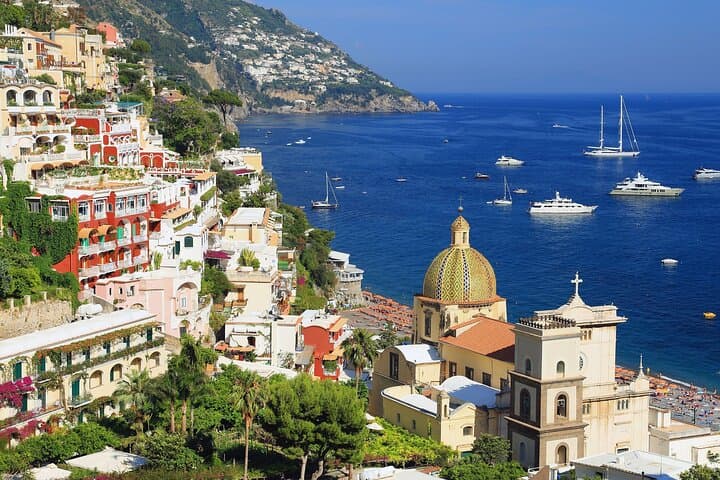
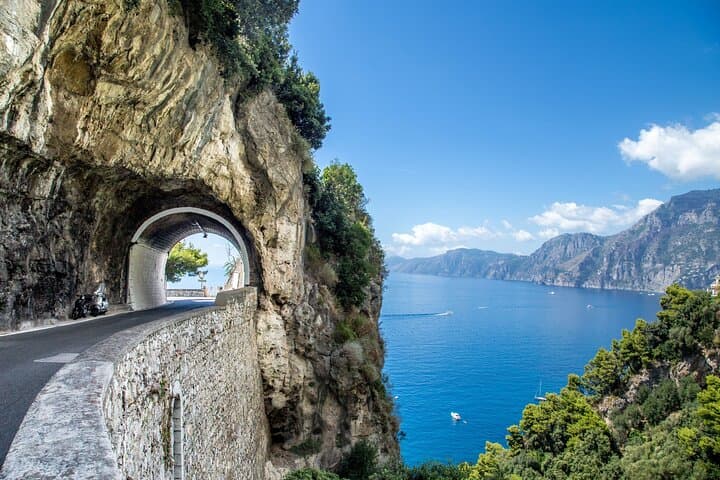
A pale morning in Rome gives way to the rumble of a private vehicle as it slips out of the city and onto the autostrada, the coast’s limestone cliffs growing taller with each kilometer. By late morning the air carries a different salt and scent—sea mixed with citrus—while the driver pauses at an overlook where the Amalfi towns hang like colored notes on a steep staff.
A pale morning in Rome gives way to the rumble of a private vehicle as it slips out of the city and onto the autostrada, the coast’s limestone cliffs growing taller with each kilometer. By late morning the air carries a different salt and scent—sea mixed with citrus—while the driver pauses at an overlook where the Amalfi towns hang like colored notes on a steep staff.
The core of the day is Pompeii: a ruined Roman city frozen under ash after Vesuvius erupted in AD 79. Walks through the Forum, the baths, and the House of the Faun reveal civic life carved from volcanic stone; mosaics and graffiti give direct, human snapshots of two millennia ago. Geologically, the region sits on the southern slope of Vesuvius and the Monti Lattari; terraces and sea-facing cliffs are the result of uplift and careful human terracing for lemon groves.
Culturally the route blends maritime villages—Positano’s steep lanes, Amalfi’s cathedral precinct—and quieter spots like Furore and Praiano, where fishermen’s traditions remain visible in harbors and menus.
Practical guidance: expect an 11–12 hour day with substantial driving and roughly 2–3 hours of walking on uneven, often sun-exposed surfaces in Pompeii. Comfortable, broken-in shoes, sun protection and a refillable water bottle are essential. Lunch can be arranged in a coastal town; bring a photocopy of your passport for ticketing. Timed returns are strict—plan for a long, full day that pairs archaeology with dramatic coastal panoramas.