THE ADVENTURE COLLECTIVE® · Independent discovery and booking for outdoor travel

Step into Rotorua’s native bush after dark to witness thousands of glow-worms light up river-carved banks. This small-group night walk pairs natural history with practical guidance for navigating low-light, uneven terrain.
Step into Rotorua’s native bush after dark to witness thousands of glow-worms light up river-carved banks. This small-group night walk pairs natural history with practical guidance for navigating low-light, uneven terrain.
You step out of the silver minivan and the bush swallows the day. Damp earth exhales under your boots; a nearby stream dares you deeper as trees tighten into a corridor. Guided only by the small beam of your torch, the forest becomes an amphitheater of sound — morepork calls, possums rustle, and the river threads a steady rhythm.
Verified experiences and guided adventures in the surrounding area.
Operated by Real Rotorua · Rotorua, Bay of Plenty
You step out of the silver minivan and the bush swallows the day. Damp earth exhales under your boots; a nearby stream dares you deeper as trees tighten into a corridor. Guided only by the small beam of your torch, the forest becomes an amphitheater of sound — morepork calls, possums rustle, and the river threads a steady rhythm.
The glow-worms you’re here to see are Arachnocampa luminosa, a species unique to New Zealand’s humid caves and stream banks. Around Rotorua the landscape is shaped by volcanic forces and geothermal heat, but these glow-worm colonies favor cool, shaded gullies where moss and constant moisture let their silk snares hang. Māori have long read the night differently, and the local guides blend natural history with on-ground knowledge to explain life cycles, habitat needs and the place of nocturnal creatures in the ecosystem.
Expect a 2 km walk over uneven, often slippery terrain in low light; towering banks and small waterfalls cue the approach. At the right moment your guide asks for silence and you switch off lights — the cave walls transform into a ceiling of tiny stars as thousands of glow-worms illuminate the darkness.
Practicalities: the tour runs about 2–3 hours, small groups (max 8), and operates in most weather—dress for damp, cool nights, wear supportive footwear, and bring a headlamp with red setting. Keep noise low, follow the guide’s route to protect fragile habitat, and plan for hotel pickup times between 7:30–8:15pm in summer. If you want clear stargazing afterward, pick a moonless night and a fast, quiet exit from the forest.
The guided walk is about 2 km over uneven, sometimes slippery terrain and lasts roughly 2–3 hours including transfer time; moderate fitness is recommended.
Flash photography and bright torches are not permitted at viewing sites because they disturb and can temporarily blind glow-worms; guides will advise when and how to photograph responsibly.
Yes — minimum age is 6; children should be supervised, able to manage the walk and follow low-light safety instructions.
The operator runs the tour in most conditions but may cancel for safety or very heavy rain; full refunds are available if you cancel at least 24 hours beforehand or if the operator cancels.
Real Rotorua operates guided outdoor trips and adventures with an emphasis on safety, stewardship, and memorable experiences.
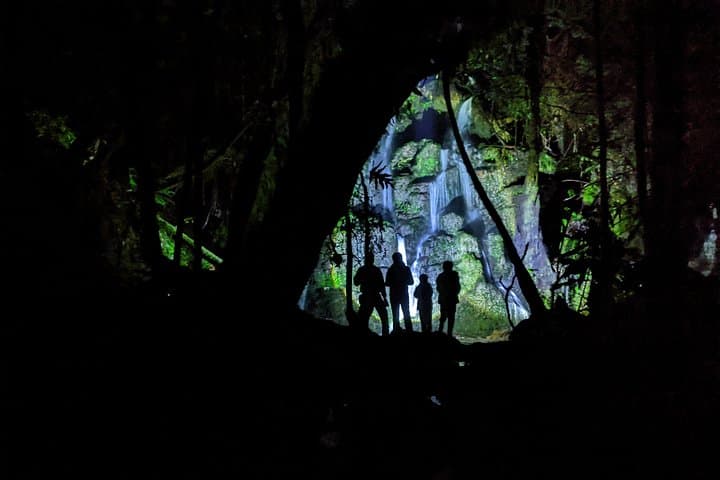


You step out of the silver minivan and the bush swallows the day. Damp earth exhales under your boots; a nearby stream dares you deeper as trees tighten into a corridor. Guided only by the small beam of your torch, the forest becomes an amphitheater of sound — morepork calls, possums rustle, and the river threads a steady rhythm.
You step out of the silver minivan and the bush swallows the day. Damp earth exhales under your boots; a nearby stream dares you deeper as trees tighten into a corridor. Guided only by the small beam of your torch, the forest becomes an amphitheater of sound — morepork calls, possums rustle, and the river threads a steady rhythm.
The glow-worms you’re here to see are Arachnocampa luminosa, a species unique to New Zealand’s humid caves and stream banks. Around Rotorua the landscape is shaped by volcanic forces and geothermal heat, but these glow-worm colonies favor cool, shaded gullies where moss and constant moisture let their silk snares hang. Māori have long read the night differently, and the local guides blend natural history with on-ground knowledge to explain life cycles, habitat needs and the place of nocturnal creatures in the ecosystem.
Expect a 2 km walk over uneven, often slippery terrain in low light; towering banks and small waterfalls cue the approach. At the right moment your guide asks for silence and you switch off lights — the cave walls transform into a ceiling of tiny stars as thousands of glow-worms illuminate the darkness.
Practicalities: the tour runs about 2–3 hours, small groups (max 8), and operates in most weather—dress for damp, cool nights, wear supportive footwear, and bring a headlamp with red setting. Keep noise low, follow the guide’s route to protect fragile habitat, and plan for hotel pickup times between 7:30–8:15pm in summer. If you want clear stargazing afterward, pick a moonless night and a fast, quiet exit from the forest.