THE ADVENTURE COLLECTIVE® · Independent discovery and booking for outdoor travel

A brisk 75-minute cruise through Rotterdam's active waterways takes you past skyscrapers, container terminals and the historic SS Rotterdam. This accessible harbor tour blends industry, architecture and maritime history into a concise waterfront experience.
A brisk 75-minute cruise through Rotterdam's active waterways takes you past skyscrapers, container terminals and the historic SS Rotterdam. This accessible harbor tour blends industry, architecture and maritime history into a concise waterfront experience.
The boat slips free from the quay and the city unfolds: a low, industrial horizon of cranes and container stacks gives way to a skyline of glass and steel as the Erasmus Bridge angles into view. Salted wind pushes against your jacket; horns and the thrum of engines form a constant, industrial heartbeat as the vessel threads active shipping lanes.
Verified experiences and guided adventures in the surrounding area.
Operated by Koninklijke Spido · Rotterdam, South Holland
The boat slips free from the quay and the city unfolds: a low, industrial horizon of cranes and container stacks gives way to a skyline of glass and steel as the Erasmus Bridge angles into view. Salted wind pushes against your jacket; horns and the thrum of engines form a constant, industrial heartbeat as the vessel threads active shipping lanes.
Rotterdam's port developed from shallow tidal estuaries into Europe's largest working port over two centuries, shaped by land reclamation and engineering that redirected the Rhine–Meuse delta. The harbor tour offers a compact primer on that evolution—shipyards that once built wooden barges now service container giants, while the SS Rotterdam, a 1950s ocean liner turned museum-ship, anchors the city's maritime memory.
Culture here skewers utility and design: bold postwar architecture meets efficient logistics. Geology is subtle—man-made quays, dredged channels and reclaimed land dominate the landscape, a reminder that this coastline is engineered as much as natural.
Practical guidance: the 75-minute shared tour departs near the Leuvehaven/Maritime Museum area, runs year-round, and is wheelchair accessible. Bring windproof layers and a warm hat in cooler months; sunscreen and light wind protection in summer. Binoculars or a camera with a zoom lens help isolate details—crane rigs, markings on hulls, and the SS Rotterdam's riveted hull.
Expect steady, flat motion—good for most fitness levels—but stay on deck for the best views and follow crew safety instructions. Book ahead during summer and cruise-ship arrival days for guaranteed spots.
Most tours board near Leuvehaven by the Maritime Museum and Hotel New York; check your booking confirmation for the exact quay.
Yes—the vessel used for this 75-minute harbor tour is wheelchair accessible and staff can assist with boarding where needed.
Yes—the itinerary includes views of the SS Rotterdam, the former Holland America Line flagship now moored as a museum and hotel ship.
Tours operate in most weather; bring appropriate clothing. Cancellation policies typically allow refunds if you cancel at least 24 hours before departure.
Koninklijke Spido operates guided outdoor trips and adventures with an emphasis on safety, stewardship, and memorable experiences.
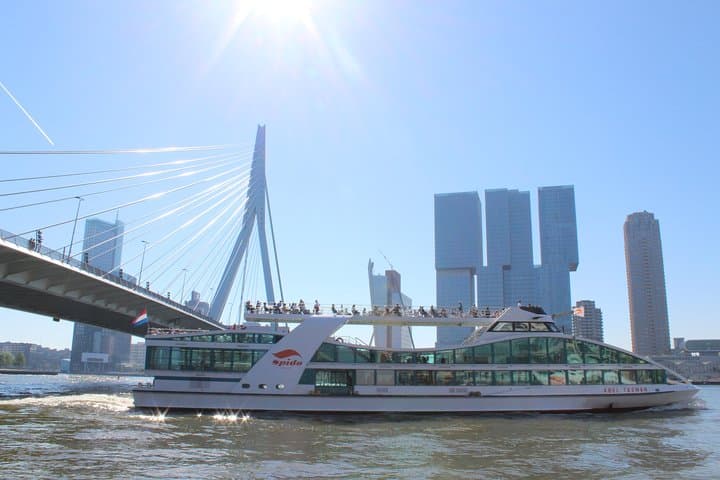
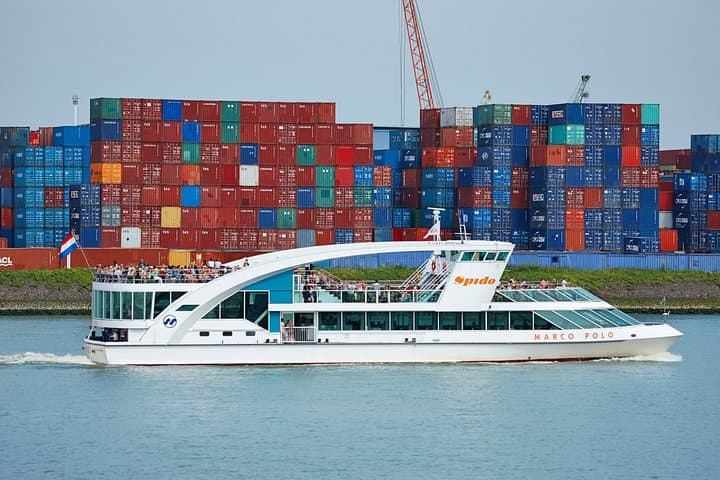
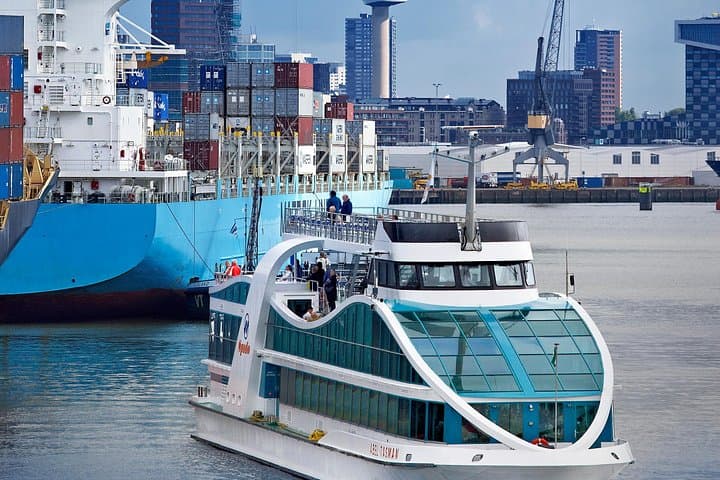
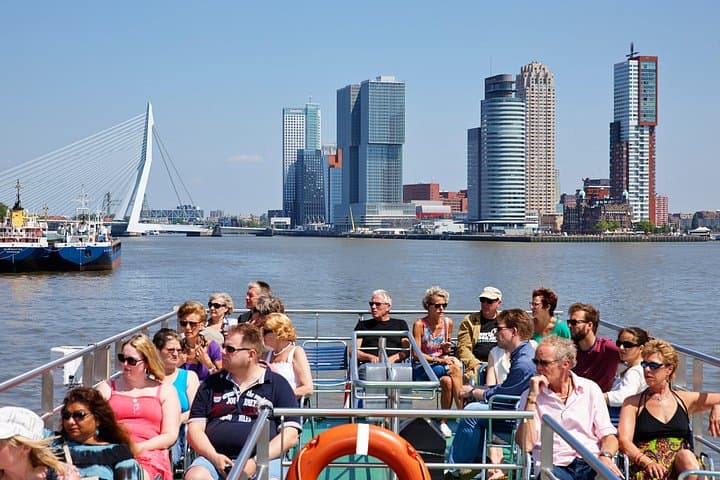
The boat slips free from the quay and the city unfolds: a low, industrial horizon of cranes and container stacks gives way to a skyline of glass and steel as the Erasmus Bridge angles into view. Salted wind pushes against your jacket; horns and the thrum of engines form a constant, industrial heartbeat as the vessel threads active shipping lanes.
The boat slips free from the quay and the city unfolds: a low, industrial horizon of cranes and container stacks gives way to a skyline of glass and steel as the Erasmus Bridge angles into view. Salted wind pushes against your jacket; horns and the thrum of engines form a constant, industrial heartbeat as the vessel threads active shipping lanes.
Rotterdam's port developed from shallow tidal estuaries into Europe's largest working port over two centuries, shaped by land reclamation and engineering that redirected the Rhine–Meuse delta. The harbor tour offers a compact primer on that evolution—shipyards that once built wooden barges now service container giants, while the SS Rotterdam, a 1950s ocean liner turned museum-ship, anchors the city's maritime memory.
Culture here skewers utility and design: bold postwar architecture meets efficient logistics. Geology is subtle—man-made quays, dredged channels and reclaimed land dominate the landscape, a reminder that this coastline is engineered as much as natural.
Practical guidance: the 75-minute shared tour departs near the Leuvehaven/Maritime Museum area, runs year-round, and is wheelchair accessible. Bring windproof layers and a warm hat in cooler months; sunscreen and light wind protection in summer. Binoculars or a camera with a zoom lens help isolate details—crane rigs, markings on hulls, and the SS Rotterdam's riveted hull.
Expect steady, flat motion—good for most fitness levels—but stay on deck for the best views and follow crew safety instructions. Book ahead during summer and cruise-ship arrival days for guaranteed spots.