THE ADVENTURE COLLECTIVE® · Independent discovery and booking for outdoor travel

Race through Tokyo’s waterfront and Ginza boulevards in a licensed go-kart — an urban sprint that pairs speed with strict documentation rules. Learn what to expect, why an IDP is mandatory, and how to prepare for this 2–3 hour city circuit.
Race through Tokyo’s waterfront and Ginza boulevards in a licensed go-kart — an urban sprint that pairs speed with strict documentation rules. Learn what to expect, why an IDP is mandatory, and how to prepare for this 2–3 hour city circuit.
The engine kicks, tires whisper on asphalt, and Tokyo rearranges itself around you — neon reflections on the bay, office towers sliding past, and a ribbon of road that dares you to keep pace. You sit low in a bright rental kart, wind cutting across your face as the guide leads a small convoy through Toyosu’s waterfront boulevards and onto the avenues that graze Ginza’s illuminated facades.
Verified experiences and guided adventures in the surrounding area.
Operated by JAPANKART · Tokyo, Tokyo
The engine kicks, tires whisper on asphalt, and Tokyo rearranges itself around you — neon reflections on the bay, office towers sliding past, and a ribbon of road that dares you to keep pace. You sit low in a bright rental kart, wind cutting across your face as the guide leads a small convoy through Toyosu’s waterfront boulevards and onto the avenues that graze Ginza’s illuminated facades.
This route threads the modern and the historic: Toyosu’s reclaimed flats, once shallow tidal waters, now host the world-class fish market that replaced Tsukiji. Ginza’s streets evoke Tokyo’s 20th-century commercial rise; nearby Nihonbashi marks the old starting point for the nation’s highways. The bay itself is engineered — landfill, piers and promenades reshaped over decades — so expect long, flat stretches with sudden urban punctuation: bridges, plazas, and clusters of glass towers.
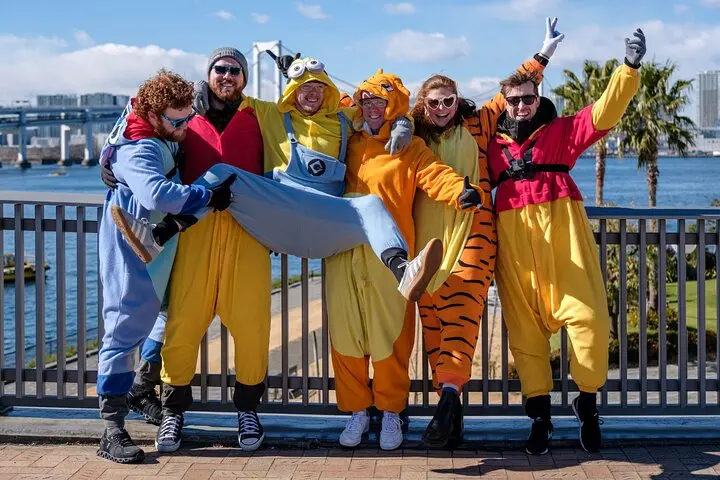
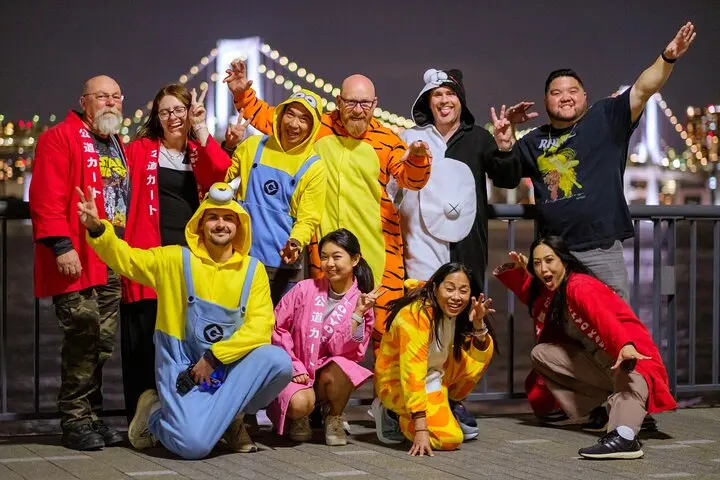
Practicalities shape the ride as much as the map. You must carry an International Driving Permit issued under the 1949 Geneva Convention (or a JAF-translated license if you’re from Switzerland, Germany, France, Taiwan, Belgium, or Monaco). The tour lasts about 2–3 hours including briefing and costume fun. Wear closed-toe shoes and comfortable trousers; avoid long skirts or loose scarves. Alcohol before riding is forbidden; arrive 15 minutes early. The operator provides helmets, costumes and photos; weather can cancel or reschedule. Expect light traffic control, firm safety briefings, and the occasional stop for photos. For city adventurers who want speed without the highway, this urban kart run delivers fast-paced sightseeing with tight rules: follow instructions, carry correct documents, and enjoy Tokyo from two wheels lower than a car.
Yes — an International Driving Permit issued under the 1949 Geneva Convention is required. If your license is from Switzerland, Germany, France, Taiwan, Belgium, or Monaco you need a Japanese translation from the Japan Automobile Federation (JAF) plus your domestic license.
Participants must hold a valid driver’s license from their home country and the required IDP or translation; check with the operator for age limits, but standard policies typically align with legal driving ages and the operator’s safety rules.
Yes — the tour usually includes costumes and a photo package, and staff will brief you on when and where photos are taken during the route.
If canceled due to bad weather you’ll be offered a full refund or the option to reschedule depending on availability; cancel up to 24 hours in advance for a full refund.
JAPANKART operates guided outdoor trips and adventures with an emphasis on safety, stewardship, and memorable experiences.
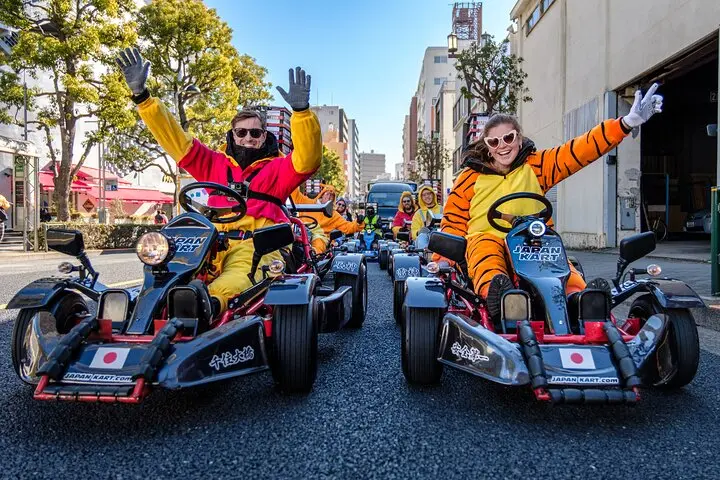
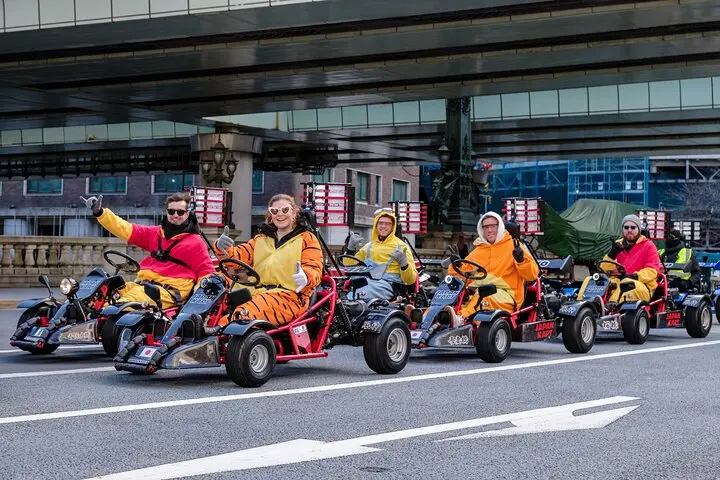
The engine kicks, tires whisper on asphalt, and Tokyo rearranges itself around you — neon reflections on the bay, office towers sliding past, and a ribbon of road that dares you to keep pace. You sit low in a bright rental kart, wind cutting across your face as the guide leads a small convoy through Toyosu’s waterfront boulevards and onto the avenues that graze Ginza’s illuminated facades.
The engine kicks, tires whisper on asphalt, and Tokyo rearranges itself around you — neon reflections on the bay, office towers sliding past, and a ribbon of road that dares you to keep pace. You sit low in a bright rental kart, wind cutting across your face as the guide leads a small convoy through Toyosu’s waterfront boulevards and onto the avenues that graze Ginza’s illuminated facades.
This route threads the modern and the historic: Toyosu’s reclaimed flats, once shallow tidal waters, now host the world-class fish market that replaced Tsukiji. Ginza’s streets evoke Tokyo’s 20th-century commercial rise; nearby Nihonbashi marks the old starting point for the nation’s highways. The bay itself is engineered — landfill, piers and promenades reshaped over decades — so expect long, flat stretches with sudden urban punctuation: bridges, plazas, and clusters of glass towers.
Practicalities shape the ride as much as the map. You must carry an International Driving Permit issued under the 1949 Geneva Convention (or a JAF-translated license if you’re from Switzerland, Germany, France, Taiwan, Belgium, or Monaco). The tour lasts about 2–3 hours including briefing and costume fun. Wear closed-toe shoes and comfortable trousers; avoid long skirts or loose scarves. Alcohol before riding is forbidden; arrive 15 minutes early. The operator provides helmets, costumes and photos; weather can cancel or reschedule. Expect light traffic control, firm safety briefings, and the occasional stop for photos. For city adventurers who want speed without the highway, this urban kart run delivers fast-paced sightseeing with tight rules: follow instructions, carry correct documents, and enjoy Tokyo from two wheels lower than a car.