THE ADVENTURE COLLECTIVE® · Independent discovery and booking for outdoor travel

Cover Paris’s signature landmarks on an 8 km guided run that moves from the Louvre to the Eiffel Tower and Musée d’Orsay. Expect paved quays, short cobbles, historical stops and a local guide who paces the group and captures photos along the way.
Cover Paris’s signature landmarks on an 8 km guided run that moves from the Louvre to the Eiffel Tower and Musée d’Orsay. Expect paved quays, short cobbles, historical stops and a local guide who paces the group and captures photos along the way.
On a cool Paris morning the Seine dares you forward: glassy water ticking past quays, the city stretching into avenues and ironwork. This 8 km group run threads the heart of Paris — past the glass dome of the Grand Palais, alongside the Louvre’s stone façade, across the Pont d’Iéna to stand briefly under the Eiffel Tower, and finishing with the converted beaux‑arts shell of Musée d’Orsay. The rhythm is urban: cobbles, riverfront promenades, park paths and short city blocks between monuments.
Verified experiences and guided adventures in the surrounding area.
Operated by Go! Running Tours · Paris, Île-de-France
On a cool Paris morning the Seine dares you forward: glassy water ticking past quays, the city stretching into avenues and ironwork. This 8 km group run threads the heart of Paris — past the glass dome of the Grand Palais, alongside the Louvre’s stone façade, across the Pont d’Iéna to stand briefly under the Eiffel Tower, and finishing with the converted beaux‑arts shell of Musée d’Orsay. The rhythm is urban: cobbles, riverfront promenades, park paths and short city blocks between monuments.
The route traces layers of Parisian history. The Louvre began as a medieval fortress and grew into a royal palace; the Eiffel Tower rose for the 1889 Exposition Universelle as an engineering bold‑stroke; Musée d’Orsay once handled steam trains before becoming a museum of 19th‑century art. Geologically Paris sits on soft river sediments—the city’s flat grades keep climbs minimal but occasional cobbles and tram rails demand attention. Culture here is public and performative: vendors, cyclists and morning café life are part of the course.
Practical guide: expect paved surfaces with short cobbled sections, ~8 km covered in about 50–70 minutes depending on group pace. Wear road running shoes, check weather for light layers, and bring a small refillable bottle; there are public restrooms at major stops but bring cash or a card. Start early to avoid crowds and heed traffic signals — this is an urban run, not a closed trail. Guides typically carry route tracking and take photos; keep valuables secure and listen for group pace cues. For a compact, high‑impact way to see Paris, this run delivers culture, history and the steady push of the city itself.
Yes—pacing is group-friendly and guides adjust speed, but beginners should be comfortable moving for roughly an hour and able to navigate short cobbles.
Yes—the itinerary includes brief photo stops at major monuments, typically 3–5 minutes each to keep the group on schedule.
Public restrooms and cafés are available near major monuments; bring a small bottle for convenience between stops.
Not recommended—this is a guided group run on mixed urban surfaces and through busy pedestrian areas, and organizers usually restrict non‑runners for safety.
Go! Running Tours operates guided outdoor trips and adventures with an emphasis on safety, stewardship, and memorable experiences.
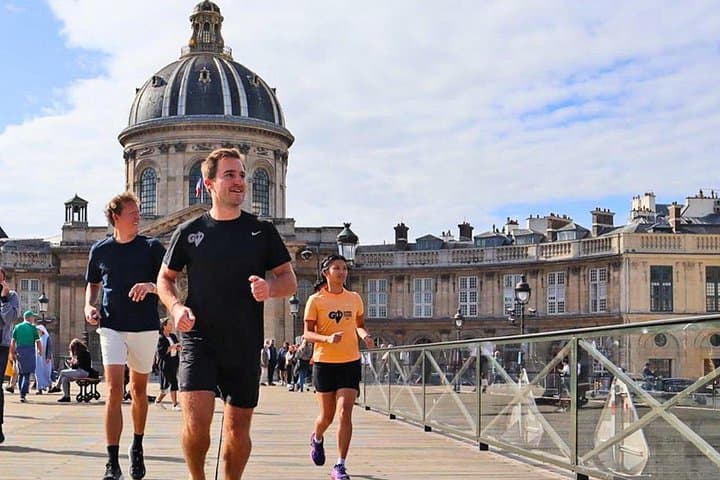
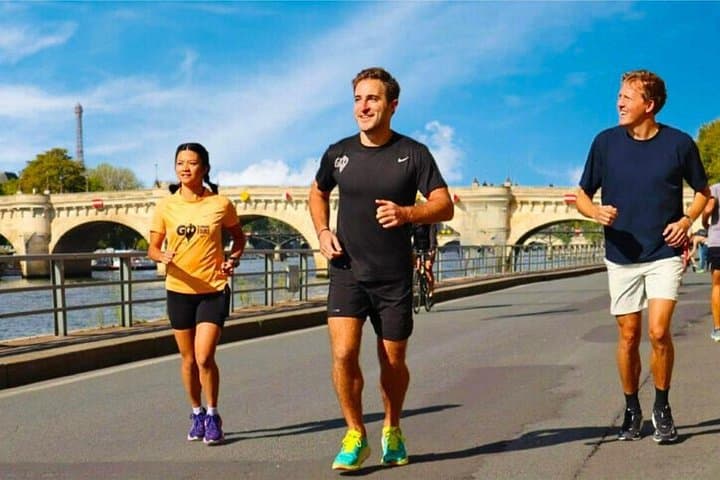
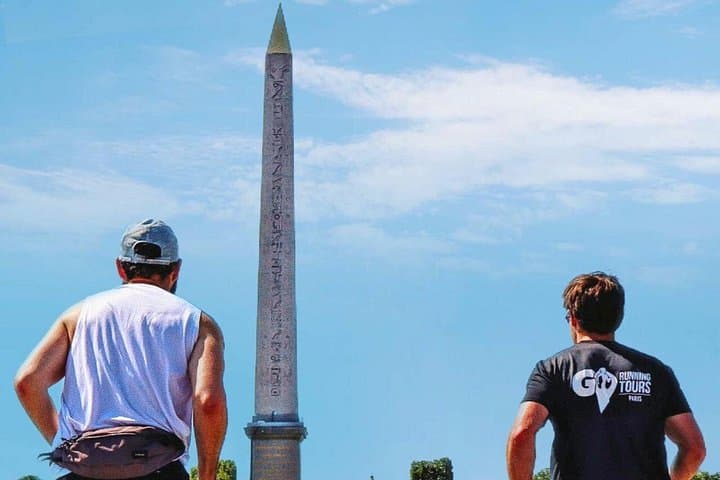
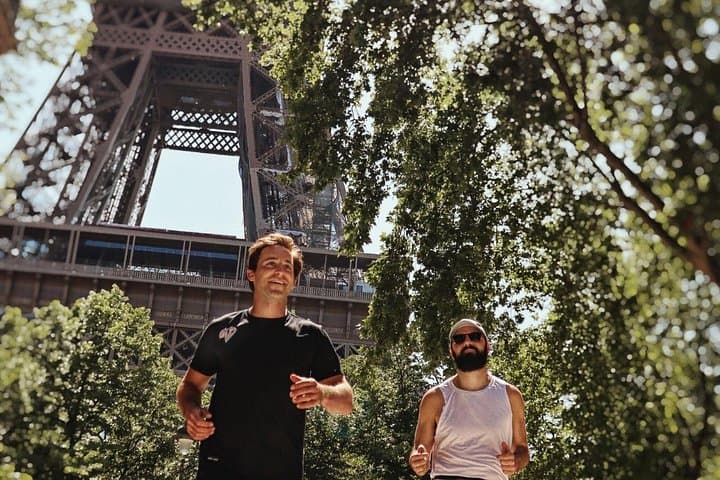
On a cool Paris morning the Seine dares you forward: glassy water ticking past quays, the city stretching into avenues and ironwork. This 8 km group run threads the heart of Paris — past the glass dome of the Grand Palais, alongside the Louvre’s stone façade, across the Pont d’Iéna to stand briefly under the Eiffel Tower, and finishing with the converted beaux‑arts shell of Musée d’Orsay. The rhythm is urban: cobbles, riverfront promenades, park paths and short city blocks between monuments.
On a cool Paris morning the Seine dares you forward: glassy water ticking past quays, the city stretching into avenues and ironwork. This 8 km group run threads the heart of Paris — past the glass dome of the Grand Palais, alongside the Louvre’s stone façade, across the Pont d’Iéna to stand briefly under the Eiffel Tower, and finishing with the converted beaux‑arts shell of Musée d’Orsay. The rhythm is urban: cobbles, riverfront promenades, park paths and short city blocks between monuments.
The route traces layers of Parisian history. The Louvre began as a medieval fortress and grew into a royal palace; the Eiffel Tower rose for the 1889 Exposition Universelle as an engineering bold‑stroke; Musée d’Orsay once handled steam trains before becoming a museum of 19th‑century art. Geologically Paris sits on soft river sediments—the city’s flat grades keep climbs minimal but occasional cobbles and tram rails demand attention. Culture here is public and performative: vendors, cyclists and morning café life are part of the course.
Practical guide: expect paved surfaces with short cobbled sections, ~8 km covered in about 50–70 minutes depending on group pace. Wear road running shoes, check weather for light layers, and bring a small refillable bottle; there are public restrooms at major stops but bring cash or a card. Start early to avoid crowds and heed traffic signals — this is an urban run, not a closed trail. Guides typically carry route tracking and take photos; keep valuables secure and listen for group pace cues. For a compact, high‑impact way to see Paris, this run delivers culture, history and the steady push of the city itself.