THE ADVENTURE COLLECTIVE® · Independent discovery and booking for outdoor travel

Fly from Georgetown to Kaieteur’s 226‑metre drop, then cross into the Rupununi savanna and Iwokrama's rainforest on an eight‑day expedition. Expect river travel, short hikes, Amerindian village visits and abundant wildlife.
Fly from Georgetown to Kaieteur’s 226‑metre drop, then cross into the Rupununi savanna and Iwokrama's rainforest on an eight‑day expedition. Expect river travel, short hikes, Amerindian village visits and abundant wildlife.
A low-plane hum dissolves into spray as the Potaro River narrows and the world opens at Kaieteur: a single 226‑metre drop that throws mist into the air and dares you to step closer. This eight‑day route begins in Georgetown’s colonial wood-frame streets, then stitches together river travel, rainforest canopy, and the wide grasslands of the Rupununi where horizons stretch and wildlife moves with intent.
Verified experiences and guided adventures in the surrounding area.
Operated by Dagron Tours · Georgetown, Demerara-Mahaica
A low-plane hum dissolves into spray as the Potaro River narrows and the world opens at Kaieteur: a single 226‑metre drop that throws mist into the air and dares you to step closer. This eight‑day route begins in Georgetown’s colonial wood-frame streets, then stitches together river travel, rainforest canopy, and the wide grasslands of the Rupununi where horizons stretch and wildlife moves with intent.
Geology here is blunt and old—tabletop sandstone and Precambrian rock carved by the Essequibo and Potaro rivers. Kaieteur is fed by a rugged plateau; the falls have no significant upstream dams, so flows reflect seasonal rains. Culturally the itinerary moves through Amerindian communities around Annai and Lethem, where traditional crafts and lifeways remain visible and local guides share stories of land stewardship.
Expect rainforest humidity, mosquito chorus and sudden tropical downpours; biodiversity is the point, from scarlet ibis on the coast to red howler monkeys and nocturnal caiman near riverbanks. Iwokrama Conservation Area protects large swathes of intact forest—trails and boat floats prioritize low-impact access.
Practical guidance: pack light for the small aircraft legs (operators limit checked weight), bring high‑DEET repellent and malaria prophylaxis, and use waterproof protection for optics. Footwear should handle muddy trails and slick rock at viewpoints. Plan dawn and dusk for wildlife watching and allocate spare memory and batteries for long, wet days photographing birds and bats. Respect village protocols, follow guides on river safety, and leave no trace—this region is remote and resilient but sensitive to visitor pressure.
Yes—small charter aircraft frequently restrict luggage; this operator indicates a 20 lb limit for some bush flights, so bring a compact carry backpack.
Consult a travel clinic—malaria prophylaxis is commonly recommended for interior Guyana, and routine vaccinations should be current.
Lodges like Iwokrama and Rock View are remote with basic comforts; expect simple rooms, communal meals and limited internet.
Minimum age is 10; children must be accompanied by adults and prepared for boat rides, light hikes and remote conditions.
Dagron Tours operates guided outdoor trips and adventures with an emphasis on safety, stewardship, and memorable experiences.
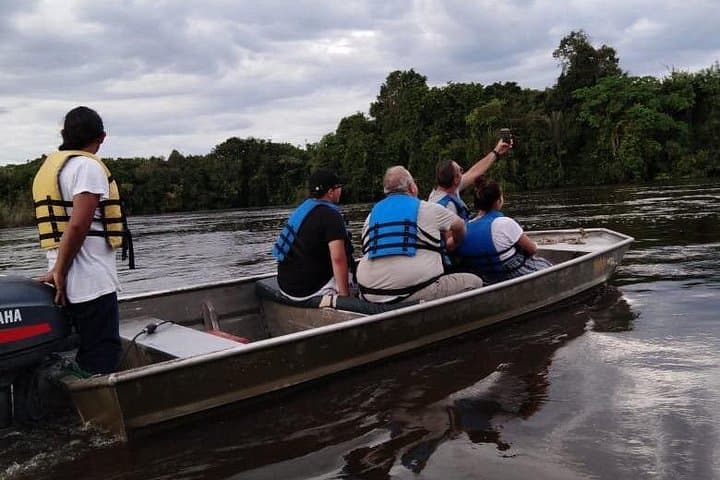


A low-plane hum dissolves into spray as the Potaro River narrows and the world opens at Kaieteur: a single 226‑metre drop that throws mist into the air and dares you to step closer. This eight‑day route begins in Georgetown’s colonial wood-frame streets, then stitches together river travel, rainforest canopy, and the wide grasslands of the Rupununi where horizons stretch and wildlife moves with intent.
A low-plane hum dissolves into spray as the Potaro River narrows and the world opens at Kaieteur: a single 226‑metre drop that throws mist into the air and dares you to step closer. This eight‑day route begins in Georgetown’s colonial wood-frame streets, then stitches together river travel, rainforest canopy, and the wide grasslands of the Rupununi where horizons stretch and wildlife moves with intent.
Geology here is blunt and old—tabletop sandstone and Precambrian rock carved by the Essequibo and Potaro rivers. Kaieteur is fed by a rugged plateau; the falls have no significant upstream dams, so flows reflect seasonal rains. Culturally the itinerary moves through Amerindian communities around Annai and Lethem, where traditional crafts and lifeways remain visible and local guides share stories of land stewardship.
Expect rainforest humidity, mosquito chorus and sudden tropical downpours; biodiversity is the point, from scarlet ibis on the coast to red howler monkeys and nocturnal caiman near riverbanks. Iwokrama Conservation Area protects large swathes of intact forest—trails and boat floats prioritize low-impact access.
Practical guidance: pack light for the small aircraft legs (operators limit checked weight), bring high‑DEET repellent and malaria prophylaxis, and use waterproof protection for optics. Footwear should handle muddy trails and slick rock at viewpoints. Plan dawn and dusk for wildlife watching and allocate spare memory and batteries for long, wet days photographing birds and bats. Respect village protocols, follow guides on river safety, and leave no trace—this region is remote and resilient but sensitive to visitor pressure.