THE ADVENTURE COLLECTIVE® · Independent discovery and booking for outdoor travel

Explore Añashuayco’s pale sillar quarries and a short canyon walk to Wari-era petroglyphs at Culebrillas. This half-day tour mixes hands-on stonecutting, geology, and a 20‑minute gorge walk beneath 15–20 m walls.
Explore Añashuayco’s pale sillar quarries and a short canyon walk to Wari-era petroglyphs at Culebrillas. This half-day tour mixes hands-on stonecutting, geology, and a 20‑minute gorge walk beneath 15–20 m walls.
Morning light in Arequipa hits the white stone first — the city’s facades reflect a volcanic clarity that began here, where quarrymen still cut sillar from the earth. You’ll be collected in the centro and driven roughly 45 minutes across high plains to Añashuayco, where an open-cut canyon unfolds in layers of pale ignimbrite. The quarry walls rise in stepped faces; dust and the rhythm of tools mark a craft practiced for generations.
Verified experiences and guided adventures in the surrounding area.
Operated by Turismo Liberty Perú · Arequipa, Arequipa
Morning light in Arequipa hits the white stone first — the city’s facades reflect a volcanic clarity that began here, where quarrymen still cut sillar from the earth. You’ll be collected in the centro and driven roughly 45 minutes across high plains to Añashuayco, where an open-cut canyon unfolds in layers of pale ignimbrite. The quarry walls rise in stepped faces; dust and the rhythm of tools mark a craft practiced for generations.
Sillar is fossilized volcanic ash compacted and cut into large blocks that built Arequipa’s colonial churches. At Añashuayco you’ll meet stonemasons who explain traditional extraction and carving; some tours include a supervised chance to strike a block yourself. The route then moves to Quebrada de Culebrillas, a narrow water-cut gorge where a 20-minute walk threads between 15–20 m walls. At the canyon’s end are petroglyph panels carved by the Wari people more than a millennium ago and small apachetas — stacked stones left as offerings — that feel like a human echo in the rock.
Practical side: expect uneven footing and loose gravel on short hikes; wear sturdy shoes, sun protection and layers for high-altitude wind and quick temperature swings. Bring water and a camera with polarizing filter for the bright white stone. Morning departures reduce heat and glare and often make stonemasons easier to meet.
This short cultural landscape loop blends geology, living craft and archaeology: a compact half-day that pairs tactile history with a brisk canyon walk.
The guided walk through the small canyon is roughly 20 minutes round-trip on uneven but well-marked ground.
Many tours include a supervised demonstration and the chance to experiment with cutting a small block under a stonemason’s guidance.
Yes — the tour is rated easy, but it’s not recommended for people with serious back problems or pregnant travelers due to vehicle transfers and brief standing on uneven surfaces.
Petroglyph panels are accessible at the canyon’s end; visitors should not touch carvings and should follow guides to avoid damage.
Turismo Liberty Perú operates guided outdoor trips and adventures with an emphasis on safety, stewardship, and memorable experiences.


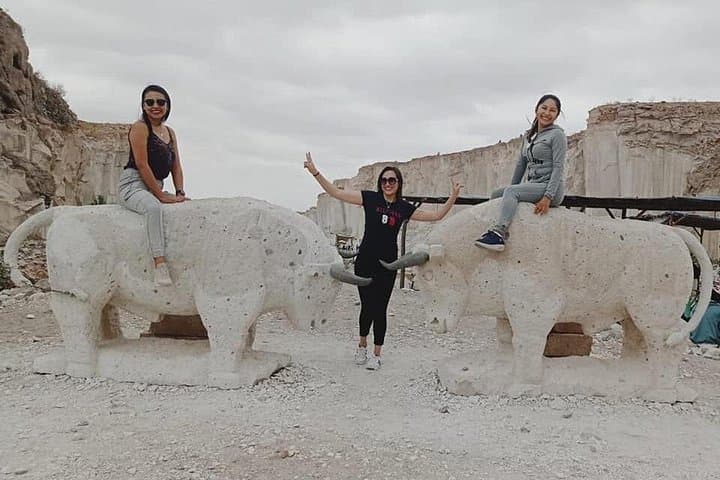

Morning light in Arequipa hits the white stone first — the city’s facades reflect a volcanic clarity that began here, where quarrymen still cut sillar from the earth. You’ll be collected in the centro and driven roughly 45 minutes across high plains to Añashuayco, where an open-cut canyon unfolds in layers of pale ignimbrite. The quarry walls rise in stepped faces; dust and the rhythm of tools mark a craft practiced for generations.
Morning light in Arequipa hits the white stone first — the city’s facades reflect a volcanic clarity that began here, where quarrymen still cut sillar from the earth. You’ll be collected in the centro and driven roughly 45 minutes across high plains to Añashuayco, where an open-cut canyon unfolds in layers of pale ignimbrite. The quarry walls rise in stepped faces; dust and the rhythm of tools mark a craft practiced for generations.
Sillar is fossilized volcanic ash compacted and cut into large blocks that built Arequipa’s colonial churches. At Añashuayco you’ll meet stonemasons who explain traditional extraction and carving; some tours include a supervised chance to strike a block yourself. The route then moves to Quebrada de Culebrillas, a narrow water-cut gorge where a 20-minute walk threads between 15–20 m walls. At the canyon’s end are petroglyph panels carved by the Wari people more than a millennium ago and small apachetas — stacked stones left as offerings — that feel like a human echo in the rock.
Practical side: expect uneven footing and loose gravel on short hikes; wear sturdy shoes, sun protection and layers for high-altitude wind and quick temperature swings. Bring water and a camera with polarizing filter for the bright white stone. Morning departures reduce heat and glare and often make stonemasons easier to meet.
This short cultural landscape loop blends geology, living craft and archaeology: a compact half-day that pairs tactile history with a brisk canyon walk.