THE ADVENTURE COLLECTIVE® · Independent discovery and booking for outdoor travel

Experience the raw drama of the elk rut just outside Estes Park. This two-hour, dawn-or-dusk jeep tour puts you close to bugling bulls, painted aspens, and expert naturalist interpretation in Rocky Mountain National Park.
Experience the raw drama of the elk rut just outside Estes Park. This two-hour, dawn-or-dusk jeep tour puts you close to bugling bulls, painted aspens, and expert naturalist interpretation in Rocky Mountain National Park.
Dawn breaks cold and clear above Estes Park; breath fogs as bull elk puncture the silence with a long, raw bugle. You’re in an open jeep, headlights splitting the pre-dawn, moving slowly through low meadows where bulls parade and cows graze—autumn colors framing a ritual older than the town itself.
Verified experiences and guided adventures in the surrounding area.
Operated by Green Jeep Tours · Estes Park, Colorado
Dawn breaks cold and clear above Estes Park; breath fogs as bull elk puncture the silence with a long, raw bugle. You’re in an open jeep, headlights splitting the pre-dawn, moving slowly through low meadows where bulls parade and cows graze—autumn colors framing a ritual older than the town itself.
The elk rut in Rocky Mountain National Park is both natural spectacle and seasonal clock. Elk migrate from high alpine ridges to valley bottoms each fall, driven by forage and mating pressure. The geology—glacial valleys, moraine-etched basins, and wide river bottoms—creates the flat, grassy arenas where bulls stage and compete. Estes Park’s history is braided with these animals: ranching and early tourism rose because wildlife was abundant; Indigenous peoples, including Ute and Arapaho, have long-held relationships to these ranges.
Your guide interprets behavior—hierarchies, bugles, wallows—and points out quieter local notes: the scent of sage, the metallic edge of a boulder field, and where to wait for a cow with calves. Practicalities matter: tours run at sunrise and sunset (Sept 7–Oct 17), last about two hours, and require RMNP timed entry or pass. Expect minimal walking; most viewing happens from the vehicle or short, guided stops.
Dress in layers for sharp temperature swings, bring binoculars and a telephoto lens, and keep noise low—elk respond to disturbance. Maintain legal distances and follow your guide’s directions; bulls are unpredictable during rut. With patience and respect, the ride delivers close, memorable wildlife moments without heavy exertion.
Sunrise and sunset during the rut window (typically early September through mid-October) are most active; this tour operates Sep 7–Oct 17 and targets those hours.
Yes—this experience notes an RMNP pass and timed-entry fee (listed at booking); carry proof and follow your guide’s instructions for park entry.
Tours are family-friendly and suitable for infants in strollers; service animals are allowed, but pets are not recommended due to wildlife and vehicle constraints.
Private tours may be available—contact the operator directly to check availability and pricing outside shared departures.
Green Jeep Tours operates guided outdoor trips and adventures with an emphasis on safety, stewardship, and memorable experiences.
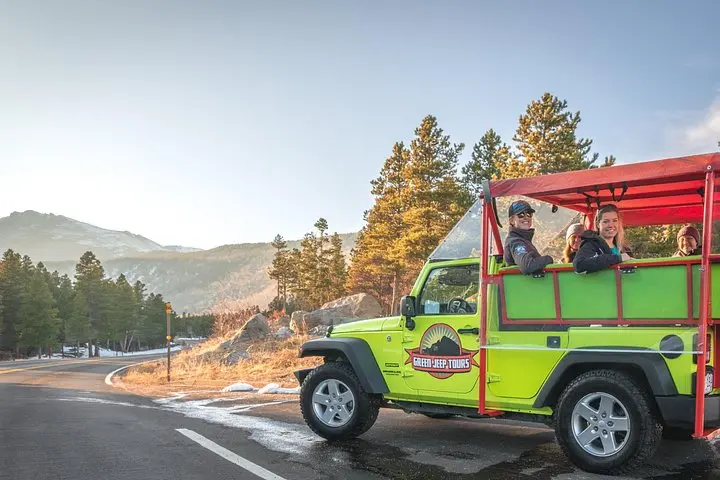
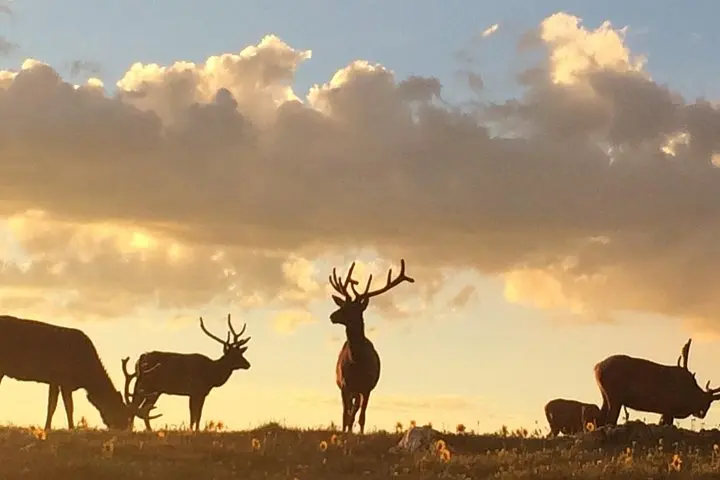
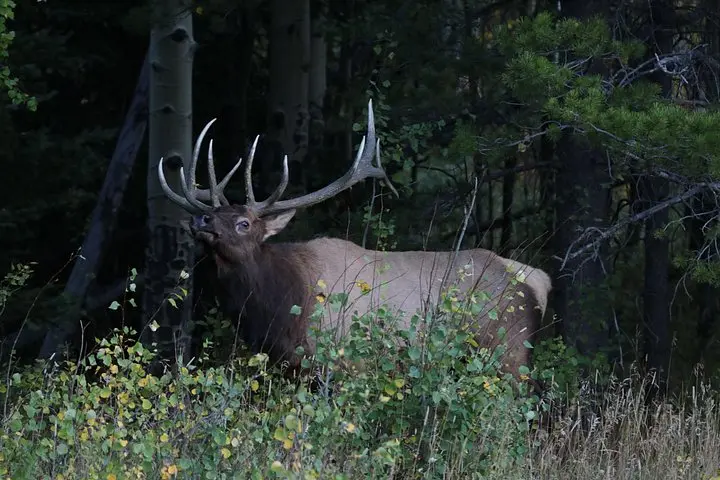
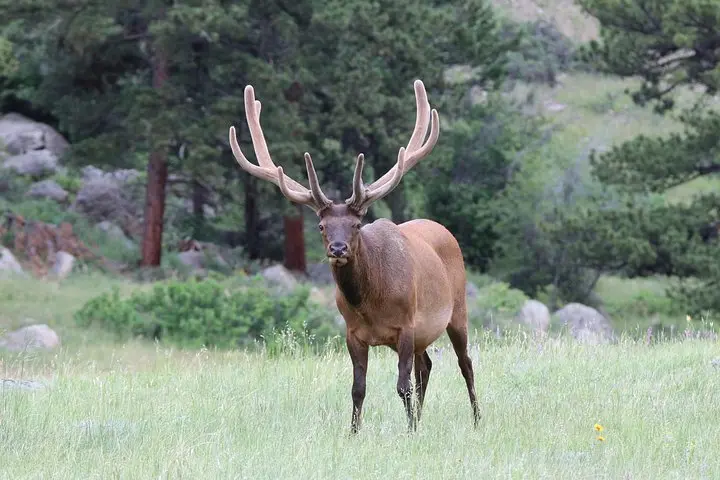
Dawn breaks cold and clear above Estes Park; breath fogs as bull elk puncture the silence with a long, raw bugle. You’re in an open jeep, headlights splitting the pre-dawn, moving slowly through low meadows where bulls parade and cows graze—autumn colors framing a ritual older than the town itself.
Dawn breaks cold and clear above Estes Park; breath fogs as bull elk puncture the silence with a long, raw bugle. You’re in an open jeep, headlights splitting the pre-dawn, moving slowly through low meadows where bulls parade and cows graze—autumn colors framing a ritual older than the town itself.
The elk rut in Rocky Mountain National Park is both natural spectacle and seasonal clock. Elk migrate from high alpine ridges to valley bottoms each fall, driven by forage and mating pressure. The geology—glacial valleys, moraine-etched basins, and wide river bottoms—creates the flat, grassy arenas where bulls stage and compete. Estes Park’s history is braided with these animals: ranching and early tourism rose because wildlife was abundant; Indigenous peoples, including Ute and Arapaho, have long-held relationships to these ranges.
Your guide interprets behavior—hierarchies, bugles, wallows—and points out quieter local notes: the scent of sage, the metallic edge of a boulder field, and where to wait for a cow with calves. Practicalities matter: tours run at sunrise and sunset (Sept 7–Oct 17), last about two hours, and require RMNP timed entry or pass. Expect minimal walking; most viewing happens from the vehicle or short, guided stops.
Dress in layers for sharp temperature swings, bring binoculars and a telephoto lens, and keep noise low—elk respond to disturbance. Maintain legal distances and follow your guide’s directions; bulls are unpredictable during rut. With patience and respect, the ride delivers close, memorable wildlife moments without heavy exertion.