THE ADVENTURE COLLECTIVE® · Independent discovery and booking for outdoor travel

Visit Tuol Sleng (S-21) and the Choeung Ek Killing Fields on a guided half‑day tour from Phnom Penh, then share a traditional Khmer lunch. This emotionally powerful experience combines historical context with local insight—plan for heat, respectful clothing, and time to reflect.
Visit Tuol Sleng (S-21) and the Choeung Ek Killing Fields on a guided half‑day tour from Phnom Penh, then share a traditional Khmer lunch. This emotionally powerful experience combines historical context with local insight—plan for heat, respectful clothing, and time to reflect.
You step off the minivan into humid Phnom Penh air and the city’s heat seems to hold its breath—this tour begins in a quiet street-front schoolhouse turned museum where the walls still carry the marks of interrogation. Walking through Tuol Sleng (S-21), the rooms are clinical and stark; placards and photographs map a recent national trauma that shaped modern Cambodia.
Verified experiences and guided adventures in the surrounding area.
Operated by Mad Monkey Phnom Penh · Phnom Penh, Phnom Penh
You step off the minivan into humid Phnom Penh air and the city’s heat seems to hold its breath—this tour begins in a quiet street-front schoolhouse turned museum where the walls still carry the marks of interrogation. Walking through Tuol Sleng (S-21), the rooms are clinical and stark; placards and photographs map a recent national trauma that shaped modern Cambodia.
From there the road moves outward toward the silent groves of Choeung Ek, the most visited of the Killing Fields. The open ground, dotted with tamarind and frangipani, gives a hard, plain face to an atrocity: mass graves, a memorial stupa, and the economy of memory that the site preserves.
Both sites are anchors in Cambodia’s late‑20th century history—the 1975–1979 Khmer Rouge regime, its system of forced relocation, interrogation at S-21, and executions at execution sites like Choeung Ek. Guides on these tours often frame the facts with local context: how families rebuilt, how memorialization informs education, and how the present city juices its commerce around memory tourism.
Practical matters: expect roughly 4–5 hours including transport; wear respectful, lightweight clothing and closed shoes for unpaved paths. Allow time to process—this tour is emotionally intense. Bring water, modest camera usage is allowed but follow signage, and tip your guide if the commentary deepened your understanding. Midday heat is strong; early departures mean cooler walking and fewer crowds.
About 4–5 hours total, including transport between S-21 and Choeung Ek and a Khmer style lunch.
Photography is allowed in many areas but restricted where human remains or sensitive exhibits appear—always follow posted signs and guide instructions.
The content is graphic and emotionally heavy; consider age and maturity before bringing children, and check tour age policies.
Yes—this tour typically includes entrance fees, transportation, bottled water, and a Khmer family-style lunch with a drink.
Mad Monkey Phnom Penh operates guided outdoor trips and adventures with an emphasis on safety, stewardship, and memorable experiences.


You step off the minivan into humid Phnom Penh air and the city’s heat seems to hold its breath—this tour begins in a quiet street-front schoolhouse turned museum where the walls still carry the marks of interrogation. Walking through Tuol Sleng (S-21), the rooms are clinical and stark; placards and photographs map a recent national trauma that shaped modern Cambodia.
You step off the minivan into humid Phnom Penh air and the city’s heat seems to hold its breath—this tour begins in a quiet street-front schoolhouse turned museum where the walls still carry the marks of interrogation. Walking through Tuol Sleng (S-21), the rooms are clinical and stark; placards and photographs map a recent national trauma that shaped modern Cambodia.
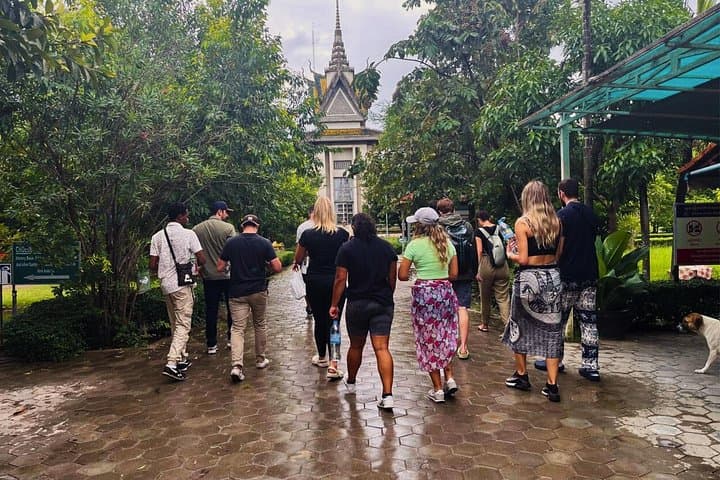
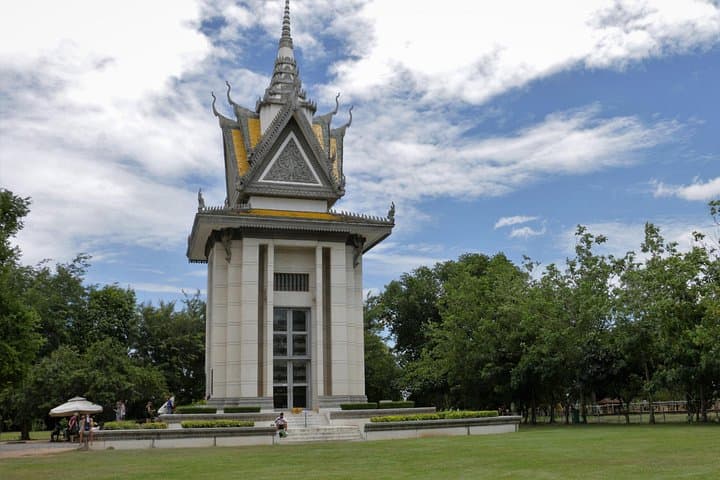
From there the road moves outward toward the silent groves of Choeung Ek, the most visited of the Killing Fields. The open ground, dotted with tamarind and frangipani, gives a hard, plain face to an atrocity: mass graves, a memorial stupa, and the economy of memory that the site preserves.
Both sites are anchors in Cambodia’s late‑20th century history—the 1975–1979 Khmer Rouge regime, its system of forced relocation, interrogation at S-21, and executions at execution sites like Choeung Ek. Guides on these tours often frame the facts with local context: how families rebuilt, how memorialization informs education, and how the present city juices its commerce around memory tourism.
Practical matters: expect roughly 4–5 hours including transport; wear respectful, lightweight clothing and closed shoes for unpaved paths. Allow time to process—this tour is emotionally intense. Bring water, modest camera usage is allowed but follow signage, and tip your guide if the commentary deepened your understanding. Midday heat is strong; early departures mean cooler walking and fewer crowds.