THE ADVENTURE COLLECTIVE® · Independent discovery and booking for outdoor travel

Fly over terraces and river canyons on a five-hour canopy circuit in the Sacred Valley. Safety-equipped platforms, four steel-core ziplines, and Quechua community context make this an accessible high-altitude aerial day trip.
Fly over terraces and river canyons on a five-hour canopy circuit in the Sacred Valley. Safety-equipped platforms, four steel-core ziplines, and Quechua community context make this an accessible high-altitude aerial day trip.
You step onto the first platform with the wind nudging at your jacket and the Sacred Valley unfurling below—fields cut into steep slopes, the river slicing a silver thread far down, terraces stacked like steps to the sky. The Tibetan bridge creaks underfoot, daring you forward; beyond it, four steel-core cables promise progressively longer flights and broader views.
Verified experiences and guided adventures in the surrounding area.
Operated by Aita Peru Adventures · Urubamba, Cusco
You step onto the first platform with the wind nudging at your jacket and the Sacred Valley unfurling below—fields cut into steep slopes, the river slicing a silver thread far down, terraces stacked like steps to the sky. The Tibetan bridge creaks underfoot, daring you forward; beyond it, four steel-core cables promise progressively longer flights and broader views.
This corridor of the Andes was the agricultural heartland of the Incas, shaped by glacial carving and river erosion into a wide valley hemmed by volcanic and metamorphic ridges. Today the Quechua communities here, including the Racchi ayllo where the course sits, maintain mountain farming traditions and welcome visitors with a practical, hands-on hospitality.
Expect a straightforward, instructor-led aerial circuit: safety briefing, harnessing, short practice line, then three progressively longer ziplines and a final panoramic run. The gear list is simple—harness, helmet, special gloves—supplied. The altitude (Sacred Valley averages around 2,800–3,000 m) makes easy tasks feel heavier, so plan for slower movements on platforms and give your breath a moment to settle.
Practical guidance: arrive acclimatized if coming from sea level, wear sturdy closed-toe shoes and layered clothing for sun and wind, and carry water and sunscreen. Confirm weight and health information during booking; operators require this for safety. Photo opportunities are plentiful but follow instructor rules for cameras and hands-free mounts. With experienced guides managing the lines, this five-hour canopy route balances adrenaline with cultural context—an efficient, high-altitude way to see the Sacred Valley from the air.
The full program runs about 4–5 hours including safety briefing, gear fitting, and the sequence of ziplines and bridge crossings.
You will be asked for weight and age during booking; limits exist for safety and harness fit, so confirm with the operator before arrival.
No—professional instructors lead every participant and provide hands-on guidance; basic comfort with heights is helpful.
Operators may cancel or reschedule in stormy conditions; check the 24-hour cancellation policy and confirm alternatives when booking.
Aita Peru Adventures operates guided outdoor trips and adventures with an emphasis on safety, stewardship, and memorable experiences.
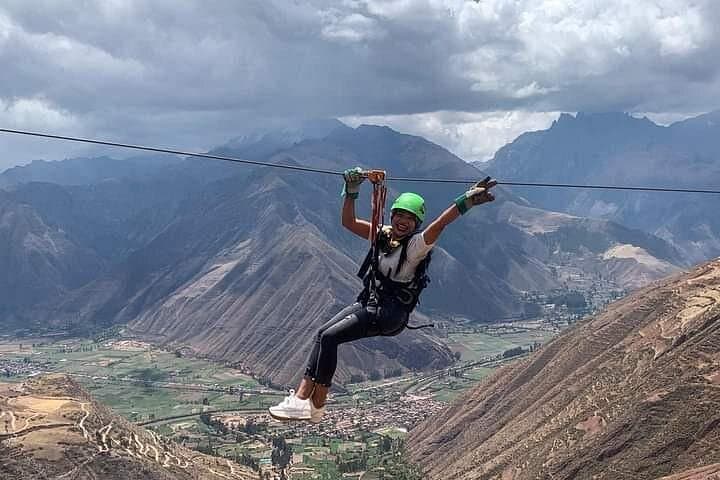


You step onto the first platform with the wind nudging at your jacket and the Sacred Valley unfurling below—fields cut into steep slopes, the river slicing a silver thread far down, terraces stacked like steps to the sky. The Tibetan bridge creaks underfoot, daring you forward; beyond it, four steel-core cables promise progressively longer flights and broader views.
You step onto the first platform with the wind nudging at your jacket and the Sacred Valley unfurling below—fields cut into steep slopes, the river slicing a silver thread far down, terraces stacked like steps to the sky. The Tibetan bridge creaks underfoot, daring you forward; beyond it, four steel-core cables promise progressively longer flights and broader views.
This corridor of the Andes was the agricultural heartland of the Incas, shaped by glacial carving and river erosion into a wide valley hemmed by volcanic and metamorphic ridges. Today the Quechua communities here, including the Racchi ayllo where the course sits, maintain mountain farming traditions and welcome visitors with a practical, hands-on hospitality.
Expect a straightforward, instructor-led aerial circuit: safety briefing, harnessing, short practice line, then three progressively longer ziplines and a final panoramic run. The gear list is simple—harness, helmet, special gloves—supplied. The altitude (Sacred Valley averages around 2,800–3,000 m) makes easy tasks feel heavier, so plan for slower movements on platforms and give your breath a moment to settle.
Practical guidance: arrive acclimatized if coming from sea level, wear sturdy closed-toe shoes and layered clothing for sun and wind, and carry water and sunscreen. Confirm weight and health information during booking; operators require this for safety. Photo opportunities are plentiful but follow instructor rules for cameras and hands-free mounts. With experienced guides managing the lines, this five-hour canopy route balances adrenaline with cultural context—an efficient, high-altitude way to see the Sacred Valley from the air.