THE ADVENTURE COLLECTIVE® · Independent discovery and booking for outdoor travel

A full-day private circuit through the Sacred Valley’s highlights — Chinchero’s textile tradition, Moray’s concentric terraces, the hand-harvested salt pans of Maras and the megaliths of Ollantaytambo. Ideal for travelers moving on to an afternoon train or anyone seeking a compact cultural immersion.
A full-day private circuit through the Sacred Valley’s highlights — Chinchero’s textile tradition, Moray’s concentric terraces, the hand-harvested salt pans of Maras and the megaliths of Ollantaytambo. Ideal for travelers moving on to an afternoon train or anyone seeking a compact cultural immersion.
You step out of the van into thin, cool air and the valley opens — terraces cutting across the hills like steps for the sky. Chinchero’s plaza smells faintly of alpaca fiber and frying corn, and a guide points out the perpendicular stones of an Inca textile center where traditional patterns still move from hand to loom.
Verified experiences and guided adventures in the surrounding area.
Operated by Peru Majestic Travel · Ollantaytambo, Cusco
You step out of the van into thin, cool air and the valley opens — terraces cutting across the hills like steps for the sky. Chinchero’s plaza smells faintly of alpaca fiber and frying corn, and a guide points out the perpendicular stones of an Inca textile center where traditional patterns still move from hand to loom.
A short drive takes you higher to Moray, a circular laboratory of concentric agricultural terraces carved into the earth. The wind seems to test your balance and the terraces answer by holding microclimates — each ring a deliberate experiment in frost, sun and soil that the Inca engineered to tweak crops.
Below Moray lie the Salineras de Maras: thousands of salt pans glinting like a patchwork of miniature lakes. Salt here still runs through family hands, channeled by gravity and ancient canals, and the pools dare the sun to finish the work.
The day closes in Ollantaytambo, where megalithic walls rise from narrow, cobbled streets and rivers push the town’s life forward. The fortress commands the valley; its stones keep the story of Inca urban planning and military foresight.
Practical guidance: plan an eight-hour private tour with flexible timing if traveling on to the train from Ollantaytambo. Expect short walks at each site, uneven stone surfaces and high altitude — hydrate before and during the day, use sun protection, and wear grippy footwear. Local guides explain textile techniques, salt-harvesting methods and terrace hydraulics; bookings often include private transport and a knowledgeable guide but not site entrance fees. Arrive early at attractions to avoid crowds and get the clearest light for photos.
Most private tours cover transport and a guide but typically do not include site entrance fees—confirm with the operator before booking.
Sites involve short walks and uneven surfaces; it's suitable for many ages if mobility allows, but not recommended for those with serious spinal or cardiovascular conditions.
Stops are within a 20–60 minute drive of each other in the Sacred Valley; the private tour minimizes transit time between Chinchero, Moray, Maras and Ollantaytambo.
Yes — private services commonly adapt timing for afternoon trains departing Ollantaytambo; inform the operator when booking to align schedules.
Peru Majestic Travel operates guided outdoor trips and adventures with an emphasis on safety, stewardship, and memorable experiences.
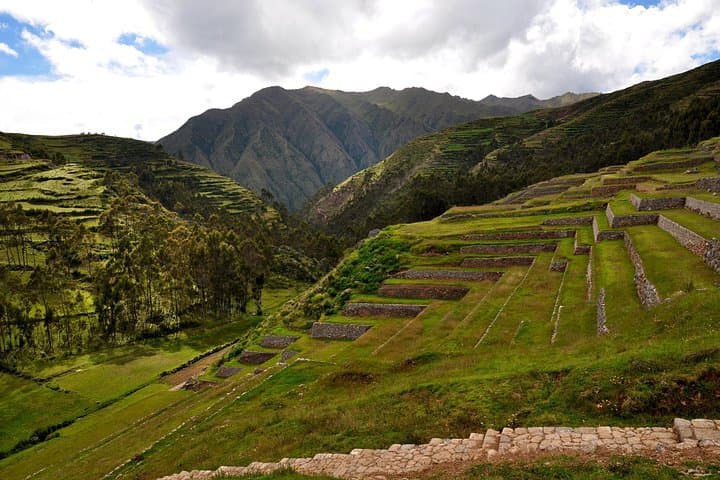

You step out of the van into thin, cool air and the valley opens — terraces cutting across the hills like steps for the sky. Chinchero’s plaza smells faintly of alpaca fiber and frying corn, and a guide points out the perpendicular stones of an Inca textile center where traditional patterns still move from hand to loom.
You step out of the van into thin, cool air and the valley opens — terraces cutting across the hills like steps for the sky. Chinchero’s plaza smells faintly of alpaca fiber and frying corn, and a guide points out the perpendicular stones of an Inca textile center where traditional patterns still move from hand to loom.
A short drive takes you higher to Moray, a circular laboratory of concentric agricultural terraces carved into the earth. The wind seems to test your balance and the terraces answer by holding microclimates — each ring a deliberate experiment in frost, sun and soil that the Inca engineered to tweak crops.
Below Moray lie the Salineras de Maras: thousands of salt pans glinting like a patchwork of miniature lakes. Salt here still runs through family hands, channeled by gravity and ancient canals, and the pools dare the sun to finish the work.
The day closes in Ollantaytambo, where megalithic walls rise from narrow, cobbled streets and rivers push the town’s life forward. The fortress commands the valley; its stones keep the story of Inca urban planning and military foresight.
Practical guidance: plan an eight-hour private tour with flexible timing if traveling on to the train from Ollantaytambo. Expect short walks at each site, uneven stone surfaces and high altitude — hydrate before and during the day, use sun protection, and wear grippy footwear. Local guides explain textile techniques, salt-harvesting methods and terrace hydraulics; bookings often include private transport and a knowledgeable guide but not site entrance fees. Arrive early at attractions to avoid crowds and get the clearest light for photos.