THE ADVENTURE COLLECTIVE® · Independent discovery and booking for outdoor travel

A full-day guided circuit through Chinchero, Moray, Maras, Ollantaytambo and Pisac showcasing Inca agricultural engineering, salt pans and markets. Expect terraces, craft demonstrations and a 12‑hour itinerary with private transport.
A full-day guided circuit through Chinchero, Moray, Maras, Ollantaytambo and Pisac showcasing Inca agricultural engineering, salt pans and markets. Expect terraces, craft demonstrations and a 12‑hour itinerary with private transport.
You step out of Cusco’s cool morning and the valley opens like an old map—steep terraces cut into ochre hills, a river daring you to follow its thread downstream, and stone towns that still move at ancestral pace.
Verified experiences and guided adventures in the surrounding area.
Operated by Huaypo Adventure · Cusco, Cusco Region
You step out of Cusco’s cool morning and the valley opens like an old map—steep terraces cut into ochre hills, a river daring you to follow its thread downstream, and stone towns that still move at ancestral pace.
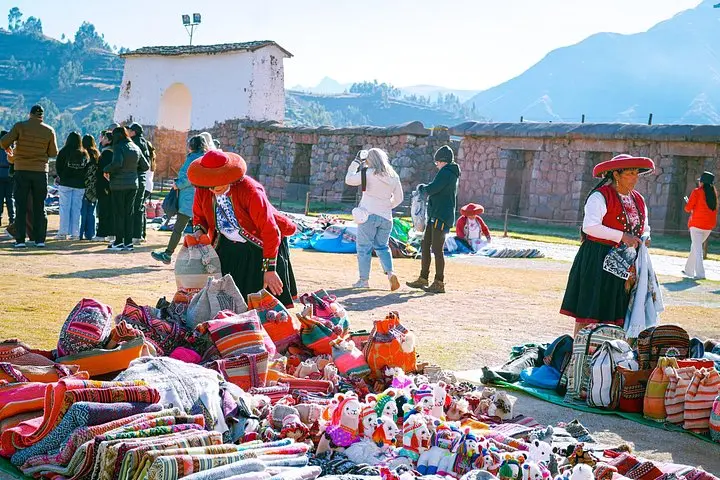
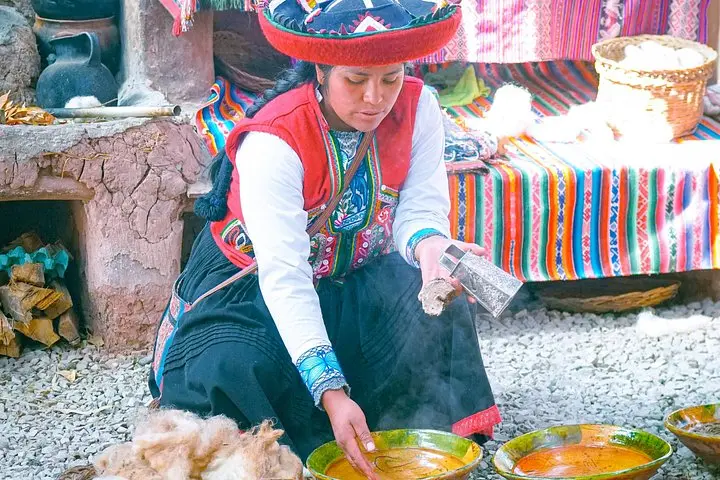
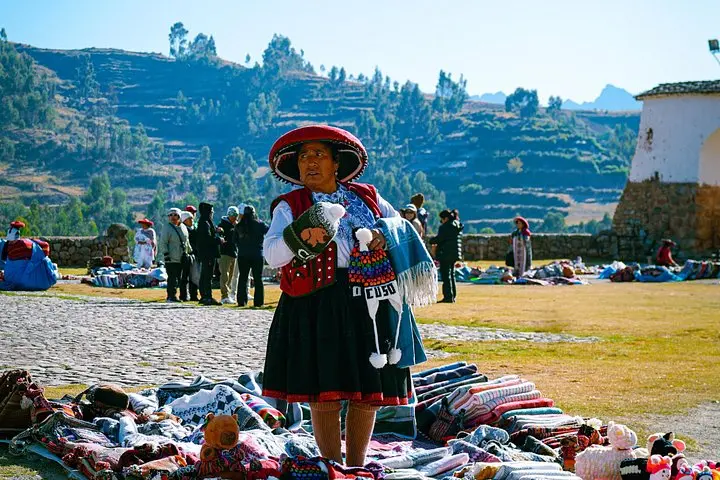
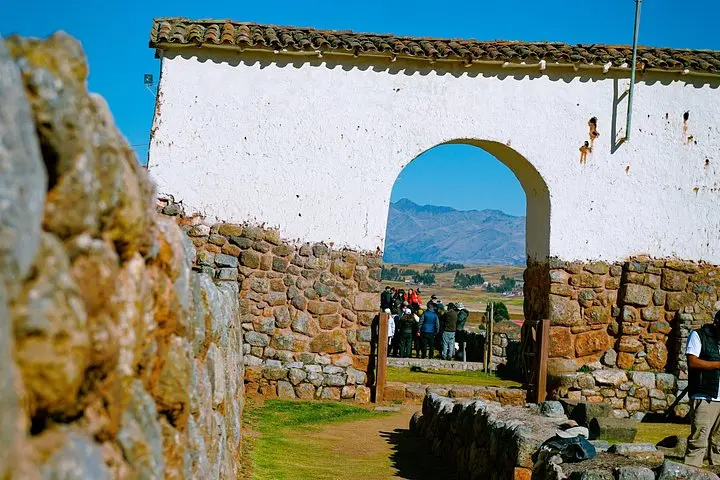
This one-day loop through Chinchero, Moray, Maras, Urubamba, Ollantaytambo and Pisac strings together Inca agriculture, colonial overlays and contemporary craft traditions. Chinchero’s textile demonstrations show natural dyes and backstrap weaving techniques passed down generations; Moray’s concentric amphitheaters reveal Inca experimentation with microclimates; the Maras salt pans glitter in stepped pools that predate modern extraction; Ollantaytambo remains a living Inca town with massive worked stone; Pisac pairs agricultural terraces with a bustling artisan market.
Geologically the valley follows a high-Andean river corridor carved into uplifted volcanic and metamorphic rock, creating abrupt elevation shifts—expect cool mornings and strong sun by mid-day. Culturally this route traces the Inca focus on engineered agriculture and sacred landscapes where terraces are both practical and symbolic.
Practical guidance: the day runs about 12 hours with private transport and a bilingual guide; walking is moderate and mostly on uneven archaeological stone and terraces. Bring layered clothing for 3,000–3,600 m elevation, sun protection, and altitude-aware hydration. Allow time at the Pisac market for bargaining and for quiet observation at Moray to feel how wind and stone hold temperature. If altitude concerns you, eat light, hydrate the day prior, and consider brief rest stops—oxygen is often available on guided tours. Return to Cusco in the evening with a fuller sense of how the valley shaped Inca life and still shapes Andean livelihoods today.
The tour lasts about 12 hours with multiple stops; walking portions are short to moderate, guided and can be paced to group needs.
Verify with your tour operator—many day tours include guide and transport but some sites require separate entry tickets not always included.
Yes—it's listed as easy; however families should consider the length of the day and altitude; infant seats and stroller access are often available for short urban sections.
Acclimatize in Cusco, avoid heavy meals before the tour, hydrate, consider coca tea, and inform your guide of any symptoms—oxygen is commonly available if needed.
Huaypo Adventure operates guided outdoor trips and adventures with an emphasis on safety, stewardship, and memorable experiences.
You step out of Cusco’s cool morning and the valley opens like an old map—steep terraces cut into ochre hills, a river daring you to follow its thread downstream, and stone towns that still move at ancestral pace.
You step out of Cusco’s cool morning and the valley opens like an old map—steep terraces cut into ochre hills, a river daring you to follow its thread downstream, and stone towns that still move at ancestral pace.
This one-day loop through Chinchero, Moray, Maras, Urubamba, Ollantaytambo and Pisac strings together Inca agriculture, colonial overlays and contemporary craft traditions. Chinchero’s textile demonstrations show natural dyes and backstrap weaving techniques passed down generations; Moray’s concentric amphitheaters reveal Inca experimentation with microclimates; the Maras salt pans glitter in stepped pools that predate modern extraction; Ollantaytambo remains a living Inca town with massive worked stone; Pisac pairs agricultural terraces with a bustling artisan market.
Geologically the valley follows a high-Andean river corridor carved into uplifted volcanic and metamorphic rock, creating abrupt elevation shifts—expect cool mornings and strong sun by mid-day. Culturally this route traces the Inca focus on engineered agriculture and sacred landscapes where terraces are both practical and symbolic.
Practical guidance: the day runs about 12 hours with private transport and a bilingual guide; walking is moderate and mostly on uneven archaeological stone and terraces. Bring layered clothing for 3,000–3,600 m elevation, sun protection, and altitude-aware hydration. Allow time at the Pisac market for bargaining and for quiet observation at Moray to feel how wind and stone hold temperature. If altitude concerns you, eat light, hydrate the day prior, and consider brief rest stops—oxygen is often available on guided tours. Return to Cusco in the evening with a fuller sense of how the valley shaped Inca life and still shapes Andean livelihoods today.