THE ADVENTURE COLLECTIVE® · Independent discovery and booking for outdoor travel

Drive ATVs across rural Andean roads to visit the circular Inca terraces of Moray and the working salt pans at Maras. This half-day Sacred Valley trip blends hands-on motorized adventure with brief guided visits to two remarkable heritage sites.
Drive ATVs across rural Andean roads to visit the circular Inca terraces of Moray and the working salt pans at Maras. This half-day Sacred Valley trip blends hands-on motorized adventure with brief guided visits to two remarkable heritage sites.
A cold mountain wind cuts across open agricultural terraces as the group straps helmets and gloves at a low base camp just off the valley road. Engines rumble; the first stretch is a gravel ribbon that climbs between tilled fields and small Andean hamlets, giving way to panoramic views of the surrounding Andes before the quads roll into the wide concentric terraces of Moray.
Verified experiences and guided adventures in the surrounding area.
Operated by Quad Bike Cusco · Maras, Cusco
A cold mountain wind cuts across open agricultural terraces as the group straps helmets and gloves at a low base camp just off the valley road. Engines rumble; the first stretch is a gravel ribbon that climbs between tilled fields and small Andean hamlets, giving way to panoramic views of the surrounding Andes before the quads roll into the wide concentric terraces of Moray.
Moray’s circular terraces—engineered by the Inca as microclimates for experimentation—feel both scientific and ceremonial: each stair steps down into a cooler, greener bowl. From there the route threads through rural roads and past stone shepherd huts toward the Salineras de Maras, centuries-old evaporation pools that still feed local families. Geologically the area sits on uplifted Andean foothills with quick transitions from irrigated valley benches to terraced slopes.
Expect a half-day of mixed riding and short walks, guided context about Inca agricultural ingenuity, and a 40-minute visit at Maras to see salt harvesting by hand. Guides handle logistics and safety briefings; riders operate Honda TRX‑style quads on unpaved, sometimes rutted tracks.
Practical guidance: wear a windproof outer layer, closed-toe sturdy boots, and bring sunglasses and sunscreen for the high sun. Hydrate before and during the ride—altitude can sap energy—and listen closely during the vehicle orientation if you are new to ATVs. Morning departures usually offer crisper light and firmer ground; afternoons can be dustier. The experience pairs adrenaline with cultural context, making it a compact way to move off main tourist routes while seeing two of the Sacred Valley’s most iconic sites.
The tour is about six hours total; most time is on quads with brief walks at Moray and a 30–40 minute visit at Maras for photos and observation.
No prior experience is required—guides provide a safety briefing and practice session, but riders should feel comfortable steering and braking on gravel.
Age or height restrictions may apply for safety reasons; check with the operator—small groups mean they can advise on child suitability.
Yes—entrance to Moray and Salineras de Maras is included, as noted in the tour inclusions.
Quad Bike Cusco operates guided outdoor trips and adventures with an emphasis on safety, stewardship, and memorable experiences.
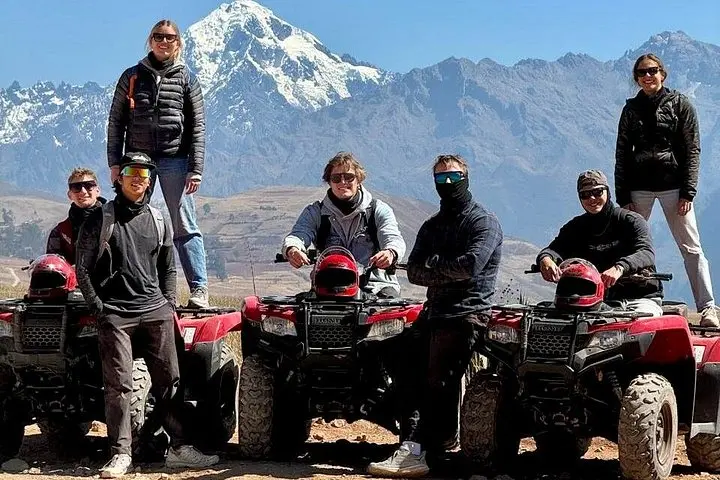
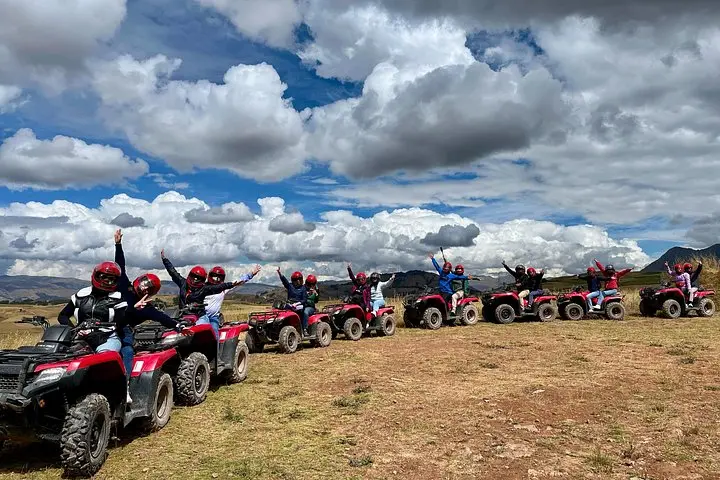
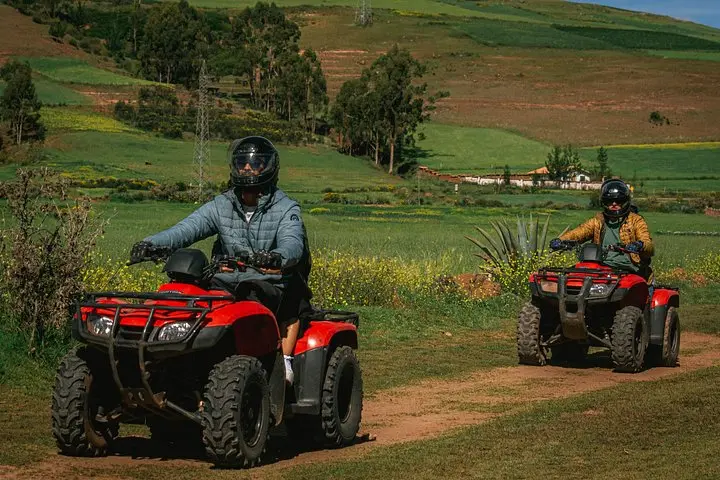
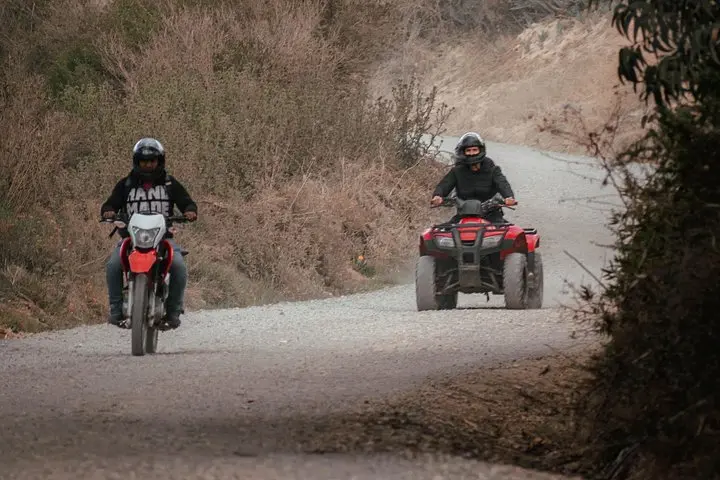
A cold mountain wind cuts across open agricultural terraces as the group straps helmets and gloves at a low base camp just off the valley road. Engines rumble; the first stretch is a gravel ribbon that climbs between tilled fields and small Andean hamlets, giving way to panoramic views of the surrounding Andes before the quads roll into the wide concentric terraces of Moray.
A cold mountain wind cuts across open agricultural terraces as the group straps helmets and gloves at a low base camp just off the valley road. Engines rumble; the first stretch is a gravel ribbon that climbs between tilled fields and small Andean hamlets, giving way to panoramic views of the surrounding Andes before the quads roll into the wide concentric terraces of Moray.
Moray’s circular terraces—engineered by the Inca as microclimates for experimentation—feel both scientific and ceremonial: each stair steps down into a cooler, greener bowl. From there the route threads through rural roads and past stone shepherd huts toward the Salineras de Maras, centuries-old evaporation pools that still feed local families. Geologically the area sits on uplifted Andean foothills with quick transitions from irrigated valley benches to terraced slopes.
Expect a half-day of mixed riding and short walks, guided context about Inca agricultural ingenuity, and a 40-minute visit at Maras to see salt harvesting by hand. Guides handle logistics and safety briefings; riders operate Honda TRX‑style quads on unpaved, sometimes rutted tracks.
Practical guidance: wear a windproof outer layer, closed-toe sturdy boots, and bring sunglasses and sunscreen for the high sun. Hydrate before and during the ride—altitude can sap energy—and listen closely during the vehicle orientation if you are new to ATVs. Morning departures usually offer crisper light and firmer ground; afternoons can be dustier. The experience pairs adrenaline with cultural context, making it a compact way to move off main tourist routes while seeing two of the Sacred Valley’s most iconic sites.