THE ADVENTURE COLLECTIVE® · Independent discovery and booking for outdoor travel

A full-day, private transfer from Safaga Port that compresses Egypt’s highlights into one ambitious itinerary: the Giza Pyramids, the Egyptian Museum’s Tutankhamun treasures and the bustling Khan El Khalili bazaar. Expect a long day with flights, walking on uneven stone, and a taste of Cairo’s layered history.
A full-day, private transfer from Safaga Port that compresses Egypt’s highlights into one ambitious itinerary: the Giza Pyramids, the Egyptian Museum’s Tutankhamun treasures and the bustling Khan El Khalili bazaar. Expect a long day with flights, walking on uneven stone, and a taste of Cairo’s layered history.
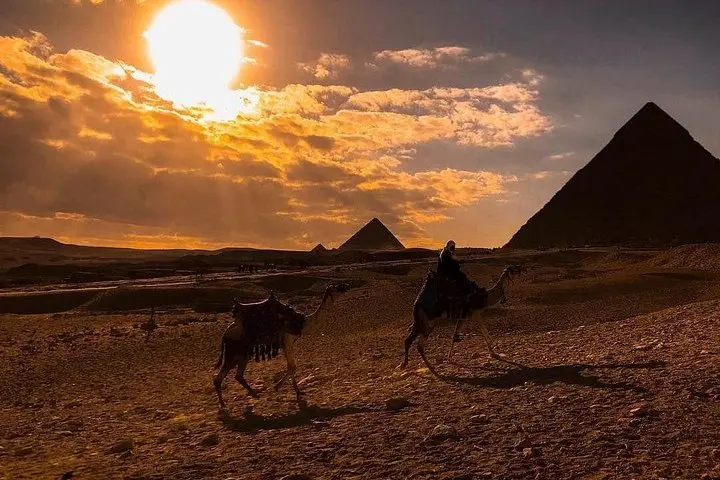
You step off the small ship at Safaga with the desert sun already at work and a private car waiting — the day compresses a thousand years into a single, purposeful journey. The drive and short domestic flight to Cairo peel away the Red Sea coastline and open onto the flat, ochre sweep of the Giza Plateau where three ancient pyramids loom like architectural tides.
Verified experiences and guided adventures in the surrounding area.
Operated by Egyptian Felucca ride On the Nile · Cairo, Cairo Governorate
You step off the small ship at Safaga with the desert sun already at work and a private car waiting — the day compresses a thousand years into a single, purposeful journey. The drive and short domestic flight to Cairo peel away the Red Sea coastline and open onto the flat, ochre sweep of the Giza Plateau where three ancient pyramids loom like architectural tides.
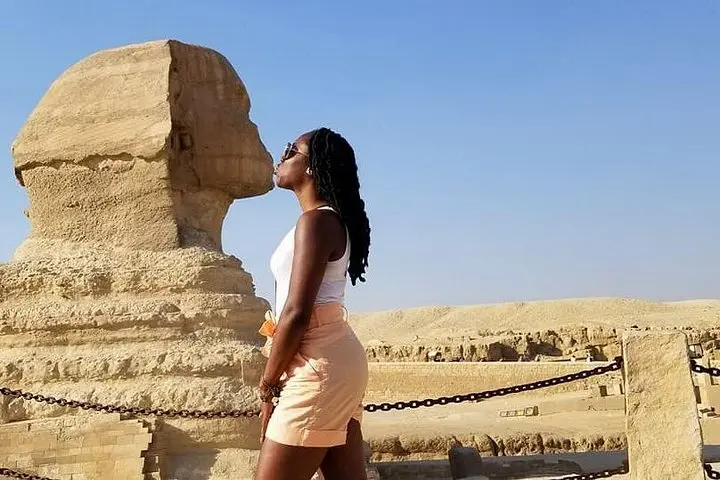
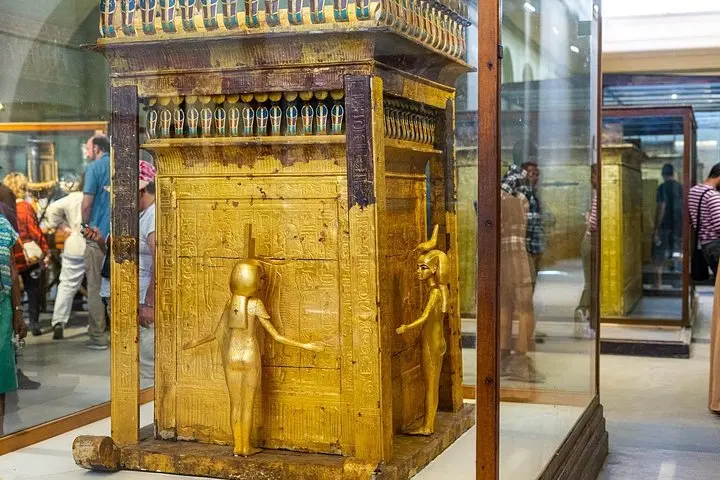
The Great Pyramid of Khufu dates to the Fourth Dynasty (c. 2600 BCE); its stones are limestone and granite quarried locally and ferried into place by skilled ancient logistics. Nearby, Khafre’s complex anchors the Sphinx — a sculpted guardian with a weathered face and lion’s body — while Menkaure’s smaller pyramid offers a quieter sense of scale. In downtown Cairo, the Egyptian Museum houses the gold of Tutankhamun and thousands of artifacts that track millennia of funerary practice and daily life. Khan El Khalili bazaar follows — a living marketplace where copperware, spices, and espresso-stained conversation form a sensory overload that contrasts with the measured silence of the necropolis.
Practical guidance: this is a long, 14‑hour day that mixes walking on uneven stone, short queues, and crowded streets. Wear sturdy walking shoes, sun protection, and carry a photocopy of your passport (the operator requires passport details at booking). Plan to move steadily between sites — camel rides and museum highlights are time-limited — and budget cash for small purchases and gratuities. Hydrate before you arrive, follow your guide’s route instructions at Giza to avoid fragile areas, and save energy for the bazaar’s tight alleys where bargaining becomes its own sport.
Yes — the itinerary includes flights from Hurghada (or transfer point) to Cairo and back as part of the full-day service.
Entry fees are included for the main sites listed, but optional extras (such as entry to the Great Pyramid interior or private rooms) may require additional payment on site.
The tour is family-friendly but involves long transfers and uneven terrain; it is not recommended for travelers with serious spinal, heart conditions or limited mobility.
Expect about 3–4 hours at Giza including the Sphinx, roughly 1–2 hours at the Egyptian Museum, and up to 1 hour for Khan El Khalili, with travel and flight time filling the remainder of the day.
Egyptian Felucca ride On the Nile operates guided outdoor trips and adventures with an emphasis on safety, stewardship, and memorable experiences.

You step off the small ship at Safaga with the desert sun already at work and a private car waiting — the day compresses a thousand years into a single, purposeful journey. The drive and short domestic flight to Cairo peel away the Red Sea coastline and open onto the flat, ochre sweep of the Giza Plateau where three ancient pyramids loom like architectural tides.
You step off the small ship at Safaga with the desert sun already at work and a private car waiting — the day compresses a thousand years into a single, purposeful journey. The drive and short domestic flight to Cairo peel away the Red Sea coastline and open onto the flat, ochre sweep of the Giza Plateau where three ancient pyramids loom like architectural tides.
The Great Pyramid of Khufu dates to the Fourth Dynasty (c. 2600 BCE); its stones are limestone and granite quarried locally and ferried into place by skilled ancient logistics. Nearby, Khafre’s complex anchors the Sphinx — a sculpted guardian with a weathered face and lion’s body — while Menkaure’s smaller pyramid offers a quieter sense of scale. In downtown Cairo, the Egyptian Museum houses the gold of Tutankhamun and thousands of artifacts that track millennia of funerary practice and daily life. Khan El Khalili bazaar follows — a living marketplace where copperware, spices, and espresso-stained conversation form a sensory overload that contrasts with the measured silence of the necropolis.
Practical guidance: this is a long, 14‑hour day that mixes walking on uneven stone, short queues, and crowded streets. Wear sturdy walking shoes, sun protection, and carry a photocopy of your passport (the operator requires passport details at booking). Plan to move steadily between sites — camel rides and museum highlights are time-limited — and budget cash for small purchases and gratuities. Hydrate before you arrive, follow your guide’s route instructions at Giza to avoid fragile areas, and save energy for the bazaar’s tight alleys where bargaining becomes its own sport.