THE ADVENTURE COLLECTIVE® · Independent discovery and booking for outdoor travel

Glide along Kyoto’s Hozugawa River Valley on the Sagano Romantic Train — a slow, 25-minute one-way ride that highlights cherry blossoms, summer green, autumn maples and winter snow. Perfect as a short nature interlude paired with Arashiyama’s temples and riverside walks.
Glide along Kyoto’s Hozugawa River Valley on the Sagano Romantic Train — a slow, 25-minute one-way ride that highlights cherry blossoms, summer green, autumn maples and winter snow. Perfect as a short nature interlude paired with Arashiyama’s temples and riverside walks.
Steam rises faintly from the rail as the carriage slides out of Torokko Saga Station and into a corridor of river, cliff, and forest. In 25 minutes the Sagano Romantic Train pushes through the Hozugawa River Valley, each window framing a different season — cherry blooms brushing the glass in spring, a green tunnel in summer, maple fire in autumn, and white hush in winter.
Verified experiences and guided adventures in the surrounding area.
Operated by FawSha Travels · Kyoto, Kyoto Prefecture
Steam rises faintly from the rail as the carriage slides out of Torokko Saga Station and into a corridor of river, cliff, and forest. In 25 minutes the Sagano Romantic Train pushes through the Hozugawa River Valley, each window framing a different season — cherry blooms brushing the glass in spring, a green tunnel in summer, maple fire in autumn, and white hush in winter.
The line follows a route once used for freight and local travel; its conversion to a sightseeing train repositions industrial-era rails as a way to read the region’s geological story: eroded volcanic and sedimentary beds shaped by the river and seasonal floods. Culturally, the ride complements nearby temples and the Arashiyama district, offering a relaxed vantage point for photographers and families without the climb of nearby trails.
Expect open-air cars on busy days, automatic seat assignments, and a slow, steady pace that favors observation over speed. The ride is one-way — many travelers pair it with a riverside walk or a return by local train or boat. Seats cannot be changed after boarding, tickets are final-sale, and the train enforces quiet-car etiquette and mask guidance to keep the ride pleasant for all.
Practical tips: arrive early to present your mobile ticket and find your assigned seat number, dress for wind in open cars, and bring a compact camera with a polarizing filter for sharp river shots. The route is short but dense with views; plan additional time in Arashiyama or Kameoka to turn the ride into a half-day outing.
Seats are automatically assigned at purchase and while the system attempts to seat groups together, adjacent seats are not guaranteed, especially during busy periods.
No — the Sagano Romantic Train is a one-way scenic service; travelers commonly combine it with a riverside walk, temple visits, or a return on local trains or buses.
Small pets are permitted only if enclosed in a carrier meeting size and weight limits; handlers must ensure animals do not extend beyond the case.
Tickets are final sale and cannot be refunded; date or time changes are not permitted after purchase, though limited seat changes may be allowed up to two days before travel.
FawSha Travels operates guided outdoor trips and adventures with an emphasis on safety, stewardship, and memorable experiences.
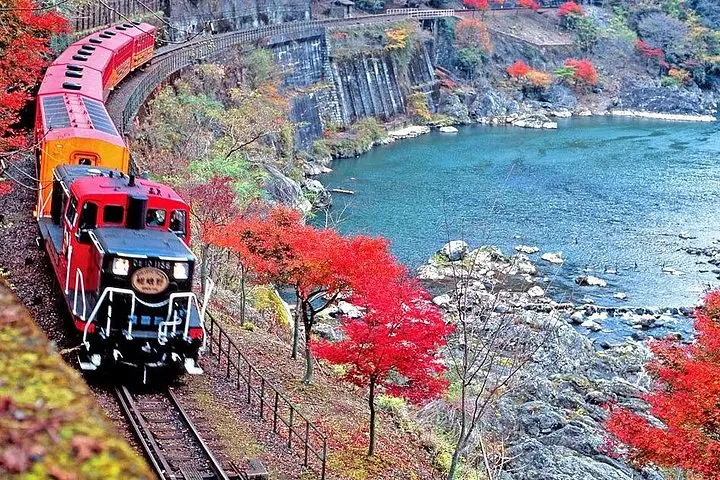
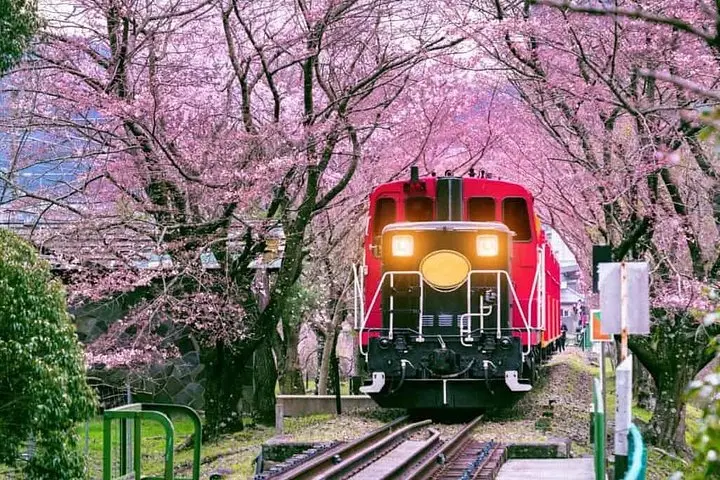
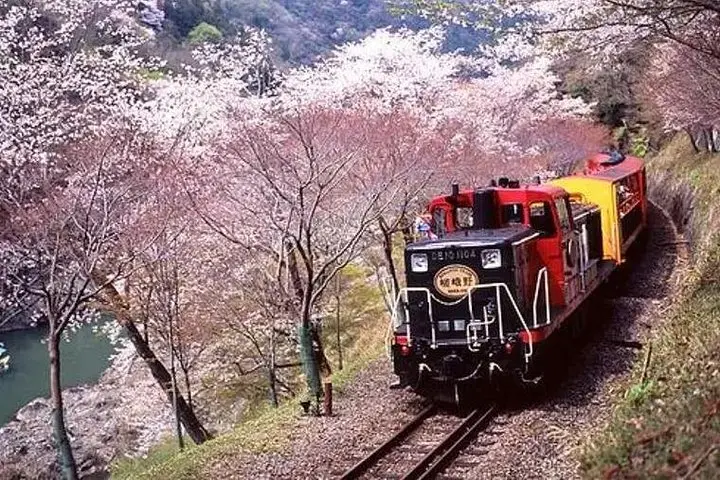
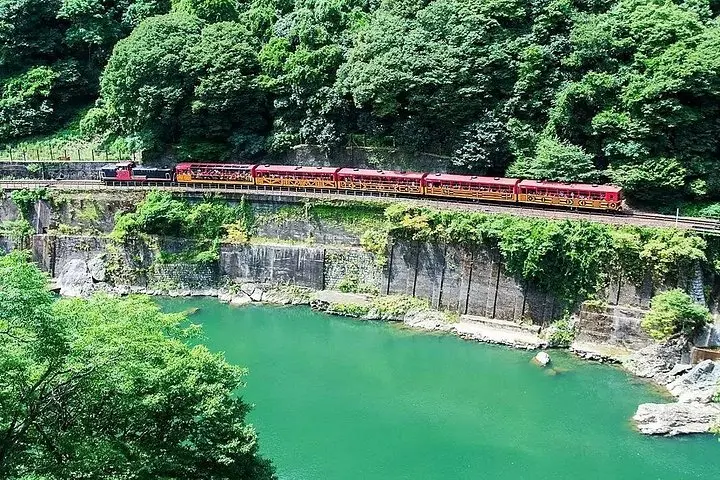
Steam rises faintly from the rail as the carriage slides out of Torokko Saga Station and into a corridor of river, cliff, and forest. In 25 minutes the Sagano Romantic Train pushes through the Hozugawa River Valley, each window framing a different season — cherry blooms brushing the glass in spring, a green tunnel in summer, maple fire in autumn, and white hush in winter.
Steam rises faintly from the rail as the carriage slides out of Torokko Saga Station and into a corridor of river, cliff, and forest. In 25 minutes the Sagano Romantic Train pushes through the Hozugawa River Valley, each window framing a different season — cherry blooms brushing the glass in spring, a green tunnel in summer, maple fire in autumn, and white hush in winter.
The line follows a route once used for freight and local travel; its conversion to a sightseeing train repositions industrial-era rails as a way to read the region’s geological story: eroded volcanic and sedimentary beds shaped by the river and seasonal floods. Culturally, the ride complements nearby temples and the Arashiyama district, offering a relaxed vantage point for photographers and families without the climb of nearby trails.
Expect open-air cars on busy days, automatic seat assignments, and a slow, steady pace that favors observation over speed. The ride is one-way — many travelers pair it with a riverside walk or a return by local train or boat. Seats cannot be changed after boarding, tickets are final-sale, and the train enforces quiet-car etiquette and mask guidance to keep the ride pleasant for all.
Practical tips: arrive early to present your mobile ticket and find your assigned seat number, dress for wind in open cars, and bring a compact camera with a polarizing filter for sharp river shots. The route is short but dense with views; plan additional time in Arashiyama or Kameoka to turn the ride into a half-day outing.