THE ADVENTURE COLLECTIVE® · Independent discovery and booking for outdoor travel

A compact three-day loop from Marrakech to Fez that crosses the High Atlas, Todra Gorge and the Erg Chebbi dunes near Merzouga. Expect long drives, a sunset camel ride, a night in a desert camp and dramatic sunrise views over dunes up to 150 m.
A compact three-day loop from Marrakech to Fez that crosses the High Atlas, Todra Gorge and the Erg Chebbi dunes near Merzouga. Expect long drives, a sunset camel ride, a night in a desert camp and dramatic sunrise views over dunes up to 150 m.
You emerge from the Atlas Mountains as light flattens the landscape and the road narrows to a ribbon of dust; the wind begins to write dunes on the horizon. On this three-day route from Marrakech to Fez, the Sahara announces itself in rippling orange: Erg Chebbi dunes that rise up to about 150 metres and push you into slow, measured steps.
Verified experiences and guided adventures in the surrounding area.
Operated by Sahara Desert Crew · Merzouga, Drâa-Tafilalet
You emerge from the Atlas Mountains as light flattens the landscape and the road narrows to a ribbon of dust; the wind begins to write dunes on the horizon. On this three-day route from Marrakech to Fez, the Sahara announces itself in rippling orange: Erg Chebbi dunes that rise up to about 150 metres and push you into slow, measured steps.
The route traces old caravan corridors and modern roads alike—passes through the High Atlas, through Dades Valley and Todra Gorge, then down to Merzouga and the sea of sand. Geologically, the dunes are recent—wind-sculpted Quaternary sands that shift with seasonal storms—while culturally the towns en route are Berber strongholds where date palms and kasbahs mark long human occupation and trans-Saharan trade.
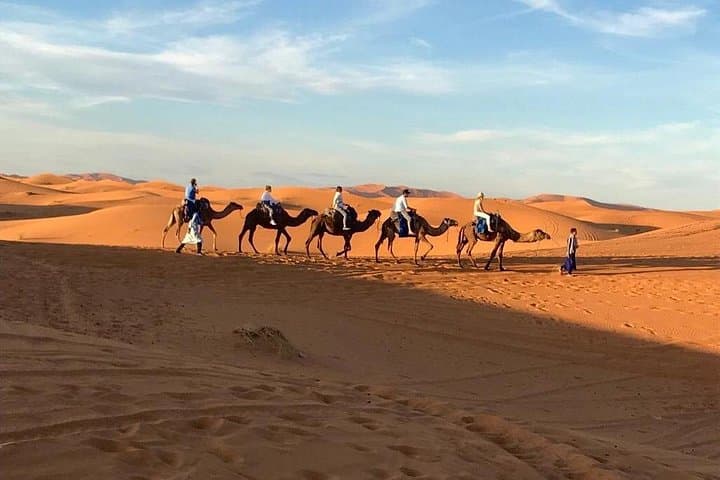
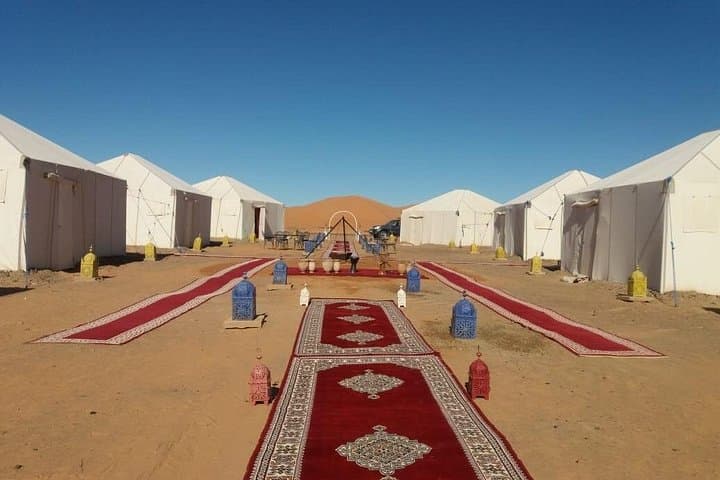
Expect long drives broken by photo stops: fortified ksars, rose-product stalls near Skoura, the narrow orange walls of Todra for a canyon walk, then a dusk camel ride into a desert camp. Nights get cold—clear skies and low humidity make for dramatic stars—and the temporary camps are low-impact, often with local music and shared dinners.
Practical guidance: pack layered clothing for hot days and cold nights, carry 2–3 liters of water per person, and schedule your dune walk for sunrise or sunset to avoid peak heat. Footwear should handle sand and occasional rocky trails; bring a daypack and a headlamp. If you have limited time, this loop is a compact, accessible way to sample Morocco’s landscapes and cultural highlights without technical skills.
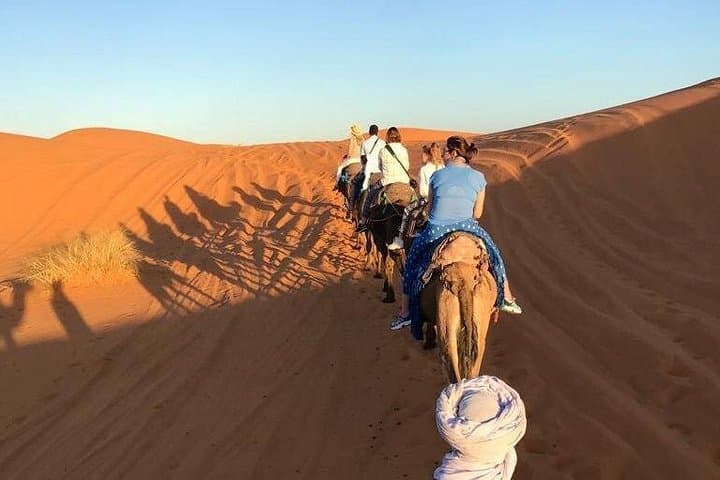
Camel treks are typically about 60–90 minutes from the edge of Erg Chebbi to the camp, timed to arrive at sunset.
Yes—most camps offer shared or private tents with mattresses, blankets, and a communal dining area; facilities are simple but comfortable.
The operator allows children but infants must sit on laps for transport; discuss specifics with your provider if traveling with young children.
Yes—small vendors, local guides, tips, and remote services commonly accept cash (Moroccan dirham); ATMs are limited outside major towns.
Sahara Desert Crew operates guided outdoor trips and adventures with an emphasis on safety, stewardship, and memorable experiences.
You emerge from the Atlas Mountains as light flattens the landscape and the road narrows to a ribbon of dust; the wind begins to write dunes on the horizon. On this three-day route from Marrakech to Fez, the Sahara announces itself in rippling orange: Erg Chebbi dunes that rise up to about 150 metres and push you into slow, measured steps.
You emerge from the Atlas Mountains as light flattens the landscape and the road narrows to a ribbon of dust; the wind begins to write dunes on the horizon. On this three-day route from Marrakech to Fez, the Sahara announces itself in rippling orange: Erg Chebbi dunes that rise up to about 150 metres and push you into slow, measured steps.
The route traces old caravan corridors and modern roads alike—passes through the High Atlas, through Dades Valley and Todra Gorge, then down to Merzouga and the sea of sand. Geologically, the dunes are recent—wind-sculpted Quaternary sands that shift with seasonal storms—while culturally the towns en route are Berber strongholds where date palms and kasbahs mark long human occupation and trans-Saharan trade.
Expect long drives broken by photo stops: fortified ksars, rose-product stalls near Skoura, the narrow orange walls of Todra for a canyon walk, then a dusk camel ride into a desert camp. Nights get cold—clear skies and low humidity make for dramatic stars—and the temporary camps are low-impact, often with local music and shared dinners.
Practical guidance: pack layered clothing for hot days and cold nights, carry 2–3 liters of water per person, and schedule your dune walk for sunrise or sunset to avoid peak heat. Footwear should handle sand and occasional rocky trails; bring a daypack and a headlamp. If you have limited time, this loop is a compact, accessible way to sample Morocco’s landscapes and cultural highlights without technical skills.