THE ADVENTURE COLLECTIVE® · Independent discovery and booking for outdoor travel

Head inland from Djerba for three days of palm oases, troglodyte villages and desert nights. This guided route mixes easy walks, a camel trek and two nights camping beneath vast North African skies.
Head inland from Djerba for three days of palm oases, troglodyte villages and desert nights. This guided route mixes easy walks, a camel trek and two nights camping beneath vast North African skies.
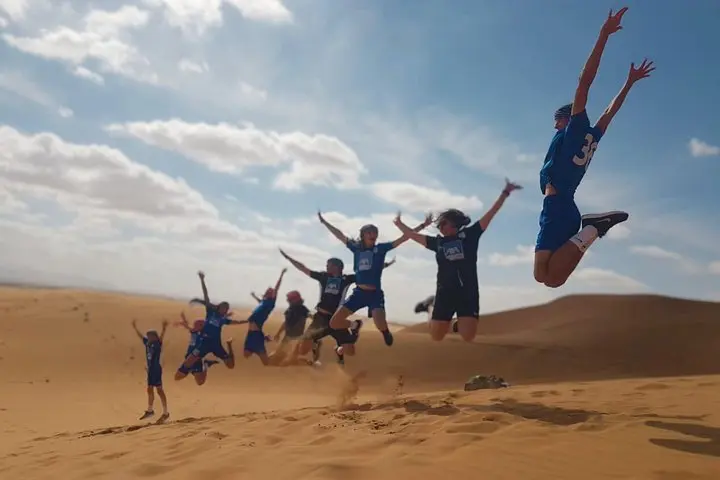
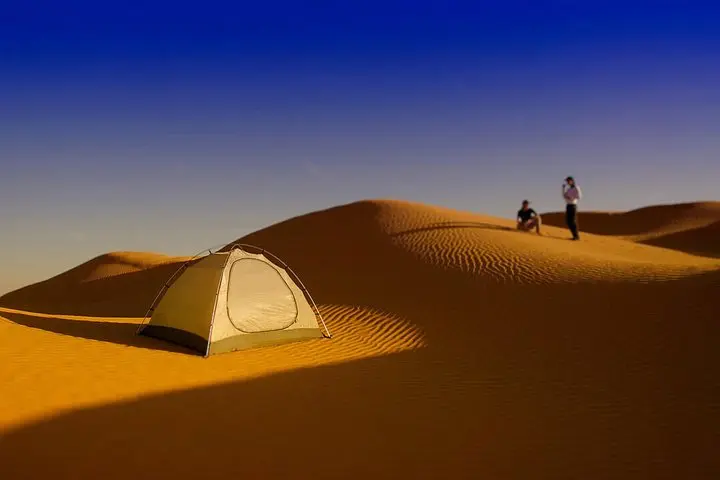
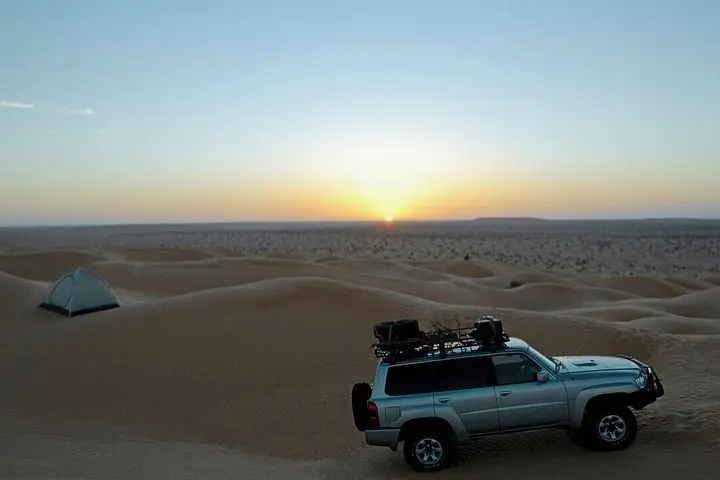
Morning light on Djerba slices across palms and whitewashed houses; the minarets recede and the road opens toward silence. Vehicles roll off the island and into an expanse where salt flats glint like old coins and the Dahar ridges rise, dry and angular. By late afternoon the palm-fringed lagoon of Ksar Ghilane appears—an oasis that offers cool refuge while dunes beyond shift and breathe under wind.
Verified experiences and guided adventures in the surrounding area.
Operated by Vacances Promo Tunisie · Houmt Souk, Medenine
Morning light on Djerba slices across palms and whitewashed houses; the minarets recede and the road opens toward silence. Vehicles roll off the island and into an expanse where salt flats glint like old coins and the Dahar ridges rise, dry and angular. By late afternoon the palm-fringed lagoon of Ksar Ghilane appears—an oasis that offers cool refuge while dunes beyond shift and breathe under wind.
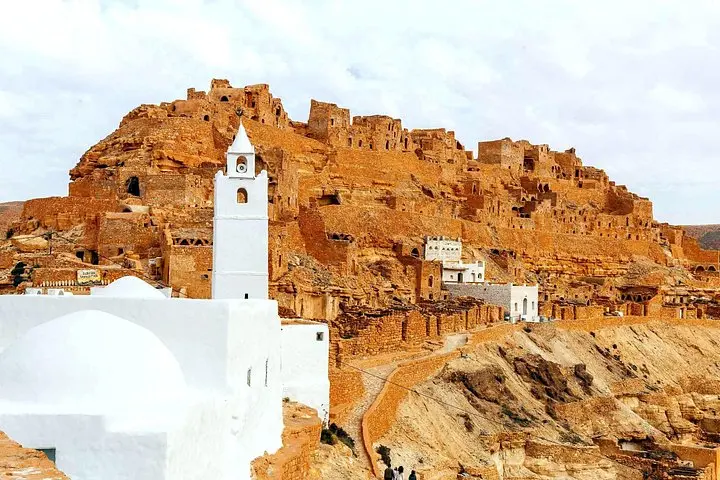
This itinerary threads Berber history, geology and cinema: Tataouine’s markets and Chenini’s troglodyte architecture speak to centuries of mountain farming and adaptive masonry, while Matmata’s subterranean homes reveal a vernacular carved into Miocene-era limestone. The landscape is primarily sand plains, interdune corridors and low rocky escarpments; expect minimal elevation change but frequent loose sand and rocky ledges when visiting hilltop villages.
Practically, the trip runs three days of mostly vehicle travel punctuated by short hikes, a camel ride and a night under canvas at a desert camp. Travel windows favor mornings and late afternoons to avoid midday heat; nights can drop sharply, so insulating layers matter. Hydration and sun protection are non-negotiable: the desert’s dry air dehydrates faster than you feel.
Participants should plan for modest physical effort—walking on uneven sand, stepping up into traditional dwellings, and brief climbs to viewpoints. Local guides handle logistics, meals and camp setup, so travelers can focus on landscape and cultural exchange. Bring durable footwear, a reliable daypack, and a camera—the dunes and star-filled night skies are the main draw, and the route balances spectacle with accessible, well-supported desert travel.
Yes for older children used to travel, but infants must sit on a lap and the schedule includes long vehicle transfers and overnight tents that may be uncomfortable for very young kids.
Coverage is intermittent in remote stretches—expect limited signal near oases and none deep in dunes; download maps and inform guides of health needs beforehand.
Camel rides are short and guided; they require basic balance and the ability to mount/dismount with assistance but are not technically difficult.
Arabic and Tunisian Arabic are common; guides often speak French and some English—basic French or translation apps are helpful.
Vacances Promo Tunisie operates guided outdoor trips and adventures with an emphasis on safety, stewardship, and memorable experiences.
Morning light on Djerba slices across palms and whitewashed houses; the minarets recede and the road opens toward silence. Vehicles roll off the island and into an expanse where salt flats glint like old coins and the Dahar ridges rise, dry and angular. By late afternoon the palm-fringed lagoon of Ksar Ghilane appears—an oasis that offers cool refuge while dunes beyond shift and breathe under wind.
Morning light on Djerba slices across palms and whitewashed houses; the minarets recede and the road opens toward silence. Vehicles roll off the island and into an expanse where salt flats glint like old coins and the Dahar ridges rise, dry and angular. By late afternoon the palm-fringed lagoon of Ksar Ghilane appears—an oasis that offers cool refuge while dunes beyond shift and breathe under wind.
This itinerary threads Berber history, geology and cinema: Tataouine’s markets and Chenini’s troglodyte architecture speak to centuries of mountain farming and adaptive masonry, while Matmata’s subterranean homes reveal a vernacular carved into Miocene-era limestone. The landscape is primarily sand plains, interdune corridors and low rocky escarpments; expect minimal elevation change but frequent loose sand and rocky ledges when visiting hilltop villages.
Practically, the trip runs three days of mostly vehicle travel punctuated by short hikes, a camel ride and a night under canvas at a desert camp. Travel windows favor mornings and late afternoons to avoid midday heat; nights can drop sharply, so insulating layers matter. Hydration and sun protection are non-negotiable: the desert’s dry air dehydrates faster than you feel.
Participants should plan for modest physical effort—walking on uneven sand, stepping up into traditional dwellings, and brief climbs to viewpoints. Local guides handle logistics, meals and camp setup, so travelers can focus on landscape and cultural exchange. Bring durable footwear, a reliable daypack, and a camera—the dunes and star-filled night skies are the main draw, and the route balances spectacle with accessible, well-supported desert travel.