THE ADVENTURE COLLECTIVE® · Independent discovery and booking for outdoor travel

Two days across southern Tunisia move from Roman grandeur to salt flats and starry desert nights. Expect dramatic sunrises at Chott el Jerid, troglodyte homes in Matmata, and the dune-carved outskirts of Ong Jemal by 4x4.
Two days across southern Tunisia move from Roman grandeur to salt flats and starry desert nights. Expect dramatic sunrises at Chott el Jerid, troglodyte homes in Matmata, and the dune-carved outskirts of Ong Jemal by 4x4.
Morning light strips the eastern horizon as your convoy slips out of Tunis and the road opens toward an older world. By mid-morning the Roman amphitheatre at El Jem rises like a fossilized arena, stone tiers catching the sun as if preparing for an unseen crowd. Later, the ground softens into ochre and rock: Matmata’s troglodyte homes appear as hollowed scars in the hillside, cool and dignified against the heat.
Verified experiences and guided adventures in the surrounding area.
Operated by TUNISIVISION · Douz, Kebili
Morning light strips the eastern horizon as your convoy slips out of Tunis and the road opens toward an older world. By mid-morning the Roman amphitheatre at El Jem rises like a fossilized arena, stone tiers catching the sun as if preparing for an unseen crowd. Later, the ground softens into ochre and rock: Matmata’s troglodyte homes appear as hollowed scars in the hillside, cool and dignified against the heat.
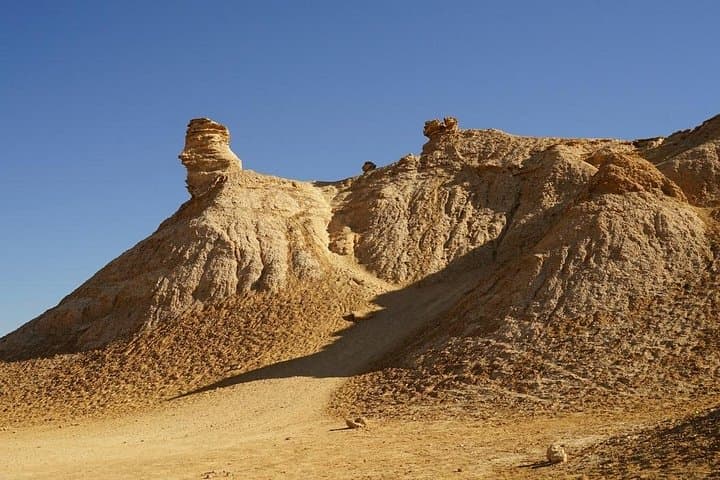
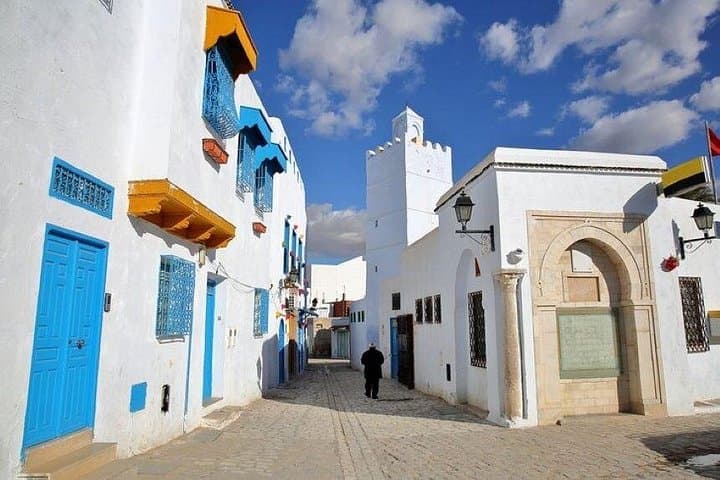
This route moves from imperial ruins to desert engineering. El Jem reflects Rome’s reach into North Africa; Kairouan, visited on day two, anchors the region’s Islamic and craft traditions. Geologically the landscape is dominated by the Saharan platform and Chott el Jerid, a vast salt pan whose crust and brine play tricks with distance at sunrise. Chebika’s palms and springs betray an underground water table that has sustained oasis life for centuries, while Ong Jemal’s dunes and rock outcrops provided the otherworldly backdrop that caught a filmmaker’s eye.
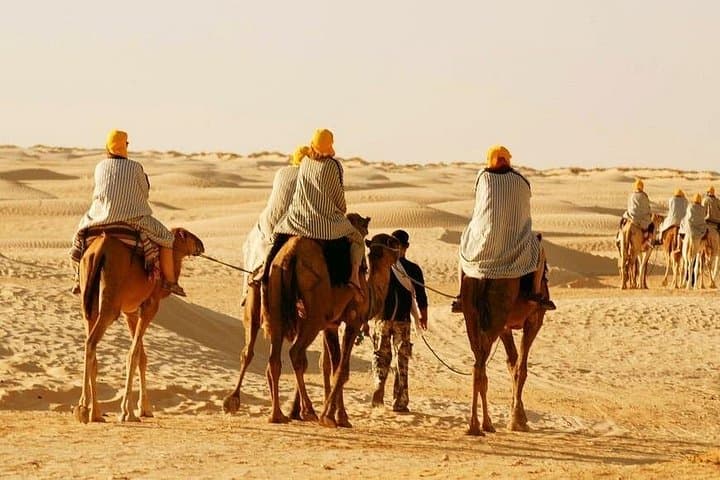
Expect long scenic drives broken by short walks — amphitheatre steps, cave interiors, short oasis trails, and dune viewpoints reached by 4x4. The desert exerts a simple set of demands: hydrate often, protect skin and eyes from reflected light, and pace yourself between stops.
Practical notes: most travel is by private vehicle with one night in Douz; moderate fitness is sufficient. Sunrise at Chott el Jerid is the photographic high point, and local guides make sense of routes, routes and risks. Pack sun protection, sturdy shoes, and a sense of curiosity—the Sahara will press its silence around you and keep a little of your attention long after you leave.
Most departures originate from Tunis with return to your pickup point; the itinerary covers El Jem, Matmata, Douz, Chott el Jerid, Chebika, Ong Jemal, and Kairouan over two days.
The package includes one night in a 4-star hotel in Douz on HB (half board); some evenings may include traditional dinner and local music.
Yes—entrance fees to listed sites and two lunches are included, along with breakfast and dinner as specified in the itinerary.
Children from 2 years old are accepted, but the tour involves vehicle transfers and short walks on uneven ground; it’s not recommended for travelers with serious mobility, heart, or spinal issues.
TUNISIVISION operates guided outdoor trips and adventures with an emphasis on safety, stewardship, and memorable experiences.
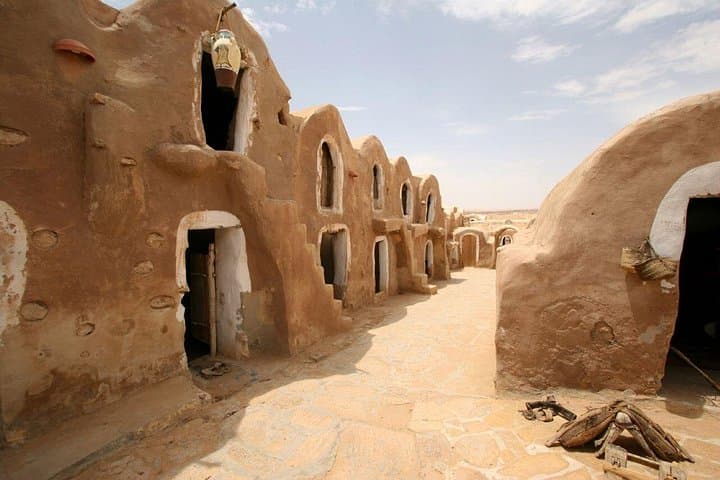
Morning light strips the eastern horizon as your convoy slips out of Tunis and the road opens toward an older world. By mid-morning the Roman amphitheatre at El Jem rises like a fossilized arena, stone tiers catching the sun as if preparing for an unseen crowd. Later, the ground softens into ochre and rock: Matmata’s troglodyte homes appear as hollowed scars in the hillside, cool and dignified against the heat.
Morning light strips the eastern horizon as your convoy slips out of Tunis and the road opens toward an older world. By mid-morning the Roman amphitheatre at El Jem rises like a fossilized arena, stone tiers catching the sun as if preparing for an unseen crowd. Later, the ground softens into ochre and rock: Matmata’s troglodyte homes appear as hollowed scars in the hillside, cool and dignified against the heat.
This route moves from imperial ruins to desert engineering. El Jem reflects Rome’s reach into North Africa; Kairouan, visited on day two, anchors the region’s Islamic and craft traditions. Geologically the landscape is dominated by the Saharan platform and Chott el Jerid, a vast salt pan whose crust and brine play tricks with distance at sunrise. Chebika’s palms and springs betray an underground water table that has sustained oasis life for centuries, while Ong Jemal’s dunes and rock outcrops provided the otherworldly backdrop that caught a filmmaker’s eye.
Expect long scenic drives broken by short walks — amphitheatre steps, cave interiors, short oasis trails, and dune viewpoints reached by 4x4. The desert exerts a simple set of demands: hydrate often, protect skin and eyes from reflected light, and pace yourself between stops.
Practical notes: most travel is by private vehicle with one night in Douz; moderate fitness is sufficient. Sunrise at Chott el Jerid is the photographic high point, and local guides make sense of routes, routes and risks. Pack sun protection, sturdy shoes, and a sense of curiosity—the Sahara will press its silence around you and keep a little of your attention long after you leave.