THE ADVENTURE COLLECTIVE® · Independent discovery and booking for outdoor travel

Cross the high Tizi n’Tichka pass, explore the UNESCO clay kasbah of Ait Ben Haddou, then step into the filmic landscapes of Ouarzazate. This long day from Marrakech combines geological drama, living history and behind‑the‑scenes movie heritage.
Cross the high Tizi n’Tichka pass, explore the UNESCO clay kasbah of Ait Ben Haddou, then step into the filmic landscapes of Ouarzazate. This long day from Marrakech combines geological drama, living history and behind‑the‑scenes movie heritage.
By first light the Atlas foothills shape the horizon and the road climbs toward Tizi n’Tichka, where switchbacks carve across 2,260 meters of wind‑scarred limestone and the air thins into clear, sharp light.
Verified experiences and guided adventures in the surrounding area.
Operated by Travel Expert Queen · Ouarzazate, Drâa-Tafilalet
By first light the Atlas foothills shape the horizon and the road climbs toward Tizi n’Tichka, where switchbacks carve across 2,260 meters of wind‑scarred limestone and the air thins into clear, sharp light.
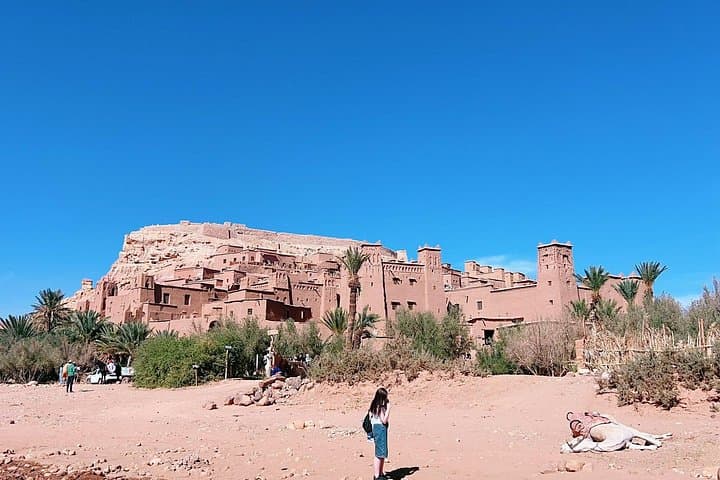
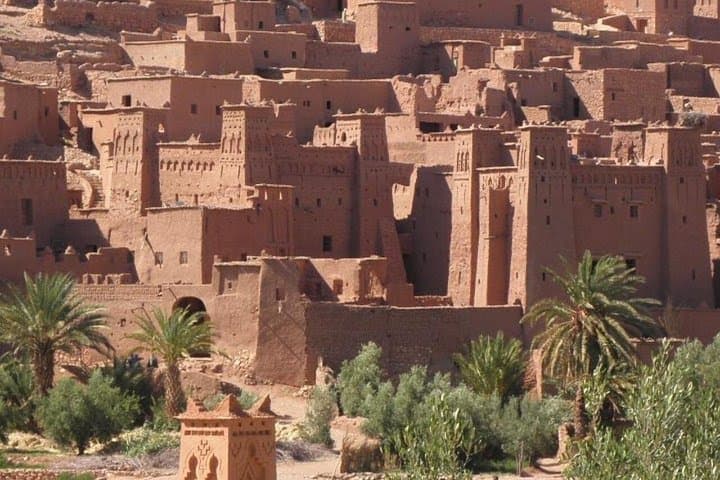
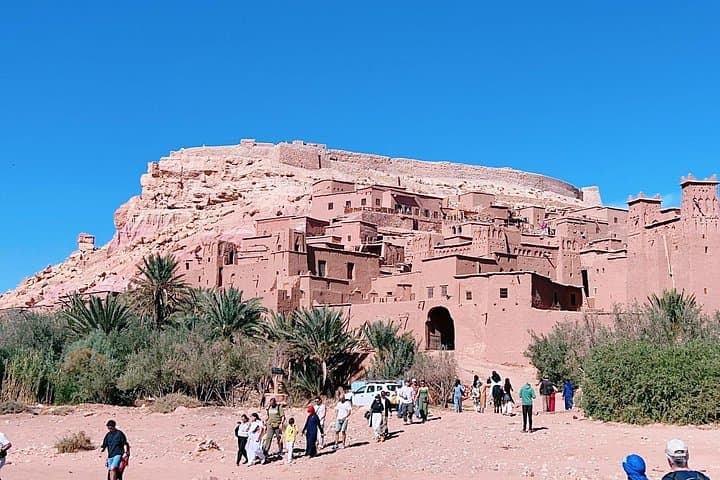
This full‑day run from Marrakech (roughly 200 km each way with scenic stops) moves quickly from red city bustle into the ochre world of southern Morocco. Ait Ben Haddou’s ksar—its sun‑baked clay walls and narrow alleys—stands as a living example of earthen architecture and a backdrop to many films; the village sits where trans‑Saharan trade routes once funneled salt, dates and stories. Ouarzazate, a short drive away, grew from a caravan outpost into a modern film hub thanks to light, landscape and wide horizons that directors favor.
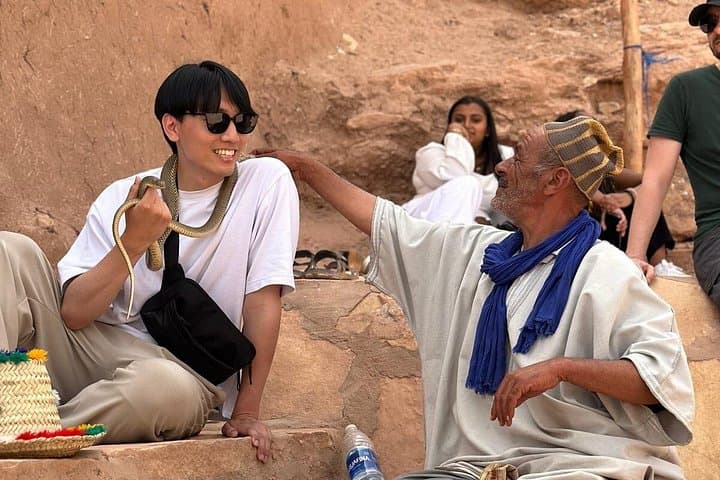
Geology here is honest and clear: folding rock, alluvial fans and desert steppe give way to irrigated oases. Local culture is Berber and Arabic, visible in kasbah decoration, souk crafts and the slow ritual of mint tea. Film studios add a modern layer—props, sets and echoes of on‑screen epics.
Practical guidance: expect a long day in the vehicle with three to four hours of walking and standing while touring; surfaces range from cobbled lanes to compacted dirt. Start early to beat midday heat, bring layered clothing for the high pass, carry at least 1.5–2 liters of water, and have cash for smaller shops and entrance fees. Footwear with ankle support is useful for uneven kasbah paths. Cameras are welcome—sunrise and late afternoon offer the best light—while respect for private homes and artisan spaces keeps the visit authentic.
The trip departs from Marrakech with hotel pickup and returns to Marrakech the same evening—confirm your pickup point when booking.
Walking is moderate: short guided walks around the ksar and kasbah, usually on uneven cobbles and dirt paths; most time is spent in a comfortable vehicle.
Lunch and some admissions (e.g., film studio entry) are often not included—check the operator’s inclusions and carry cash for extras.
The pass is generally passable but can see snow or ice; operators monitor conditions—ask about cancellations or alternative routing if traveling in winter.
Travel Expert Queen operates guided outdoor trips and adventures with an emphasis on safety, stewardship, and memorable experiences.
By first light the Atlas foothills shape the horizon and the road climbs toward Tizi n’Tichka, where switchbacks carve across 2,260 meters of wind‑scarred limestone and the air thins into clear, sharp light.
By first light the Atlas foothills shape the horizon and the road climbs toward Tizi n’Tichka, where switchbacks carve across 2,260 meters of wind‑scarred limestone and the air thins into clear, sharp light.
This full‑day run from Marrakech (roughly 200 km each way with scenic stops) moves quickly from red city bustle into the ochre world of southern Morocco. Ait Ben Haddou’s ksar—its sun‑baked clay walls and narrow alleys—stands as a living example of earthen architecture and a backdrop to many films; the village sits where trans‑Saharan trade routes once funneled salt, dates and stories. Ouarzazate, a short drive away, grew from a caravan outpost into a modern film hub thanks to light, landscape and wide horizons that directors favor.
Geology here is honest and clear: folding rock, alluvial fans and desert steppe give way to irrigated oases. Local culture is Berber and Arabic, visible in kasbah decoration, souk crafts and the slow ritual of mint tea. Film studios add a modern layer—props, sets and echoes of on‑screen epics.
Practical guidance: expect a long day in the vehicle with three to four hours of walking and standing while touring; surfaces range from cobbled lanes to compacted dirt. Start early to beat midday heat, bring layered clothing for the high pass, carry at least 1.5–2 liters of water, and have cash for smaller shops and entrance fees. Footwear with ankle support is useful for uneven kasbah paths. Cameras are welcome—sunrise and late afternoon offer the best light—while respect for private homes and artisan spaces keeps the visit authentic.