THE ADVENTURE COLLECTIVE® · Independent discovery and booking for outdoor travel

Cross dune seas and wadi-carved rockscapes on an eight-day private stay based in Djanet. Guided by Tuareg hosts, this trip blends light hikes, 4x4 crossings and bivouac nights beneath commanding Saharan skies.
Cross dune seas and wadi-carved rockscapes on an eight-day private stay based in Djanet. Guided by Tuareg hosts, this trip blends light hikes, 4x4 crossings and bivouac nights beneath commanding Saharan skies.
The sun leans low and the wind writes new ribs on the dune as your convoy slides off a track into open sand. A Tuareg guide signals, camels graze like dark punctuation, and a line of ochre tents waits where heat and night meet. Over the next eight days you trade asphalt for wadi, following carved rock arches and petroglyphs that watch the horizon.
Verified experiences and guided adventures in the surrounding area.
Operated by Freedom Travel Algeria · Djanet, Illizi Province
The sun leans low and the wind writes new ribs on the dune as your convoy slides off a track into open sand. A Tuareg guide signals, camels graze like dark punctuation, and a line of ochre tents waits where heat and night meet. Over the next eight days you trade asphalt for wadi, following carved rock arches and petroglyphs that watch the horizon.
This route moves through the Tadrart edges around Djanet — a landscape shaped by wind-sculpted sandstone, ancient river beds and pockets of guelta where water clings. Millennia-old engravings at Oued In Djaren and Ouan Zaouaten recall a time when the Sahara supported savannah herds; today those images stitch culture and geology together. The Tuareg people remain the living thread, sharing campfire stories and practical knowledge of navigation, water conservation and desert etiquette.
Expect a mix of light hikes, dune crossings and 4x4 transfers: Tin Amali bivouacs, Moul Naga’s sea of sand, the hedgehog rock at Bouhedianla, the caves of Imesnougua and the red-tinged dunes of Tin Merzouga. Nights are cold and crystalline; days are brutally bright.
Practical guidance: fly into Djanet (internal flight recommended), bring layered clothing for temperature swings, at least 3–4 liters of water per day, sun protection, sturdy boots and a headlamp. Travel paced by golden hours makes photography and cooler walking possible. Respect local customs, follow guides’ directions in fragile rock-art sites, and pack out waste — the desert keeps what you leave.
Most travelers fly from Algiers to Djanet on an internal flight included in the tour; confirm times and baggage rules when you book.
No specialized fitness is required, but expect walking on sand and uneven rock for up to a few hours daily and altitude is not a factor.
Accommodations are in desert bivouacs (tents) each night, with communal meals; the itinerary lists which nights are spent under canvas.
Yes — Tuareg guides and a support team lead navigation, cultural orientation and camp logistics throughout the trip.
Freedom Travel Algeria operates guided outdoor trips and adventures with an emphasis on safety, stewardship, and memorable experiences.
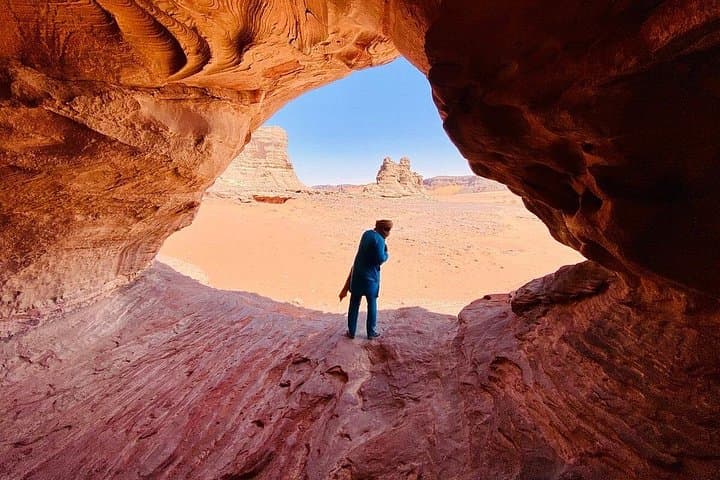


The sun leans low and the wind writes new ribs on the dune as your convoy slides off a track into open sand. A Tuareg guide signals, camels graze like dark punctuation, and a line of ochre tents waits where heat and night meet. Over the next eight days you trade asphalt for wadi, following carved rock arches and petroglyphs that watch the horizon.
The sun leans low and the wind writes new ribs on the dune as your convoy slides off a track into open sand. A Tuareg guide signals, camels graze like dark punctuation, and a line of ochre tents waits where heat and night meet. Over the next eight days you trade asphalt for wadi, following carved rock arches and petroglyphs that watch the horizon.
This route moves through the Tadrart edges around Djanet — a landscape shaped by wind-sculpted sandstone, ancient river beds and pockets of guelta where water clings. Millennia-old engravings at Oued In Djaren and Ouan Zaouaten recall a time when the Sahara supported savannah herds; today those images stitch culture and geology together. The Tuareg people remain the living thread, sharing campfire stories and practical knowledge of navigation, water conservation and desert etiquette.
Expect a mix of light hikes, dune crossings and 4x4 transfers: Tin Amali bivouacs, Moul Naga’s sea of sand, the hedgehog rock at Bouhedianla, the caves of Imesnougua and the red-tinged dunes of Tin Merzouga. Nights are cold and crystalline; days are brutally bright.
Practical guidance: fly into Djanet (internal flight recommended), bring layered clothing for temperature swings, at least 3–4 liters of water per day, sun protection, sturdy boots and a headlamp. Travel paced by golden hours makes photography and cooler walking possible. Respect local customs, follow guides’ directions in fragile rock-art sites, and pack out waste — the desert keeps what you leave.