THE ADVENTURE COLLECTIVE® · Independent discovery and booking for outdoor travel

Cross oases, kasbahs and valleys on a two-day route from Ouarzazate to the towering dunes of Erg Chebbi. Expect a sunset camel ride, a luxury Berber camp under brilliant stars, and insight into caravan-era culture.
Cross oases, kasbahs and valleys on a two-day route from Ouarzazate to the towering dunes of Erg Chebbi. Expect a sunset camel ride, a luxury Berber camp under brilliant stars, and insight into caravan-era culture.
The sun slides low over orange ridges as a caravan of camels casts long, slow shadows across Erg Chebbi. Sand softens with every step; wind-carved ripples catch the light and the distant outline of a ksar (fortified village) appears, punctuating the flat horizon. This two-day journey moves from the fortified lanes of Ouarzazate across palm-lined oases and red-rock valleys to the cathedral-like dunes of Merzouga.
Verified experiences and guided adventures in the surrounding area.
The sun slides low over orange ridges as a caravan of camels casts long, slow shadows across Erg Chebbi. Sand softens with every step; wind-carved ripples catch the light and the distant outline of a ksar (fortified village) appears, punctuating the flat horizon. This two-day journey moves from the fortified lanes of Ouarzazate across palm-lined oases and red-rock valleys to the cathedral-like dunes of Merzouga.
Geologically, Erg Chebbi is a moving sea of sand formed by millennia of erosion and wind transport, sitting on ancient riverbeds that once carried Atlas runoff to the Sahara. Culturally, the route traces caravan trails used for salt and spice trade; kasbahs and nomad camps speak to Berber hospitality. Evenings are communal: tajine, drums, and guestrooms of canvas elevated into luxury Berber camps where stars read like a map.
Practically, expect long drives on paved roads punctuated by short hikes and a sunset camel ride into camp. Temperatures swing—hot days and cool nights—so layer. Hydration and sun protection are non-negotiable; guides handle logistics from camel handlers to camp setup, but independent travel skills like basic pack organization and respectful dress help the rhythm of the trip.
Timing matters: sunsets and dawns are the day's highlights, and the dunes are best explored when wind calms. Cameras, a headlamp, and a small daypack keep gear manageable. The experience balances comfortable sleeping arrangements with authentic desert travel: walking dunes, meeting local guides, and sleeping beneath an enormous, patient sky.
Camel rides are generally gentle; rides are slow and rhythmic, but mounting and dismounting can require balance—ask guides for assistance.
Most operators transfer larger suitcases by vehicle; bring a small, soft overnight bag for camp as vehicles may be limited at the dunes.
Luxury Berber camps typically provide mattress bedding, blankets, and private wash facilities or shared camp toilets—expect rustic comfort rather than hotel service.
With a licensed guide and camp operator, night activities are managed safely; avoid solo walks after dark due to navigation and temperature risks.
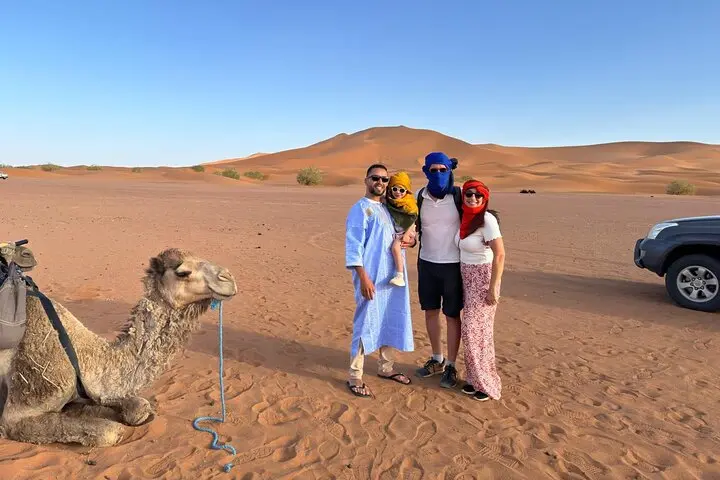
The sun slides low over orange ridges as a caravan of camels casts long, slow shadows across Erg Chebbi. Sand softens with every step; wind-carved ripples catch the light and the distant outline of a ksar (fortified village) appears, punctuating the flat horizon. This two-day journey moves from the fortified lanes of Ouarzazate across palm-lined oases and red-rock valleys to the cathedral-like dunes of Merzouga.
The sun slides low over orange ridges as a caravan of camels casts long, slow shadows across Erg Chebbi. Sand softens with every step; wind-carved ripples catch the light and the distant outline of a ksar (fortified village) appears, punctuating the flat horizon. This two-day journey moves from the fortified lanes of Ouarzazate across palm-lined oases and red-rock valleys to the cathedral-like dunes of Merzouga.
Geologically, Erg Chebbi is a moving sea of sand formed by millennia of erosion and wind transport, sitting on ancient riverbeds that once carried Atlas runoff to the Sahara. Culturally, the route traces caravan trails used for salt and spice trade; kasbahs and nomad camps speak to Berber hospitality. Evenings are communal: tajine, drums, and guestrooms of canvas elevated into luxury Berber camps where stars read like a map.
Practically, expect long drives on paved roads punctuated by short hikes and a sunset camel ride into camp. Temperatures swing—hot days and cool nights—so layer. Hydration and sun protection are non-negotiable; guides handle logistics from camel handlers to camp setup, but independent travel skills like basic pack organization and respectful dress help the rhythm of the trip.
Timing matters: sunsets and dawns are the day's highlights, and the dunes are best explored when wind calms. Cameras, a headlamp, and a small daypack keep gear manageable. The experience balances comfortable sleeping arrangements with authentic desert travel: walking dunes, meeting local guides, and sleeping beneath an enormous, patient sky.