THE ADVENTURE COLLECTIVE® · Independent discovery and booking for outdoor travel

Walk through western Guangzhou’s Sai Kwan (Xiguan) neighborhood on a five-hour tour that pairs Lingnan architecture and colonial-era streets with local Cantonese tastings. Expect markets, a Taoist temple, Shamian Island and hands-on cultural insights.
Walk through western Guangzhou’s Sai Kwan (Xiguan) neighborhood on a five-hour tour that pairs Lingnan architecture and colonial-era streets with local Cantonese tastings. Expect markets, a Taoist temple, Shamian Island and hands-on cultural insights.
You step off the Metro into a lane where Cantonese voices and the scent of steaming dim sum meet faded plaster and carved wooden balconies. This five-hour Sai Kwan (Xiguan) walking tour threads through western Guangzhou’s old town — from the leafy promenades of Shamian Island to the crowded stalls of Shangxiajiu — and places food tasting at the center of local life.
Verified experiences and guided adventures in the surrounding area.
Operated by Janvi Off The Beaten Path Tours · Guangzhou, Guangdong
You step off the Metro into a lane where Cantonese voices and the scent of steaming dim sum meet faded plaster and carved wooden balconies. This five-hour Sai Kwan (Xiguan) walking tour threads through western Guangzhou’s old town — from the leafy promenades of Shamian Island to the crowded stalls of Shangxiajiu — and places food tasting at the center of local life.
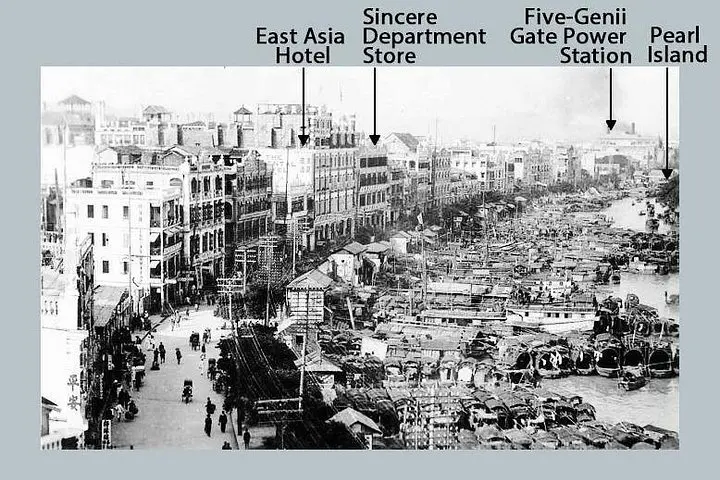
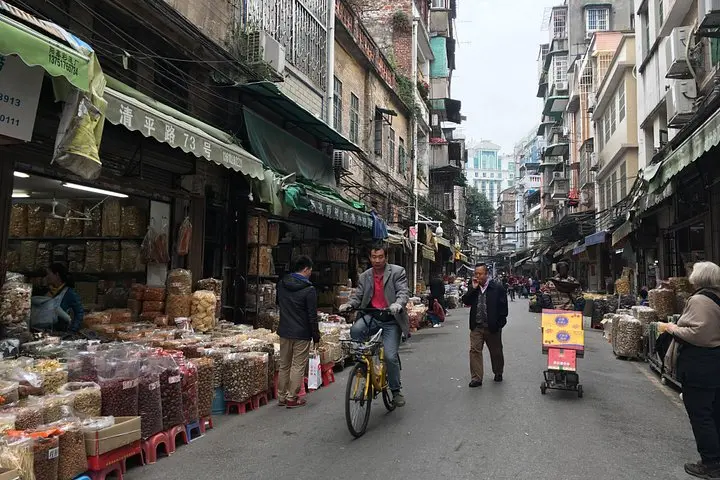
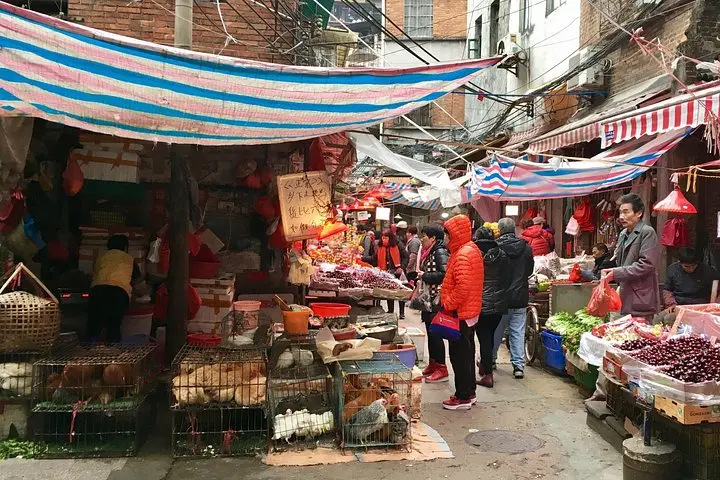
The route highlights Lingnan-style architecture: deep eaves, carved beams and compact alleyways that grew from Canton’s boom as a southern port. Shamian Island’s colonial facades recall British and French concessions, while the hundred-year-old official wharf and Taoist temples trace the city’s maritime trade, religion and folk medicine. You’ll move past the Chinese traditional medicine market and wet markets where routines of the neighborhood are visible, and end near Liwan Lake Park, a slow pocket of green.
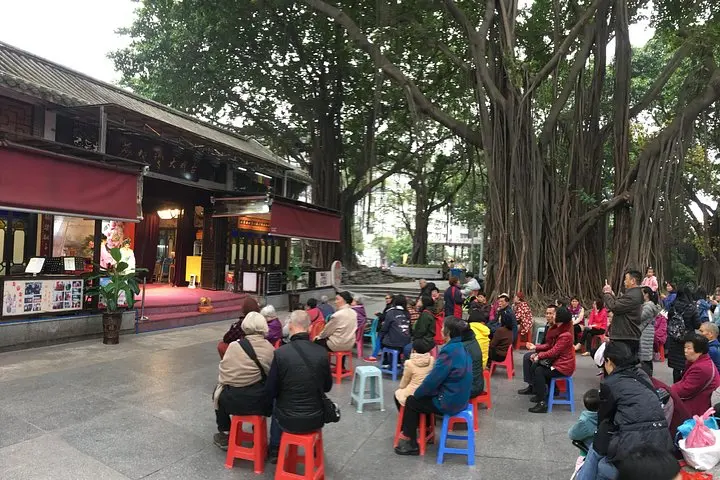
Expect practical rhythms: short urban walks, several food stops (including dim sum and local desserts), and time to linger at a Taoist temple and a wet market. The surfaces are paved but uneven in places; shade is intermittent. Guides explain local customs, ingredients, and the social history linking markets to family life.
Plan for humidity and crowds: bring comfortable walking shoes, a refillable water bottle, light rain protection, and some cash for street snacks. Start early to avoid the hottest hours; pace the tastings so you can absorb history between bites. This is a neighborhood tour — sensory, social, and centered on eating your way through Guangzhou’s living past.
Minimum age is 15; children under 15 must be accompanied by an adult and the pace includes several food stops and walking.
Guides can often adjust tastings, but inform the operator at booking about allergies or strict dietary needs.
The start is at Metro Line 6 Beijing Lu station Exit A—use the metro for the most predictable arrival time in downtown Guangzhou.
The tour operates in most weather; light rain is common so bring rain gear. For severe storms, contact the provider per the booking policy.
Janvi Off The Beaten Path Tours operates guided outdoor trips and adventures with an emphasis on safety, stewardship, and memorable experiences.
You step off the Metro into a lane where Cantonese voices and the scent of steaming dim sum meet faded plaster and carved wooden balconies. This five-hour Sai Kwan (Xiguan) walking tour threads through western Guangzhou’s old town — from the leafy promenades of Shamian Island to the crowded stalls of Shangxiajiu — and places food tasting at the center of local life.
You step off the Metro into a lane where Cantonese voices and the scent of steaming dim sum meet faded plaster and carved wooden balconies. This five-hour Sai Kwan (Xiguan) walking tour threads through western Guangzhou’s old town — from the leafy promenades of Shamian Island to the crowded stalls of Shangxiajiu — and places food tasting at the center of local life.
The route highlights Lingnan-style architecture: deep eaves, carved beams and compact alleyways that grew from Canton’s boom as a southern port. Shamian Island’s colonial facades recall British and French concessions, while the hundred-year-old official wharf and Taoist temples trace the city’s maritime trade, religion and folk medicine. You’ll move past the Chinese traditional medicine market and wet markets where routines of the neighborhood are visible, and end near Liwan Lake Park, a slow pocket of green.
Expect practical rhythms: short urban walks, several food stops (including dim sum and local desserts), and time to linger at a Taoist temple and a wet market. The surfaces are paved but uneven in places; shade is intermittent. Guides explain local customs, ingredients, and the social history linking markets to family life.
Plan for humidity and crowds: bring comfortable walking shoes, a refillable water bottle, light rain protection, and some cash for street snacks. Start early to avoid the hottest hours; pace the tastings so you can absorb history between bites. This is a neighborhood tour — sensory, social, and centered on eating your way through Guangzhou’s living past.