THE ADVENTURE COLLECTIVE® · Independent discovery and booking for outdoor travel

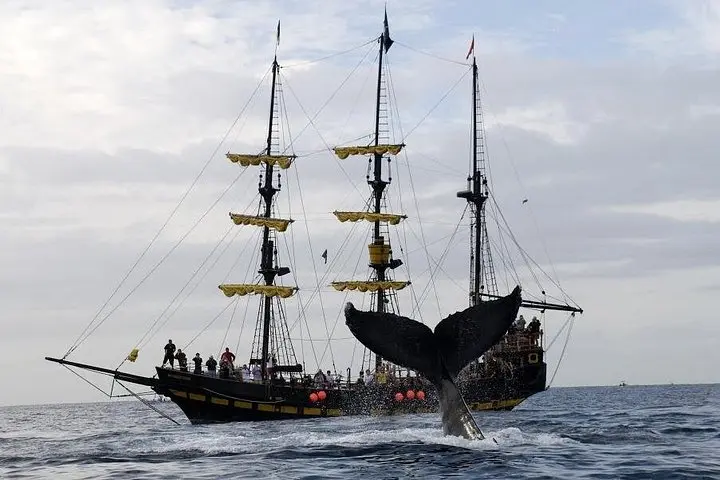
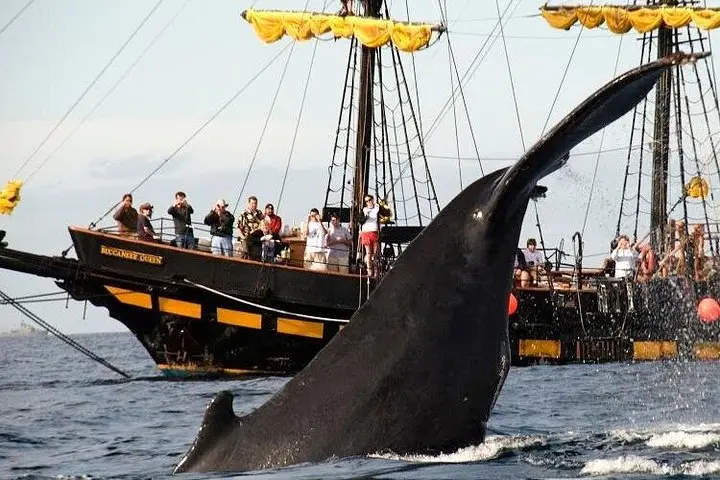
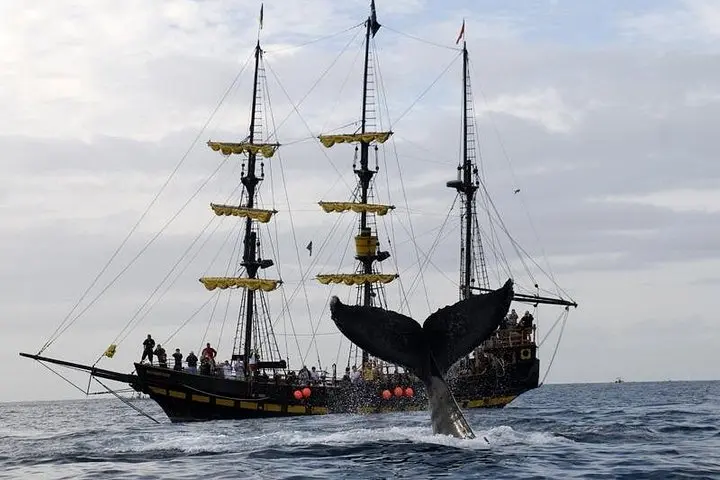
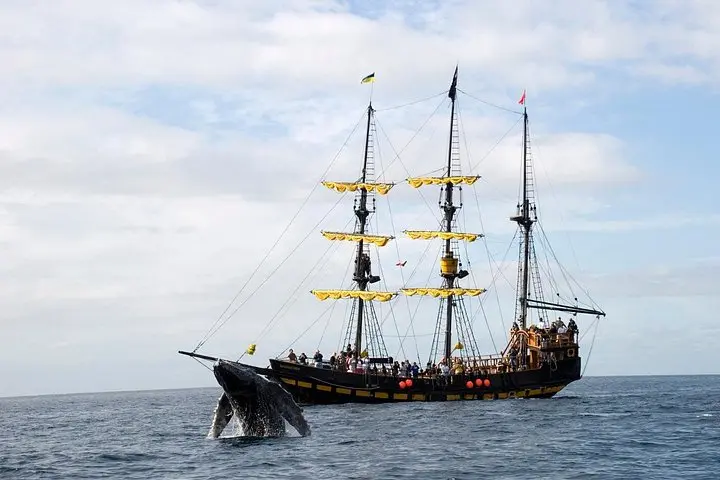
Board the Bucaneer Queen at La Terminal de Cabo for a two-hour whale-watching cruise that mixes scenic photo stops at the Arch with guided sightings of gray and humpback whales. Expect breakfast, an open bar and bilingual commentary as you search the Pacific and Sea of Cortez for migrating giants.
Board the Bucaneer Queen at La Terminal de Cabo for a two-hour whale-watching cruise that mixes scenic photo stops at the Arch with guided sightings of gray and humpback whales. Expect breakfast, an open bar and bilingual commentary as you search the Pacific and Sea of Cortez for migrating giants.
Morning light cuts across the Sea of Cortez as the Bucaneer Queen shoves off from La Terminal de Cabo. Salted wind tugs at the rigging and the ship’s wooden railings vibrate with the chatter of excited passengers; binoculars click into place and the guide points seaward. The route skirts the iconic Arch, slips past the sea lion colony and then opens into the wide blue where migrating gray and humpback whales play out their seasonal rituals.
Verified experiences and guided adventures in the surrounding area.
Operated by Reyna de los Bucaneros S.A. de C.V. · Cabo San Lucas, Baja California Sur
Morning light cuts across the Sea of Cortez as the Bucaneer Queen shoves off from La Terminal de Cabo. Salted wind tugs at the rigging and the ship’s wooden railings vibrate with the chatter of excited passengers; binoculars click into place and the guide points seaward. The route skirts the iconic Arch, slips past the sea lion colony and then opens into the wide blue where migrating gray and humpback whales play out their seasonal rituals.
The waters around Los Cabos sit at the meeting point of the Pacific and the Gulf of California. Centuries of tectonic uplift and volcanic flows formed the rocky outcrops and offshore reefs that funnel plankton and attract whales each winter. Local guides—often bilingual—blend natural history with cultural notes: Cabo’s fishing and maritime traditions, early navigators, and the town’s transformation into a major marine ecotourism hub.
Practically, the trip is straightforward: a two-hour cruise with onboard breakfast and an open bar. Expect periods of calm transit, photo stops at the Arch and Lover’s Beach, and stretches of active searching where the crew scans for blows, breaches, and tails. Dress in layers, bring sun protection, and keep a pair of binoculars handy; motion from swells is normal so stable footing matters.
This experience suits travelers who want close marine encounters without technical requirements—perfect for families, photographers and anyone who wants the drama of whales on the wing of a classic pirate-style vessel.
Peak season runs from mid-December through April when gray and humpback whales migrate to breed and calve in Baja’s warmer waters.
The tour is approximately two hours and departs from La Terminal de Cabo, behind the Breathless Resort—arrive 30–40 minutes early.
Yes—this vessel is stroller- and wheelchair-accessible and suitable for most ages and fitness levels; check with the operator for specific mobility needs.
Trips commonly encounter sea lions, dolphins and various seabirds; seasonal sightings can also include manta rays and turtles.
Reyna de los Bucaneros S.A. de C.V. operates guided outdoor trips and adventures with an emphasis on safety, stewardship, and memorable experiences.
Morning light cuts across the Sea of Cortez as the Bucaneer Queen shoves off from La Terminal de Cabo. Salted wind tugs at the rigging and the ship’s wooden railings vibrate with the chatter of excited passengers; binoculars click into place and the guide points seaward. The route skirts the iconic Arch, slips past the sea lion colony and then opens into the wide blue where migrating gray and humpback whales play out their seasonal rituals.
Morning light cuts across the Sea of Cortez as the Bucaneer Queen shoves off from La Terminal de Cabo. Salted wind tugs at the rigging and the ship’s wooden railings vibrate with the chatter of excited passengers; binoculars click into place and the guide points seaward. The route skirts the iconic Arch, slips past the sea lion colony and then opens into the wide blue where migrating gray and humpback whales play out their seasonal rituals.
The waters around Los Cabos sit at the meeting point of the Pacific and the Gulf of California. Centuries of tectonic uplift and volcanic flows formed the rocky outcrops and offshore reefs that funnel plankton and attract whales each winter. Local guides—often bilingual—blend natural history with cultural notes: Cabo’s fishing and maritime traditions, early navigators, and the town’s transformation into a major marine ecotourism hub.
Practically, the trip is straightforward: a two-hour cruise with onboard breakfast and an open bar. Expect periods of calm transit, photo stops at the Arch and Lover’s Beach, and stretches of active searching where the crew scans for blows, breaches, and tails. Dress in layers, bring sun protection, and keep a pair of binoculars handy; motion from swells is normal so stable footing matters.
This experience suits travelers who want close marine encounters without technical requirements—perfect for families, photographers and anyone who wants the drama of whales on the wing of a classic pirate-style vessel.