THE ADVENTURE COLLECTIVE® · Independent discovery and booking for outdoor travel

Cross the Aegean for an eight‑hour day trip to Nisyros, where steaming vents and a dramatic crater meet whitewashed villages. Expect rocky trails, panoramic crater rims and a hands‑on lesson in island geology.
Cross the Aegean for an eight‑hour day trip to Nisyros, where steaming vents and a dramatic crater meet whitewashed villages. Expect rocky trails, panoramic crater rims and a hands‑on lesson in island geology.
A boat slips from Kos Harbor and the Aegean opens into pale blue — the island of Nisyros appears as a low, brooding silhouette, smoke-slight at its center. On a clear day the crossing takes an hour, giving passengers time to watch the coastline shrink and to feel the sea breeze sharpen.
Verified experiences and guided adventures in the surrounding area.
Operated by Destination Services Greece · Mandraki, South Aegean
A boat slips from Kos Harbor and the Aegean opens into pale blue — the island of Nisyros appears as a low, brooding silhouette, smoke-slight at its center. On a clear day the crossing takes an hour, giving passengers time to watch the coastline shrink and to feel the sea breeze sharpen.
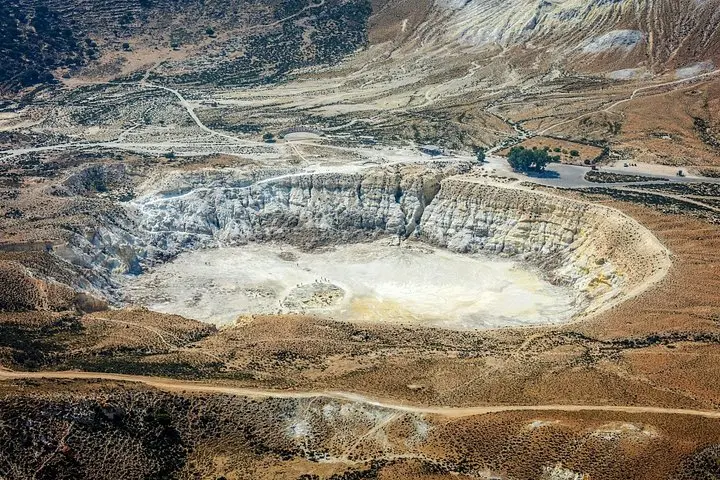
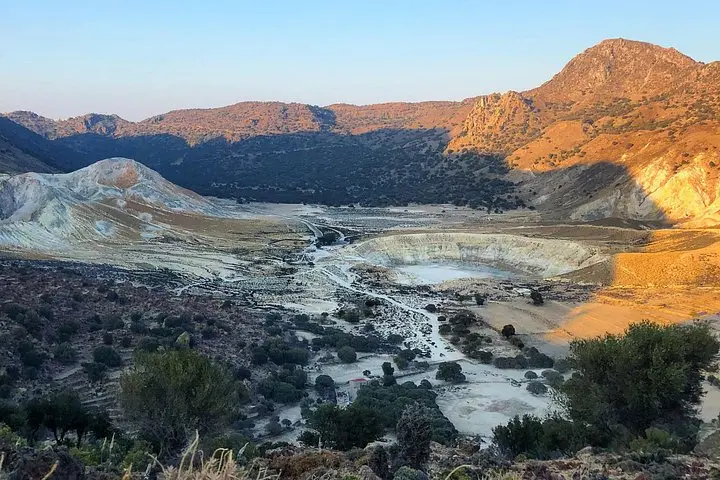
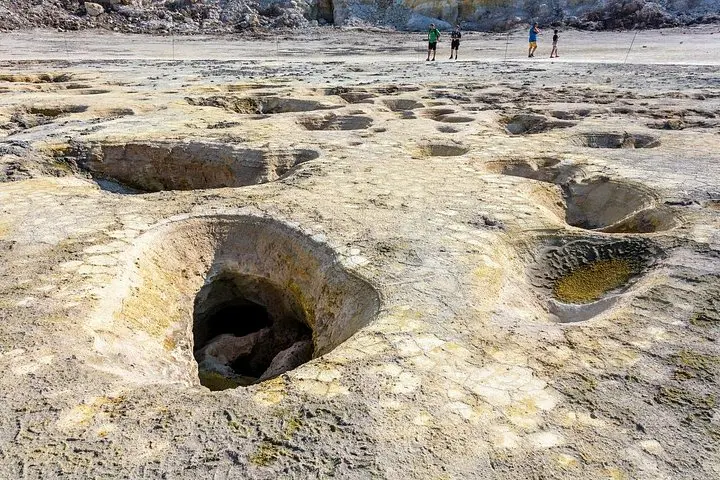
Nisyros is a volcanic caldera with human footprints that reach back to antiquity. Local legend credits Poseidon with hurling a rock that became the island; archaeologists note Byzantine churches and a medieval castle clustered above the port of Mandraki. Geologically, Stefanos crater is a fumarolic rim where sulfur-streaked vents heat the ground and occasional steam rises, a living reminder of the island’s thermal past.
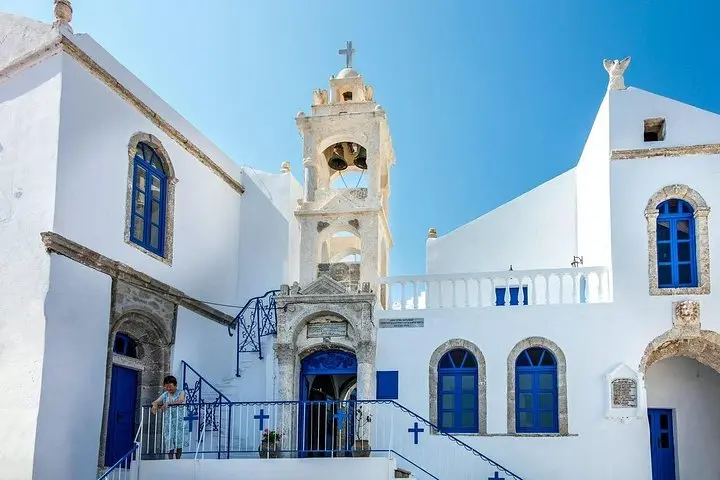
The tour typically docks in Mandraki before climbing to Nikia and the crater edge; cobbled lanes and whitewashed houses lean into the slope, offering abrupt panoramas of the caldera. Visits include the Stefanos crater (entry often regulated) and time in the amphitheater-like town beneath Panagia Spiliani monastery.
Practicalities matter: expect uneven, rocky footing around the crater and wear hard-soled shoes. Bring water, sun protection and small change for the €3 sustainability fee at the volcano. The outing runs about eight hours and suits travelers with moderate fitness — stair climbs and short hikes are part of the day. Weather can alter the schedule; the boat operator may cancel in rough conditions. For anyone wanting an elemental Aegean day—sea, stone and hot breath from the earth—this is a compact, achievable dose of volcanic drama.
The crossing is about one hour each way, depending on sea conditions and the vessel used.
Pregnant travelers are discouraged from entering the crater due to uneven footing and possible gas exposure; they can remain in Mandraki or Nikia instead.
There is a small sustainability charge (around €3) at the volcano; operators may also collect admission where applicable.
Yes — Mandraki and Nikia have tavernas and cafes, but bring cash and expect limited choices during low season.
Destination Services Greece operates guided outdoor trips and adventures with an emphasis on safety, stewardship, and memorable experiences.
A boat slips from Kos Harbor and the Aegean opens into pale blue — the island of Nisyros appears as a low, brooding silhouette, smoke-slight at its center. On a clear day the crossing takes an hour, giving passengers time to watch the coastline shrink and to feel the sea breeze sharpen.
A boat slips from Kos Harbor and the Aegean opens into pale blue — the island of Nisyros appears as a low, brooding silhouette, smoke-slight at its center. On a clear day the crossing takes an hour, giving passengers time to watch the coastline shrink and to feel the sea breeze sharpen.
Nisyros is a volcanic caldera with human footprints that reach back to antiquity. Local legend credits Poseidon with hurling a rock that became the island; archaeologists note Byzantine churches and a medieval castle clustered above the port of Mandraki. Geologically, Stefanos crater is a fumarolic rim where sulfur-streaked vents heat the ground and occasional steam rises, a living reminder of the island’s thermal past.
The tour typically docks in Mandraki before climbing to Nikia and the crater edge; cobbled lanes and whitewashed houses lean into the slope, offering abrupt panoramas of the caldera. Visits include the Stefanos crater (entry often regulated) and time in the amphitheater-like town beneath Panagia Spiliani monastery.
Practicalities matter: expect uneven, rocky footing around the crater and wear hard-soled shoes. Bring water, sun protection and small change for the €3 sustainability fee at the volcano. The outing runs about eight hours and suits travelers with moderate fitness — stair climbs and short hikes are part of the day. Weather can alter the schedule; the boat operator may cancel in rough conditions. For anyone wanting an elemental Aegean day—sea, stone and hot breath from the earth—this is a compact, achievable dose of volcanic drama.