THE ADVENTURE COLLECTIVE® · Independent discovery and booking for outdoor travel

A compact, half-day catamaran from Bariloche takes you into the western arms of Nahuel Huapi to a glacier-green lake and the forceful Los Cantaros waterfall. Expect easy walks through Valdivian forest, a historic islet, and crisp views of Cerro Tronador.
A compact, half-day catamaran from Bariloche takes you into the western arms of Nahuel Huapi to a glacier-green lake and the forceful Los Cantaros waterfall. Expect easy walks through Valdivian forest, a historic islet, and crisp views of Cerro Tronador.
The catamaran slides away from Puerto Pañuelo with a soft, insistent shove, and the lake takes over: a broad blue that pushes at the hull and seems to pull voices quieter. In minutes the Llao Llao peninsula is a receding ridge and the boat threads between islands, past the low, tree-draped Sentinel islet where the remains of explorer Francisco Pascasio Moreno lie—an old argument between man and mountain, kept quiet by the lapping water.
Verified experiences and guided adventures in the surrounding area.
Operated by Luna Roja · San Carlos de Bariloche, Río Negro
The catamaran slides away from Puerto Pañuelo with a soft, insistent shove, and the lake takes over: a broad blue that pushes at the hull and seems to pull voices quieter. In minutes the Llao Llao peninsula is a receding ridge and the boat threads between islands, past the low, tree-draped Sentinel islet where the remains of explorer Francisco Pascasio Moreno lie—an old argument between man and mountain, kept quiet by the lapping water.
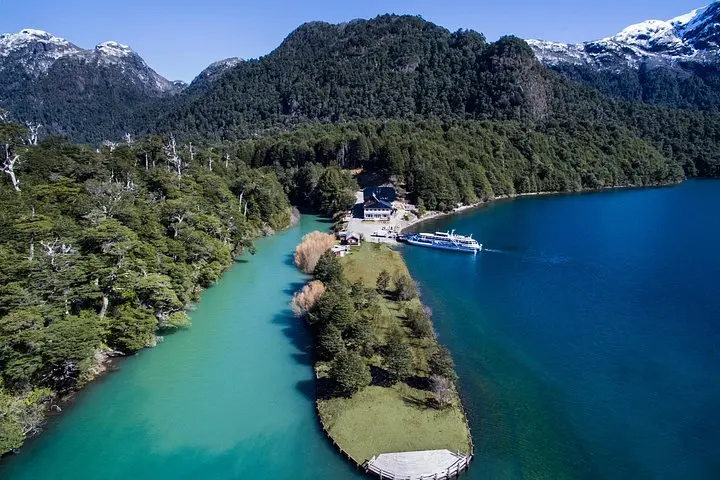
This four-hour excursion from San Carlos de Bariloche concentrates the region’s big scenes into a compact, low-effort adventure. Expect about an hour of open-water sailing, short guided walks into the Valdivian temperate forest, and time at Lake Frías—whose glacier-fed, almost electric-green surface announces the presence of Cerro Tronador—and a visit to the cascade at Los Cantaros. Onshore paths are gentle but uneven: mossy roots and damp leaf litter demand steady shoes rather than speed.
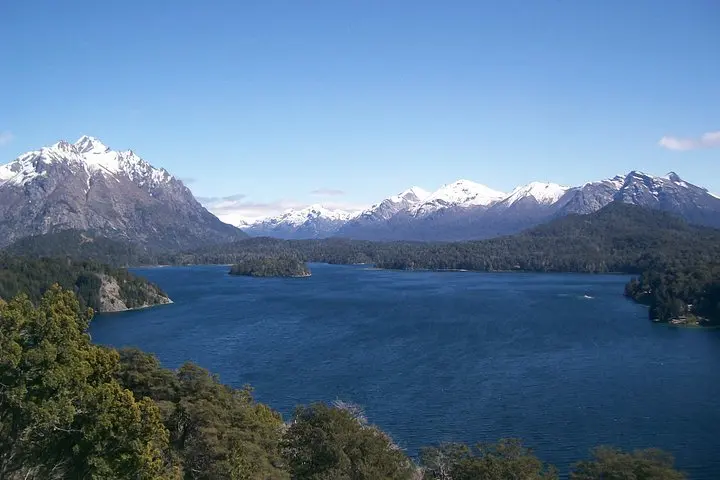
Geology writes itself across this shore: ancient volcanic activity raised the Andes; returning glaciers sculpted the fjord-like arms of Nahuel Huapi and ground bedrock into the basins that hold crystal lakes. The region’s climate and altitude enabled the Valdivian forest—dense, dark, and humid—to survive here, giving shelter to trees such as the millennia-old larch that stands near the waterfall.
Culturally, the trip touches two stories. Moreno, the explorer and advocate for Argentina’s national parks, links the place to early conservation. At the same time the lakes remain a living resource for local communities and tour operators who balance access with protection of fragile shorelines and glacial-fed waters.
Practically, the outing is accessible: transfers from central Bariloche hotels (up to 8 km) bring guests to Puerto Pañuelo for boarding; the guide speaks Spanish and Portuguese. Wear waterproof layers—weather can switch from sun to wind to drizzle—sturdy hiking shoes, and a small daypack. Bring a refillable water bottle, insect repellent, and a camera with a polarizer for the green of Lake Frías. Swimming is not recommended—the water is glacier-cold.
Timing matters: choose morning departures for calmer water and softer light on the larch and falls. If you’re chasing photography, stay on deck when the boat rounds the peninsulas; for nature, follow the guide into the understory and let the forest close around you.
For travelers with limited time in Patagonia, this excursion is a concentrated introduction to Nahuel Huapi’s lakes, forest, and glacial influence—an accessible slice of the high-Andean landscape that rewards travelers who come prepared and curious.
The main sailing segment from Puerto Pañuelo is about 60 minutes; the full excursion including stops runs roughly four hours.
Yes—it's rated easy for all fitness levels; infants must sit on an adult’s lap per operator policy.
Swimming is not recommended—the water is glacier-cold year-round and currents can be strong.
Guides provide commentary in Spanish and Portuguese according to the listing; check with the operator for English options.
Transfers from hotels within approximately 8 km of central Bariloche are included; confirm your pickup point at booking.
Layered clothing, a waterproof jacket, and sturdy shoes are recommended; bring sun protection on clear days.
Luna Roja operates guided outdoor trips and adventures with an emphasis on safety, stewardship, and memorable experiences.
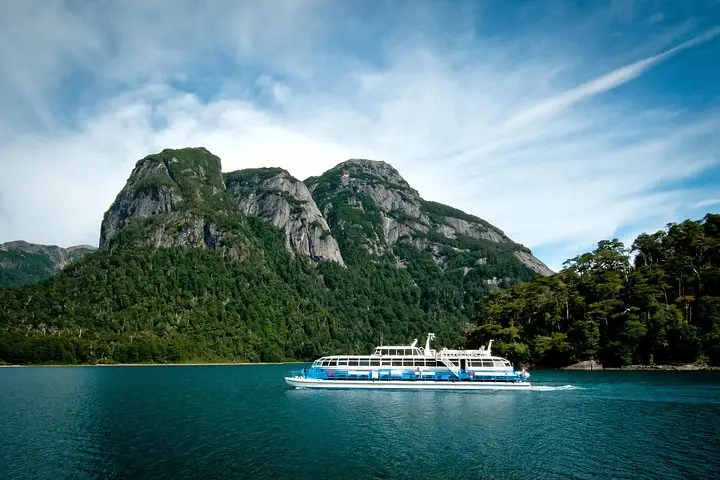
The catamaran slides away from Puerto Pañuelo with a soft, insistent shove, and the lake takes over: a broad blue that pushes at the hull and seems to pull voices quieter. In minutes the Llao Llao peninsula is a receding ridge and the boat threads between islands, past the low, tree-draped Sentinel islet where the remains of explorer Francisco Pascasio Moreno lie—an old argument between man and mountain, kept quiet by the lapping water.
The catamaran slides away from Puerto Pañuelo with a soft, insistent shove, and the lake takes over: a broad blue that pushes at the hull and seems to pull voices quieter. In minutes the Llao Llao peninsula is a receding ridge and the boat threads between islands, past the low, tree-draped Sentinel islet where the remains of explorer Francisco Pascasio Moreno lie—an old argument between man and mountain, kept quiet by the lapping water.
This four-hour excursion from San Carlos de Bariloche concentrates the region’s big scenes into a compact, low-effort adventure. Expect about an hour of open-water sailing, short guided walks into the Valdivian temperate forest, and time at Lake Frías—whose glacier-fed, almost electric-green surface announces the presence of Cerro Tronador—and a visit to the cascade at Los Cantaros. Onshore paths are gentle but uneven: mossy roots and damp leaf litter demand steady shoes rather than speed.
Geology writes itself across this shore: ancient volcanic activity raised the Andes; returning glaciers sculpted the fjord-like arms of Nahuel Huapi and ground bedrock into the basins that hold crystal lakes. The region’s climate and altitude enabled the Valdivian forest—dense, dark, and humid—to survive here, giving shelter to trees such as the millennia-old larch that stands near the waterfall.
Culturally, the trip touches two stories. Moreno, the explorer and advocate for Argentina’s national parks, links the place to early conservation. At the same time the lakes remain a living resource for local communities and tour operators who balance access with protection of fragile shorelines and glacial-fed waters.
Practically, the outing is accessible: transfers from central Bariloche hotels (up to 8 km) bring guests to Puerto Pañuelo for boarding; the guide speaks Spanish and Portuguese. Wear waterproof layers—weather can switch from sun to wind to drizzle—sturdy hiking shoes, and a small daypack. Bring a refillable water bottle, insect repellent, and a camera with a polarizer for the green of Lake Frías. Swimming is not recommended—the water is glacier-cold.
Timing matters: choose morning departures for calmer water and softer light on the larch and falls. If you’re chasing photography, stay on deck when the boat rounds the peninsulas; for nature, follow the guide into the understory and let the forest close around you.
For travelers with limited time in Patagonia, this excursion is a concentrated introduction to Nahuel Huapi’s lakes, forest, and glacial influence—an accessible slice of the high-Andean landscape that rewards travelers who come prepared and curious.