THE ADVENTURE COLLECTIVE® · Independent discovery and booking for outdoor travel

Cross the cold, wind-scoured Beagle Channel from Ushuaia to see penguin colonies, sea lion rookeries and the famous Les Éclaireurs Lighthouse. This five-hour cruise mixes wildlife viewing with maritime history and Fuegian landscapes.
Cross the cold, wind-scoured Beagle Channel from Ushuaia to see penguin colonies, sea lion rookeries and the famous Les Éclaireurs Lighthouse. This five-hour cruise mixes wildlife viewing with maritime history and Fuegian landscapes.
A sharp wind cuts across the bow as the city of Ushuaia shrinks behind you and the Beagle Channel opens into a corridor of slate mountains and low islands. The boat threads between rocky skerries where cormorants roost and sea lions haul out, then eases past the compact, red-and-white Les Éclaireurs Lighthouse — a maritime marker more useful than ornamental in these waters.
Verified experiences and guided adventures in the surrounding area.
Operated by Que Hacer en Buenos Aires · Ushuaia, Tierra del Fuego
A sharp wind cuts across the bow as the city of Ushuaia shrinks behind you and the Beagle Channel opens into a corridor of slate mountains and low islands. The boat threads between rocky skerries where cormorants roost and sea lions haul out, then eases past the compact, red-and-white Les Éclaireurs Lighthouse — a maritime marker more useful than ornamental in these waters.
This channel was carved by glacial ice and shaped by currents that still push ships toward Chile and Argentina; its shores hold relics of 19th–20th century sealing, missionary outposts, and wrecks like the Monte Cervantes. Geologically, the scene is Fuegian Andes: granite ridges, peatlands, and slow-moving rivers that feed the channel. Culturally, the trip links modern Ushuaia — once a penal colony, now a gateway town — with rural estancias along the coast and the naval presence in Puerto Williams.
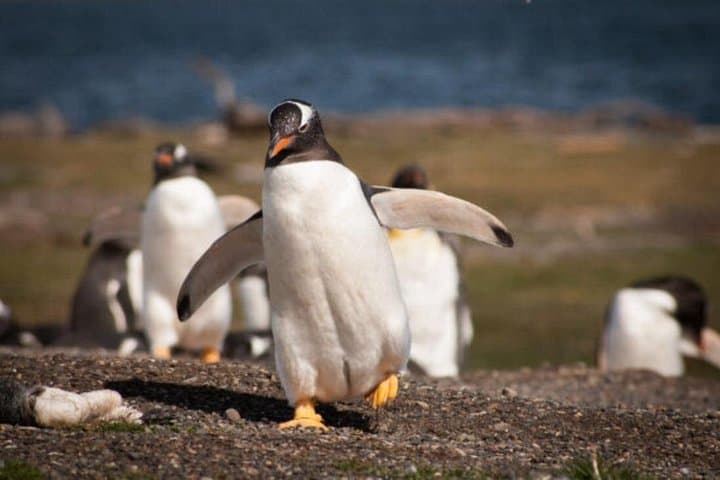
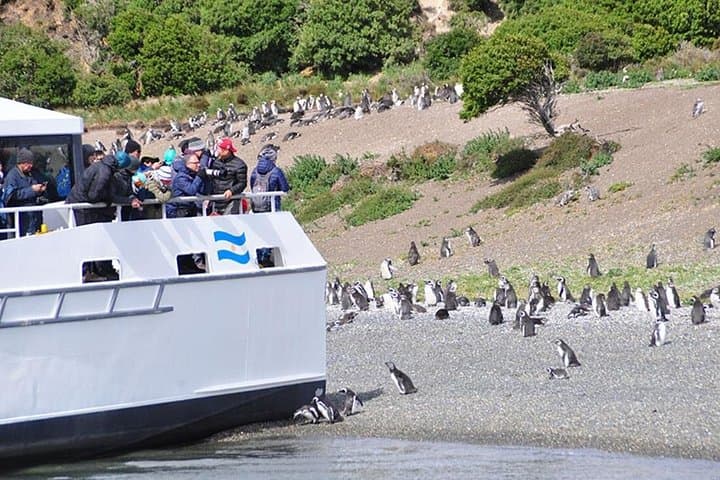
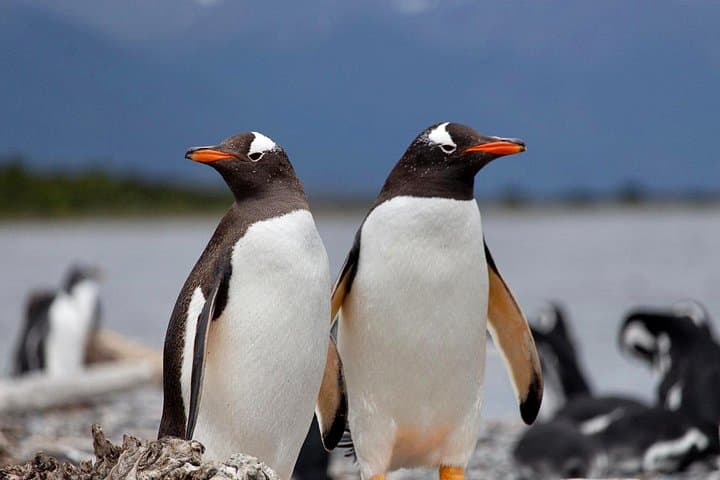
Wildlife is the draw: imperial cormorants, skuas, albatrosses, and the Magellanic penguins of Isla Martillo. On Isla de los Lobos the boat slows so you can watch one- and two-haired sea lions haul out on rocks.
Practical guide: tours are roughly five hours, often require a small port tax paid in cash, and may include bilingual audio guides and hotel transfers. Dress warm, windproof layers; waters here are cold even in summer and seas can be choppy. Photography benefits from a fast shutter and a steady hand. Expect wildlife to be observed from the boat — landings are not guaranteed — and plan return transport and timing given variable weather and limited daylight in shoulder seasons.
Wildlife viewing is primarily done from the boat; landing is not guaranteed and most operators observe colonies from a safe distance.
The tour is about five hours and departs from the tourist pier in Ushuaia, typically including hotel transfers when booked.
Yes — a small local port tax (usually payable in cash) is commonly collected during embarkation.
Expect to see Magellanic penguins (Isla Martillo), imperial cormorants, various gulls, skuas, and sea lions on Isla de los Lobos; sightings depend on season and sea conditions.
Que Hacer en Buenos Aires operates guided outdoor trips and adventures with an emphasis on safety, stewardship, and memorable experiences.
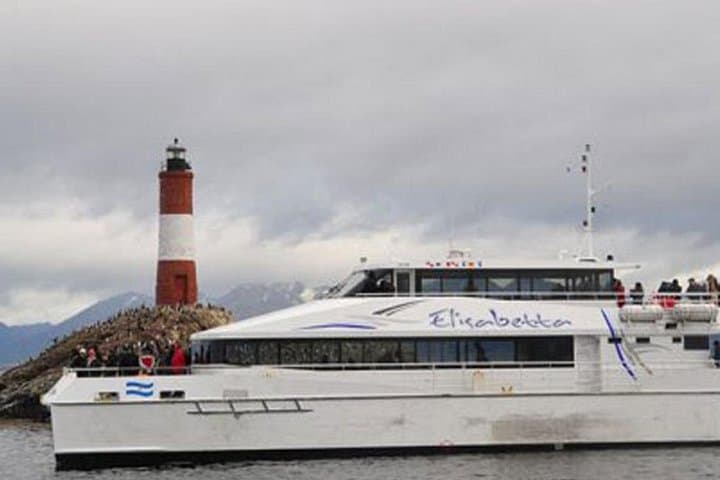
A sharp wind cuts across the bow as the city of Ushuaia shrinks behind you and the Beagle Channel opens into a corridor of slate mountains and low islands. The boat threads between rocky skerries where cormorants roost and sea lions haul out, then eases past the compact, red-and-white Les Éclaireurs Lighthouse — a maritime marker more useful than ornamental in these waters.
A sharp wind cuts across the bow as the city of Ushuaia shrinks behind you and the Beagle Channel opens into a corridor of slate mountains and low islands. The boat threads between rocky skerries where cormorants roost and sea lions haul out, then eases past the compact, red-and-white Les Éclaireurs Lighthouse — a maritime marker more useful than ornamental in these waters.
This channel was carved by glacial ice and shaped by currents that still push ships toward Chile and Argentina; its shores hold relics of 19th–20th century sealing, missionary outposts, and wrecks like the Monte Cervantes. Geologically, the scene is Fuegian Andes: granite ridges, peatlands, and slow-moving rivers that feed the channel. Culturally, the trip links modern Ushuaia — once a penal colony, now a gateway town — with rural estancias along the coast and the naval presence in Puerto Williams.
Wildlife is the draw: imperial cormorants, skuas, albatrosses, and the Magellanic penguins of Isla Martillo. On Isla de los Lobos the boat slows so you can watch one- and two-haired sea lions haul out on rocks.
Practical guide: tours are roughly five hours, often require a small port tax paid in cash, and may include bilingual audio guides and hotel transfers. Dress warm, windproof layers; waters here are cold even in summer and seas can be choppy. Photography benefits from a fast shutter and a steady hand. Expect wildlife to be observed from the boat — landings are not guaranteed — and plan return transport and timing given variable weather and limited daylight in shoulder seasons.