THE ADVENTURE COLLECTIVE® · Independent discovery and booking for outdoor travel

Explore Salalah’s landmarks and the raw coastal drama of Mughsail in one day. This private combo tour mixes mosque architecture, fragrant frankincense markets, a spring-fed valley and the Marneef blowholes for a compact, scenic experience.
Explore Salalah’s landmarks and the raw coastal drama of Mughsail in one day. This private combo tour mixes mosque architecture, fragrant frankincense markets, a spring-fed valley and the Marneef blowholes for a compact, scenic experience.
You step out of your vehicle into a wind that smells of salt and resin—the frankincense trees inland sending a dry, pine-like perfume toward the coast. The tour begins among Salalah’s whitewashed buildings and the carved wood and plaster of the Great Mosque, then slips into plantations where coconut palms clap slow, leafy rhythms overhead.
Verified experiences and guided adventures in the surrounding area.
Operated by Takamul Travel and Rent a Car · Salalah, Dhofar
You step out of your vehicle into a wind that smells of salt and resin—the frankincense trees inland sending a dry, pine-like perfume toward the coast. The tour begins among Salalah’s whitewashed buildings and the carved wood and plaster of the Great Mosque, then slips into plantations where coconut palms clap slow, leafy rhythms overhead.
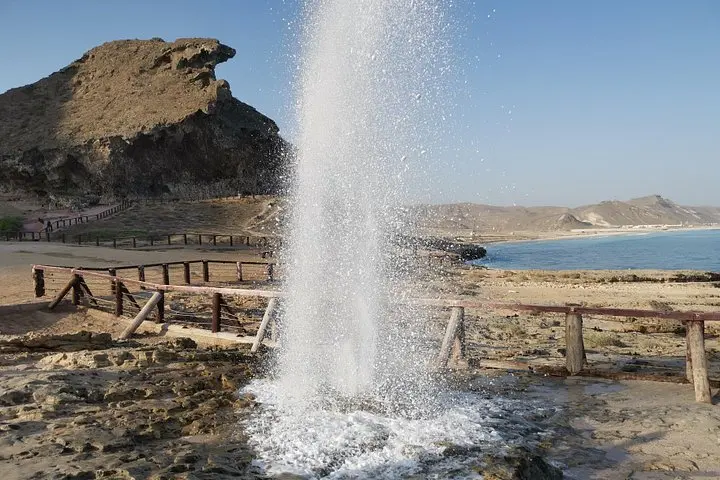
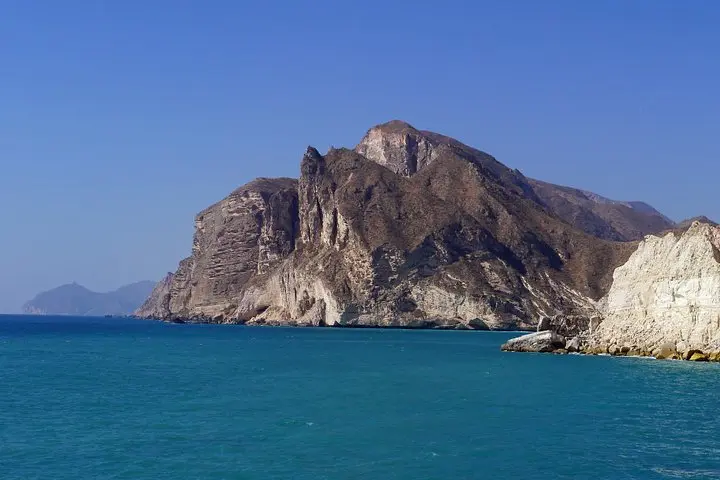
Dhofar’s landscape is two-faced: an arid limestone plateau giving way to lush plantation valleys fed by ancient irrigation channels, and a dramatic shoreline where cliffs shaped by sea and wind host the Marneef blowholes. Geology here is honest and visible—limestone benches, coastal erosion sculpting caves and spouts that force the ocean’s breath through narrow vents.
Culturally, Salalah is the origin of frankincense, traded across the Arabian Peninsula and beyond for millennia; al-Haffa market still sells resin, woven shawls and perfumes that tie the past to present daily life. Local farmers maintain aflaj (irrigation) lines that have kept palms alive in valleys like Jarzeez for generations.
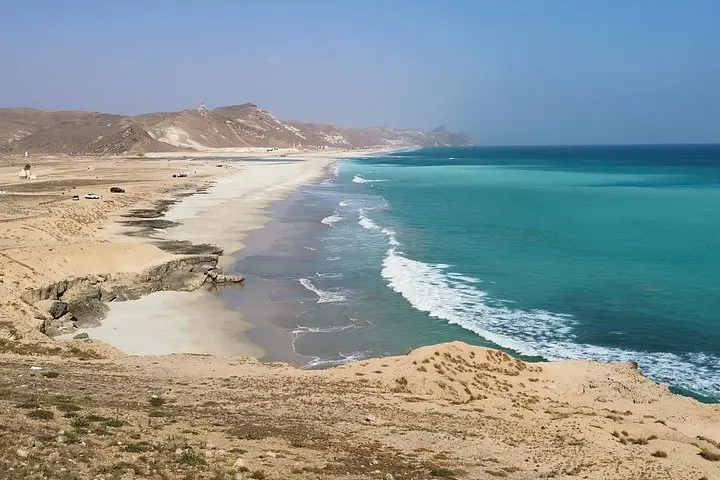
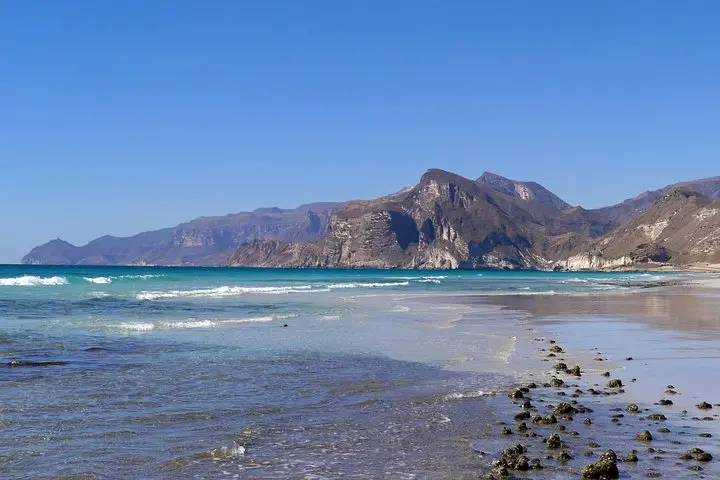
Practically, expect a full 6–7 hour day moving by private vehicle, with short walks: easy terrain, sandy beach stretches, and cliff viewpoints. Blowholes are most dramatic around high tide—listen to the sea pound and watch water geysers punctuate the cliffs. Bring sun protection, a refillable bottle, sturdy shoes for uneven rock, and leave shells and flora in place to protect the fragile coast. Timing your visit in the Khareef (monsoon) season changes the scene—green hills and misted coasts—while winter and spring are drier and clearer for coastal visibility.
The full itinerary runs about 6–7 hours (approximately 420 minutes) and is provided as a private tour.
Blowhole activity depends on tide and sea conditions; they’re most dramatic at high tide and during rougher seas.
Yes — the tour is rated easy with short walks, though guests with limited mobility should check specific stop access in advance.
Yes — al-Haffa market and roadside stalls sell frankincense, perfumes, and textiles; carry local currency and expect to haggle gently.
Takamul Travel and Rent a Car operates guided outdoor trips and adventures with an emphasis on safety, stewardship, and memorable experiences.
You step out of your vehicle into a wind that smells of salt and resin—the frankincense trees inland sending a dry, pine-like perfume toward the coast. The tour begins among Salalah’s whitewashed buildings and the carved wood and plaster of the Great Mosque, then slips into plantations where coconut palms clap slow, leafy rhythms overhead.
You step out of your vehicle into a wind that smells of salt and resin—the frankincense trees inland sending a dry, pine-like perfume toward the coast. The tour begins among Salalah’s whitewashed buildings and the carved wood and plaster of the Great Mosque, then slips into plantations where coconut palms clap slow, leafy rhythms overhead.
Dhofar’s landscape is two-faced: an arid limestone plateau giving way to lush plantation valleys fed by ancient irrigation channels, and a dramatic shoreline where cliffs shaped by sea and wind host the Marneef blowholes. Geology here is honest and visible—limestone benches, coastal erosion sculpting caves and spouts that force the ocean’s breath through narrow vents.
Culturally, Salalah is the origin of frankincense, traded across the Arabian Peninsula and beyond for millennia; al-Haffa market still sells resin, woven shawls and perfumes that tie the past to present daily life. Local farmers maintain aflaj (irrigation) lines that have kept palms alive in valleys like Jarzeez for generations.
Practically, expect a full 6–7 hour day moving by private vehicle, with short walks: easy terrain, sandy beach stretches, and cliff viewpoints. Blowholes are most dramatic around high tide—listen to the sea pound and watch water geysers punctuate the cliffs. Bring sun protection, a refillable bottle, sturdy shoes for uneven rock, and leave shells and flora in place to protect the fragile coast. Timing your visit in the Khareef (monsoon) season changes the scene—green hills and misted coasts—while winter and spring are drier and clearer for coastal visibility.