THE ADVENTURE COLLECTIVE® · Independent discovery and booking for outdoor travel

A compact two‑day circuit from Uyuni that pairs the alien expanse of the salar with Isla Incahuasi’s cacti, the Train Cemetery and vivid high‑altitude lagoons. Practical for first‑time visitors, this route highlights geology, culture and photography opportunities while moving at a measured pace to handle altitude.
A compact two‑day circuit from Uyuni that pairs the alien expanse of the salar with Isla Incahuasi’s cacti, the Train Cemetery and vivid high‑altitude lagoons. Practical for first‑time visitors, this route highlights geology, culture and photography opportunities while moving at a measured pace to handle altitude.
At sunrise on the salt, a flat white plain expands to the horizon, light slicing through cold air as a 4x4 pushes across a surface that mirrors the sky. This two‑day Lagunas Route from Uyuni threads together the Train Cemetery, Colchani’s salt workshops, the sculptural salt mounds, Isla Incahuasi’s giant cacti and the liquid blues of high Andean lagoons.
Verified experiences and guided adventures in the surrounding area.
Operated by Mapamundi Go · Uyuni, Potosí
At sunrise on the salt, a flat white plain expands to the horizon, light slicing through cold air as a 4x4 pushes across a surface that mirrors the sky. This two‑day Lagunas Route from Uyuni threads together the Train Cemetery, Colchani’s salt workshops, the sculptural salt mounds, Isla Incahuasi’s giant cacti and the liquid blues of high Andean lagoons.
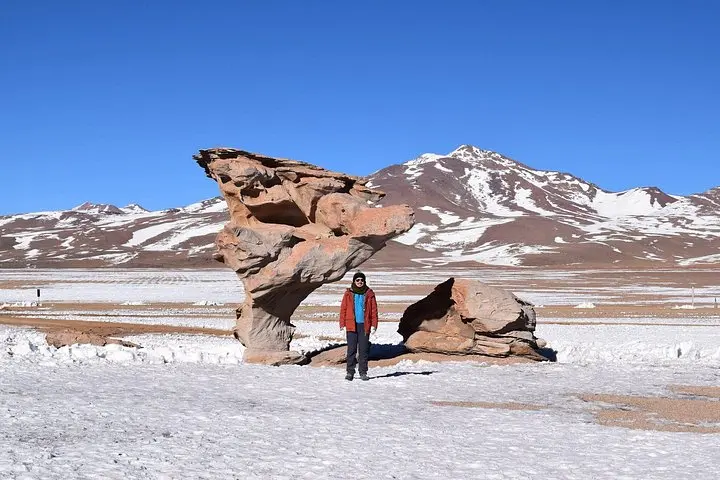
The salt flat formed when prehistoric lakes evaporated, leaving a crust of sodium chloride and an underlayer of salt-rich sediments; its hard, cracked geometry records millennia of climate shifts. Human history here ranges from indigenous salt harvesters to the steam-pocked locomotives abandoned at the turn of the 20th century — artifacts of Bolivia’s railroad and mining booms. Nearby rock formations and caves around Chantani speak to volcanic uplift and wind erosion that shaped the altiplano.
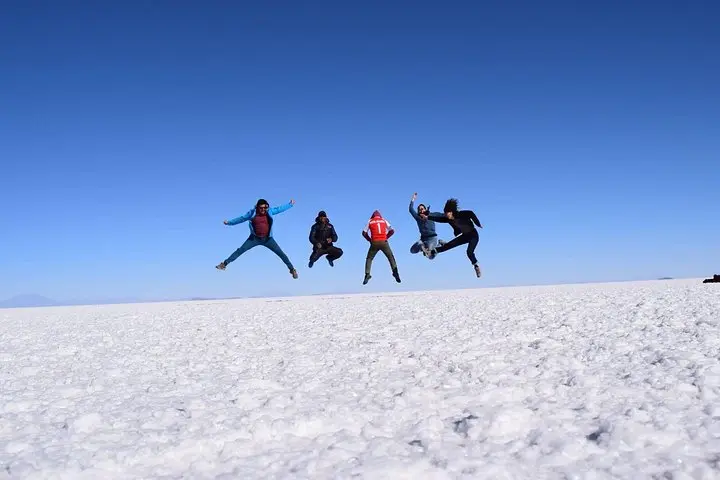
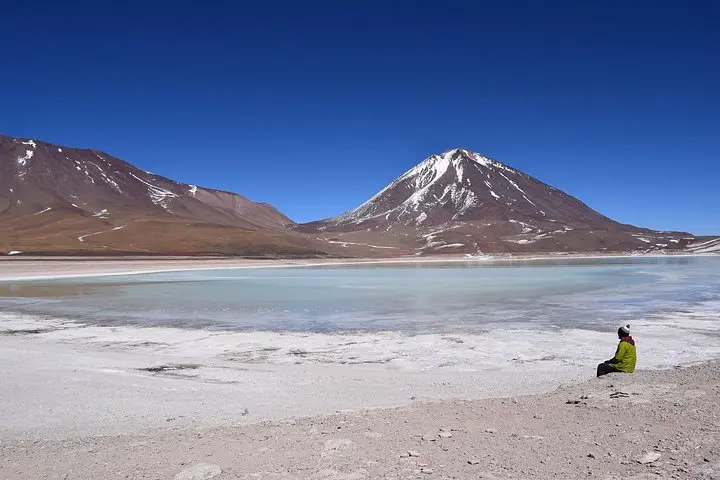
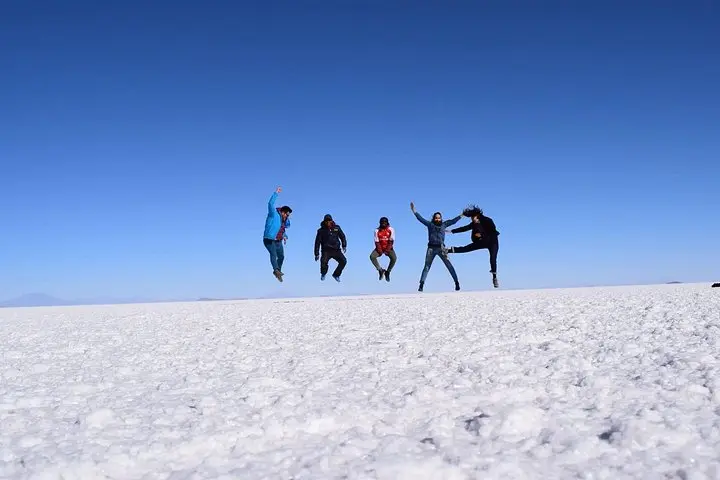
Expect long drives on high pampa roads, short hikes on cactus-covered Isla Incahuasi, and close-up views of multicolored lagoons where flamingos feed. Nights are cold and thin‑air real: altitude hovers around 3,650–4,300 m depending on stops, so pace and hydration matter. Photographers will find endless perspective-play on the salar; guides stage playful forced‑perspective shots.
Practical tips: bring sun-protective layers, high-SPF sunscreen, and a windproof shell; carry water and snacks; choose sturdy boots for rocky islets and caves; pack altitude remedies and a warm hat for night. Respect local communities: buy salt handicrafts in Colchani and avoid leaving waste on the salt crust. Plan departures early to catch light changes and avoid midday winds that stir salt.
Stops and sights sit roughly between 3,650 m and 4,300 m; expect thin air and colder temperatures, especially at night.
Yes — one overnight at a shared hostel with shared bathroom is included; private rooms are usually available for an extra cost if requested.
The itinerary is accessible with short walks and minimal technical difficulty, but altitude can affect anyone regardless of fitness.
Yes — Colchani offers salt-made crafts and small souvenirs; buying locally supports community economies.
Mapamundi Go operates guided outdoor trips and adventures with an emphasis on safety, stewardship, and memorable experiences.
At sunrise on the salt, a flat white plain expands to the horizon, light slicing through cold air as a 4x4 pushes across a surface that mirrors the sky. This two‑day Lagunas Route from Uyuni threads together the Train Cemetery, Colchani’s salt workshops, the sculptural salt mounds, Isla Incahuasi’s giant cacti and the liquid blues of high Andean lagoons.
At sunrise on the salt, a flat white plain expands to the horizon, light slicing through cold air as a 4x4 pushes across a surface that mirrors the sky. This two‑day Lagunas Route from Uyuni threads together the Train Cemetery, Colchani’s salt workshops, the sculptural salt mounds, Isla Incahuasi’s giant cacti and the liquid blues of high Andean lagoons.
The salt flat formed when prehistoric lakes evaporated, leaving a crust of sodium chloride and an underlayer of salt-rich sediments; its hard, cracked geometry records millennia of climate shifts. Human history here ranges from indigenous salt harvesters to the steam-pocked locomotives abandoned at the turn of the 20th century — artifacts of Bolivia’s railroad and mining booms. Nearby rock formations and caves around Chantani speak to volcanic uplift and wind erosion that shaped the altiplano.
Expect long drives on high pampa roads, short hikes on cactus-covered Isla Incahuasi, and close-up views of multicolored lagoons where flamingos feed. Nights are cold and thin‑air real: altitude hovers around 3,650–4,300 m depending on stops, so pace and hydration matter. Photographers will find endless perspective-play on the salar; guides stage playful forced‑perspective shots.
Practical tips: bring sun-protective layers, high-SPF sunscreen, and a windproof shell; carry water and snacks; choose sturdy boots for rocky islets and caves; pack altitude remedies and a warm hat for night. Respect local communities: buy salt handicrafts in Colchani and avoid leaving waste on the salt crust. Plan departures early to catch light changes and avoid midday winds that stir salt.