THE ADVENTURE COLLECTIVE® · Independent discovery and booking for outdoor travel

Experience the alien expanse of Salar de Uyuni on a full‑day 4WD tour—visit the Train Cemetery, Colchani salt workshops, Incahuasi Island, and a salt-flat sunset. A mix of geology, culture, and unforgettable photo ops awaits, with practical tips on altitude and timing.
Experience the alien expanse of Salar de Uyuni on a full‑day 4WD tour—visit the Train Cemetery, Colchani salt workshops, Incahuasi Island, and a salt-flat sunset. A mix of geology, culture, and unforgettable photo ops awaits, with practical tips on altitude and timing.
You step out of Uyuni and the world flattens into white—an unbroken plain that presses the sky low and bright. The 4WD hums across the crust; wind trims the horizon into a sharp line. By midday the salt gleams like glass when water lies on its surface, and the vastness dares you to find scale with a camera.
Verified experiences and guided adventures in the surrounding area.
Operated by Mega Expeditions · Uyuni, Potosí
You step out of Uyuni and the world flattens into white—an unbroken plain that presses the sky low and bright. The 4WD hums across the crust; wind trims the horizon into a sharp line. By midday the salt gleams like glass when water lies on its surface, and the vastness dares you to find scale with a camera.
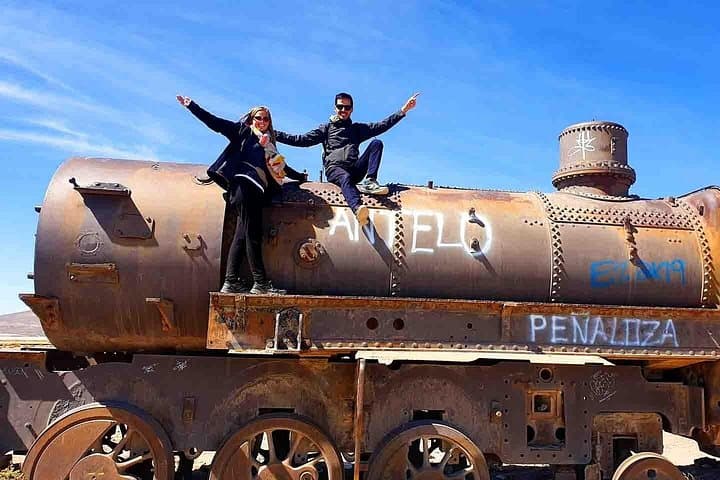
The salar is the remnant of prehistoric Lake Minchin and is today a broad salt pan sitting at roughly 3,656 m (about 12,000 ft). Beneath the hard white crust lies brine rich in minerals, and Incahuasi Island rises like an island of stone and giant cacti—petrified coral and volcanic rock recording ancient shorelines. Before the salt plains, the Train Cemetery outside Uyuni tells a different chapter: 19th–20th century locomotives once moved minerals to the Pacific before the industry collapsed.
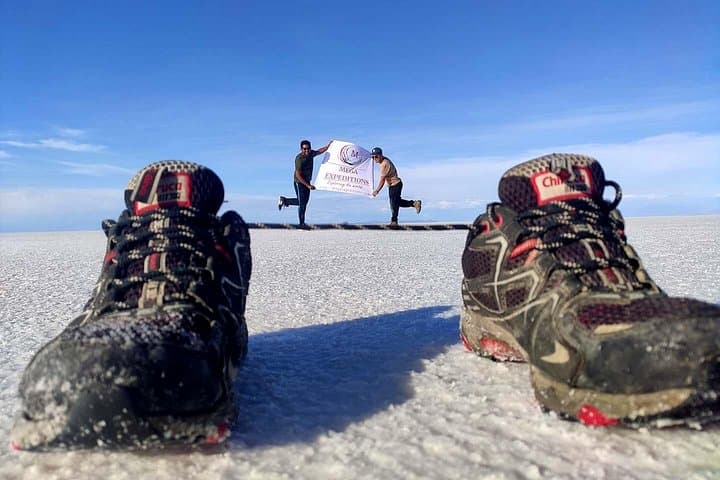
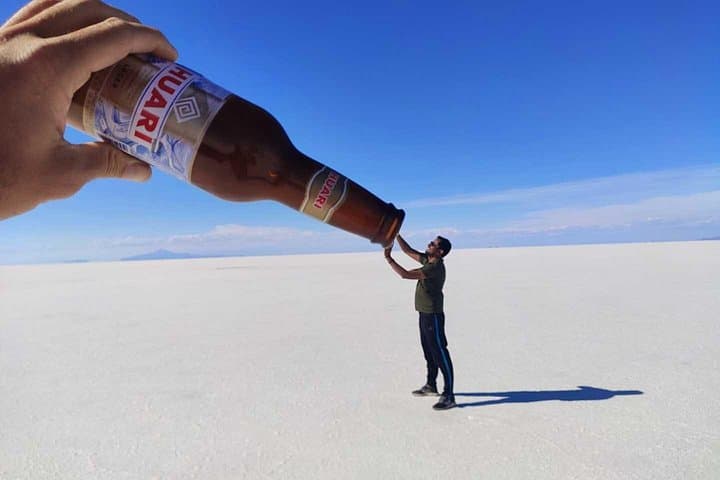
Cultural life clusters in Colchani where families harvest salt and fashion handcrafts, a direct link between landscape and livelihood. On the flat you’ll practice perspective photography—tiny people, enormous emptiness—and watch sunsets that color the horizon in sudden, raw oranges.
Practical notes: expect a long day (roughly 10–12 hours) with several short stops and substantial drive time in a rooftop-equipped 4WD. Temperatures swing from sun-baked midday to near-freezing at sunset; the air is thin and dry, so hydrate and move slowly if you’re sensitive to altitude. Bring layered clothing, sun protection, and a camera with a wide-angle lens. Restrooms are sparse between stops; plan accordingly. The trip is non-strenuous and accessible to most travelers, but altitude and weather define the pace.
The tour runs about 10–12 hours, typically departing mid-morning from Uyuni and returning in the early evening (around 7:00–8:00 pm).
Yes; the tour is non‑strenuous with short walks at stops, but altitude and time in a vehicle mean participants should be prepared and healthy enough for a long day.
The rainy season (roughly December–March) creates the mirror effect when a thin layer of water covers the salt; the dry season (April–November) shows the hexagonal salt crusts.
Typical inclusions are round-trip transport in 4WD, an English/Spanish guide, and lunch. Restrooms are limited—expect basic facilities at main stops and none on open stretches of the salar.
Mega Expeditions operates guided outdoor trips and adventures with an emphasis on safety, stewardship, and memorable experiences.
You step out of Uyuni and the world flattens into white—an unbroken plain that presses the sky low and bright. The 4WD hums across the crust; wind trims the horizon into a sharp line. By midday the salt gleams like glass when water lies on its surface, and the vastness dares you to find scale with a camera.
You step out of Uyuni and the world flattens into white—an unbroken plain that presses the sky low and bright. The 4WD hums across the crust; wind trims the horizon into a sharp line. By midday the salt gleams like glass when water lies on its surface, and the vastness dares you to find scale with a camera.
The salar is the remnant of prehistoric Lake Minchin and is today a broad salt pan sitting at roughly 3,656 m (about 12,000 ft). Beneath the hard white crust lies brine rich in minerals, and Incahuasi Island rises like an island of stone and giant cacti—petrified coral and volcanic rock recording ancient shorelines. Before the salt plains, the Train Cemetery outside Uyuni tells a different chapter: 19th–20th century locomotives once moved minerals to the Pacific before the industry collapsed.
Cultural life clusters in Colchani where families harvest salt and fashion handcrafts, a direct link between landscape and livelihood. On the flat you’ll practice perspective photography—tiny people, enormous emptiness—and watch sunsets that color the horizon in sudden, raw oranges.
Practical notes: expect a long day (roughly 10–12 hours) with several short stops and substantial drive time in a rooftop-equipped 4WD. Temperatures swing from sun-baked midday to near-freezing at sunset; the air is thin and dry, so hydrate and move slowly if you’re sensitive to altitude. Bring layered clothing, sun protection, and a camera with a wide-angle lens. Restrooms are sparse between stops; plan accordingly. The trip is non-strenuous and accessible to most travelers, but altitude and weather define the pace.