THE ADVENTURE COLLECTIVE® · Independent discovery and booking for outdoor travel

Cross the world’s largest salt flat on a private day tour from Uyuni—visit a train cemetery, see traditional salt processing in Colchani, explore Incahuasi’s giant cacti and watch the sunset by Volcán Tunupa. Learn what to expect at 3,650 m and how to prepare for the long day.
Cross the world’s largest salt flat on a private day tour from Uyuni—visit a train cemetery, see traditional salt processing in Colchani, explore Incahuasi’s giant cacti and watch the sunset by Volcán Tunupa. Learn what to expect at 3,650 m and how to prepare for the long day.
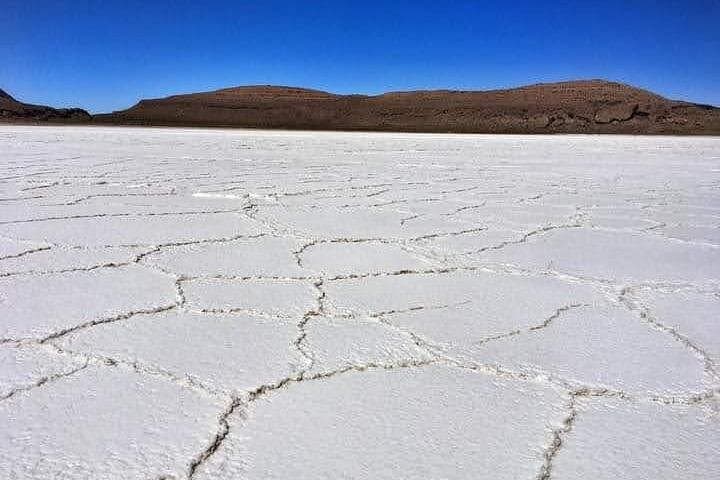
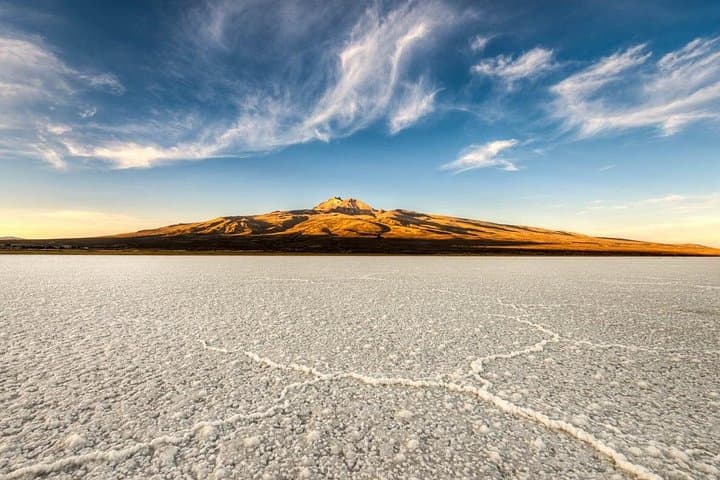
A low sun breaks across the salt, turning the flat white plane into an impossible horizon. Vehicles cross the crust in polite, measured lines; a guide points toward a solitary silhouette—Incahuasi—its giant cacti throwing long shadows like fossilized hands. The air at 3,650 m is thin, every step deliberate, every breath a reminder that this is high-altitude country.
Verified experiences and guided adventures in the surrounding area.
Operated by Mundicontact Expeditions · Uyuni, Potosí
A low sun breaks across the salt, turning the flat white plane into an impossible horizon. Vehicles cross the crust in polite, measured lines; a guide points toward a solitary silhouette—Incahuasi—its giant cacti throwing long shadows like fossilized hands. The air at 3,650 m is thin, every step deliberate, every breath a reminder that this is high-altitude country.
Geologically, the Salar is the dried bed of prehistoric Lake Minchin, its hard salt crust formed over millennia and punctuated by volcanic outcrops such as Tunupa. Culturally the plain is woven into Aymara and Quechua life—salt is still harvested in Colchani and ceremonies at the edges of the salar mark seasonal cycles. The train cemetery outside Uyuni tells a later chapter: 19th-century mining ambitions left iron skeletons that now age under Andean light.
On a private day trip visitors typically stop at the train cemetery, watch salt processing in Colchani, walk among Incahuasi’s cacti, and finish near Tahua for sunset beneath Tunupa’s flank. Expect long drives on compact salt and gravel, brief hikes across rocky island trails, and wide-open photographic opportunities. Bring layers for brutal midday sun and freezing evenings, pace yourself to the altitude, and keep water and snacks handy—meals are included but windows for stops are limited. Guides manage logistics and permits; private transport means extra flexibility for photos, slow pacing, and quick shelter if winds pick up. For photographers and first-time visitors alike, the Salar offers both epic vistas and quiet, weathered detail—respect the crust, honor local communities, and the day will reward patience with some of the clearest light on Earth.
Expect about 11–12 hours door-to-door from Uyuni, including multiple short stops and a dedicated sunset view near Tahua.
Yes—most of the crust is safe, but follow your guide’s route, avoid soft or wet areas, and do not walk alone far from the vehicle.
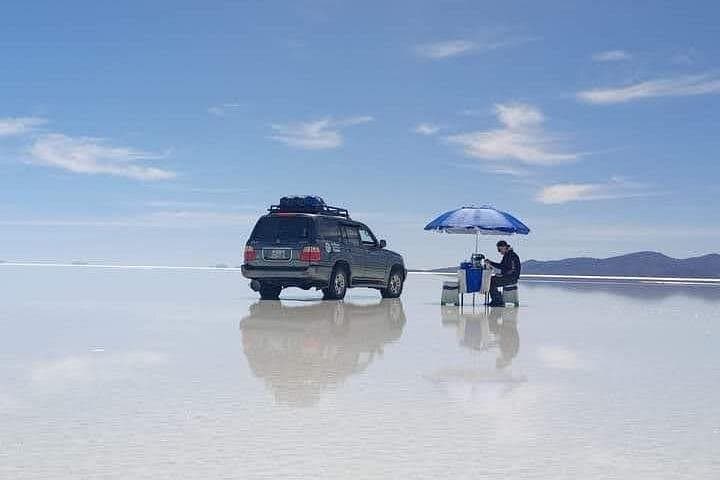
The mirror effect occurs during and just after the rainy season (roughly Dec–Mar) when a thin water layer covers the salar; it’s spectacular but weather-dependent and can affect accessibility.
There are basic facilities in Colchani and at visitor areas; lunch is included on the private tour, but bring snacks and water for between stops.
Mundicontact Expeditions operates guided outdoor trips and adventures with an emphasis on safety, stewardship, and memorable experiences.
A low sun breaks across the salt, turning the flat white plane into an impossible horizon. Vehicles cross the crust in polite, measured lines; a guide points toward a solitary silhouette—Incahuasi—its giant cacti throwing long shadows like fossilized hands. The air at 3,650 m is thin, every step deliberate, every breath a reminder that this is high-altitude country.
A low sun breaks across the salt, turning the flat white plane into an impossible horizon. Vehicles cross the crust in polite, measured lines; a guide points toward a solitary silhouette—Incahuasi—its giant cacti throwing long shadows like fossilized hands. The air at 3,650 m is thin, every step deliberate, every breath a reminder that this is high-altitude country.
Geologically, the Salar is the dried bed of prehistoric Lake Minchin, its hard salt crust formed over millennia and punctuated by volcanic outcrops such as Tunupa. Culturally the plain is woven into Aymara and Quechua life—salt is still harvested in Colchani and ceremonies at the edges of the salar mark seasonal cycles. The train cemetery outside Uyuni tells a later chapter: 19th-century mining ambitions left iron skeletons that now age under Andean light.
On a private day trip visitors typically stop at the train cemetery, watch salt processing in Colchani, walk among Incahuasi’s cacti, and finish near Tahua for sunset beneath Tunupa’s flank. Expect long drives on compact salt and gravel, brief hikes across rocky island trails, and wide-open photographic opportunities. Bring layers for brutal midday sun and freezing evenings, pace yourself to the altitude, and keep water and snacks handy—meals are included but windows for stops are limited. Guides manage logistics and permits; private transport means extra flexibility for photos, slow pacing, and quick shelter if winds pick up. For photographers and first-time visitors alike, the Salar offers both epic vistas and quiet, weathered detail—respect the crust, honor local communities, and the day will reward patience with some of the clearest light on Earth.