THE ADVENTURE COLLECTIVE® · Independent discovery and booking for outdoor travel

A five-day route that moves from glaciated high passes to humid cloud forest, ending at Machu Picchu. Expect one of the region’s most varied treks — long ascents, high camps, a glamping night in Sky Lodge domes, and an early sunrise at the ruins.
A five-day route that moves from glaciated high passes to humid cloud forest, ending at Machu Picchu. Expect one of the region’s most varied treks — long ascents, high camps, a glamping night in Sky Lodge domes, and an early sunrise at the ruins.
Dawn on the high Andean plain is thin and cold; your group gathers in Cusco before a three-hour drive that drops you into Mollepata and the trailhead. The first day rises into Cruzpata and Soraypampa, where Humantay Lake’s turquoise basin reflects the glaciers and the Sky Lodge domes stand as an unexpected modern camp against ancient peaks.
Verified experiences and guided adventures in the surrounding area.
Operated by Quechuas Expeditions · Cusco, Cusco
Dawn on the high Andean plain is thin and cold; your group gathers in Cusco before a three-hour drive that drops you into Mollepata and the trailhead. The first day rises into Cruzpata and Soraypampa, where Humantay Lake’s turquoise basin reflects the glaciers and the Sky Lodge domes stand as an unexpected modern camp against ancient peaks.
The Salkantay route predates the Inca road network but became a popular alternative to the Classic Inca Trail for its dramatic alpine-to-jungle transition. Geology here is raw: granite and glaciated cirques above 4,600–4,650 m at the pass, then a rapid descent through cloud forest where humidity feeds waterfalls and coca and banana crops. Culture is visible in terraces, local Quechua communities, and the constant presence of Salkantay — one of the Cordillera Vilcabamba’s principal peaks — a mountain that has guided travelers for centuries.
Expect demanding daily stages: steep ascents to the Salkantay Pass, long downhill stretches on muddy or rocky singletrack, river crossings, and final kilometers along the railroad into Aguas Calientes. Nights alternate between high camps (cold, thin air) and a Sky Lodge dome experience or hostel in Aguas Calientes. The final morning includes an early climb or bus to Machu Picchu and a guided tour; permit and timed-entry logistics apply.
Practical edge: acclimatize in Cusco at least 24–48 hours, pack layered insulation and a -10°C-rated bag, use trekking poles, and budget for water purchases and small local tips. Guides provide meals, camp gear, and train return; be prepared for fast weather shifts and reduced oxygen at altitude.
Yes — timed-entry tickets are required for Machu Picchu and are included in this itinerary; Huayna Picchu or Machu Picchu Mountain climbs require separate limited permits.
The pass reaches around 4,600–4,650 m with several sustained ascents; it’s physically demanding due to altitude and steep grades but requires no technical climbing.
This tour includes horsemen, horses or porters to carry group camping gear and food; personal luggage limits typically apply (about 7 kg).
Bring acetazolamide if prescribed, hydrate well, ascend slowly, and notify guides immediately if symptoms (headache, nausea, dizziness) develop; guides carry oxygen and first-aid kits.
Quechuas Expeditions operates guided outdoor trips and adventures with an emphasis on safety, stewardship, and memorable experiences.
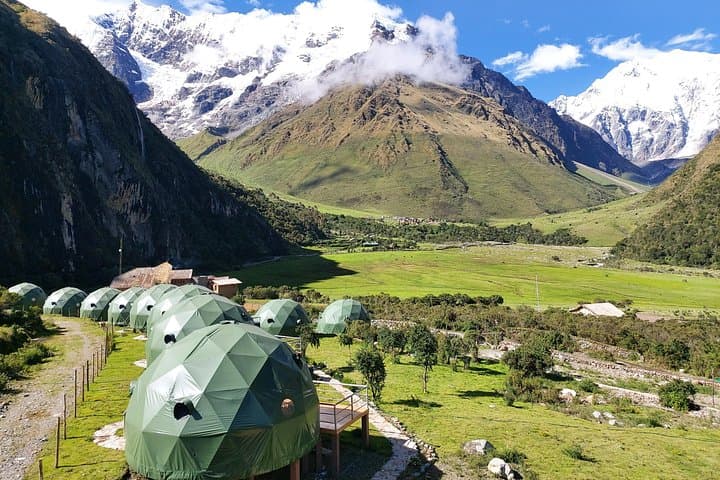


Dawn on the high Andean plain is thin and cold; your group gathers in Cusco before a three-hour drive that drops you into Mollepata and the trailhead. The first day rises into Cruzpata and Soraypampa, where Humantay Lake’s turquoise basin reflects the glaciers and the Sky Lodge domes stand as an unexpected modern camp against ancient peaks.
Dawn on the high Andean plain is thin and cold; your group gathers in Cusco before a three-hour drive that drops you into Mollepata and the trailhead. The first day rises into Cruzpata and Soraypampa, where Humantay Lake’s turquoise basin reflects the glaciers and the Sky Lodge domes stand as an unexpected modern camp against ancient peaks.
The Salkantay route predates the Inca road network but became a popular alternative to the Classic Inca Trail for its dramatic alpine-to-jungle transition. Geology here is raw: granite and glaciated cirques above 4,600–4,650 m at the pass, then a rapid descent through cloud forest where humidity feeds waterfalls and coca and banana crops. Culture is visible in terraces, local Quechua communities, and the constant presence of Salkantay — one of the Cordillera Vilcabamba’s principal peaks — a mountain that has guided travelers for centuries.
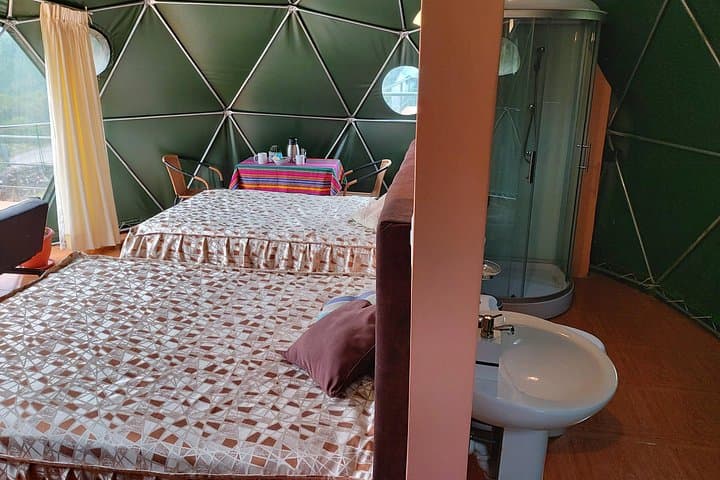
Expect demanding daily stages: steep ascents to the Salkantay Pass, long downhill stretches on muddy or rocky singletrack, river crossings, and final kilometers along the railroad into Aguas Calientes. Nights alternate between high camps (cold, thin air) and a Sky Lodge dome experience or hostel in Aguas Calientes. The final morning includes an early climb or bus to Machu Picchu and a guided tour; permit and timed-entry logistics apply.
Practical edge: acclimatize in Cusco at least 24–48 hours, pack layered insulation and a -10°C-rated bag, use trekking poles, and budget for water purchases and small local tips. Guides provide meals, camp gear, and train return; be prepared for fast weather shifts and reduced oxygen at altitude.