THE ADVENTURE COLLECTIVE® · Independent discovery and booking for outdoor travel

The Salkantay Trek is a demanding five-day route from high Andean passes to the cloud forests that frame Machu Picchu. Expect glacial views, shifting microclimates, and remote camps before a final approach to the legendary citadel.
The Salkantay Trek is a demanding five-day route from high Andean passes to the cloud forests that frame Machu Picchu. Expect glacial views, shifting microclimates, and remote camps before a final approach to the legendary citadel.
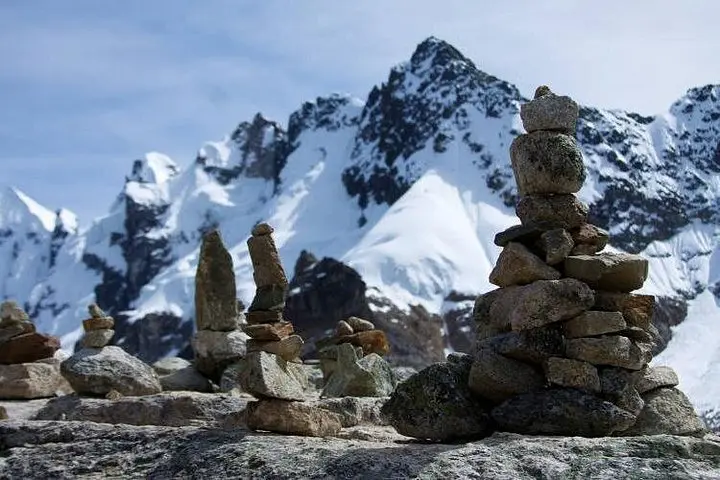
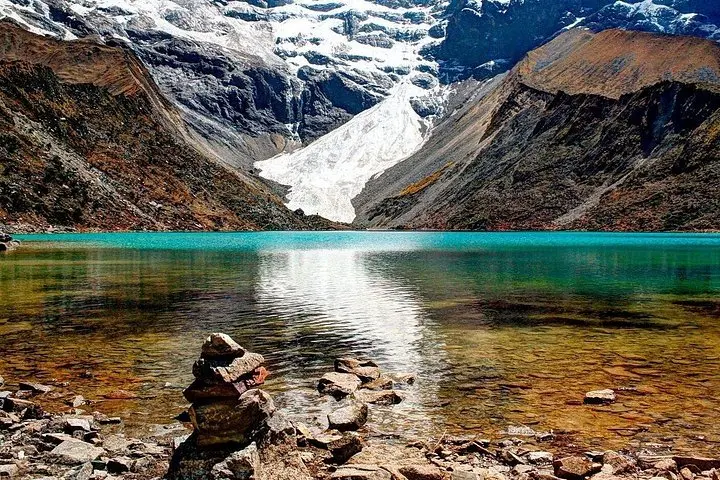
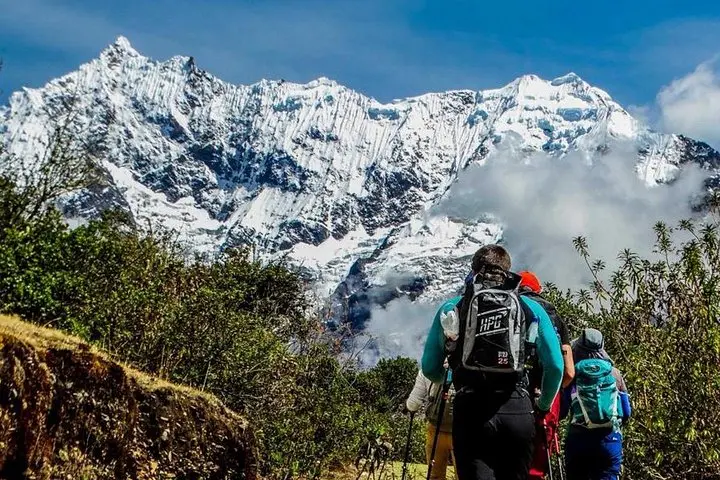
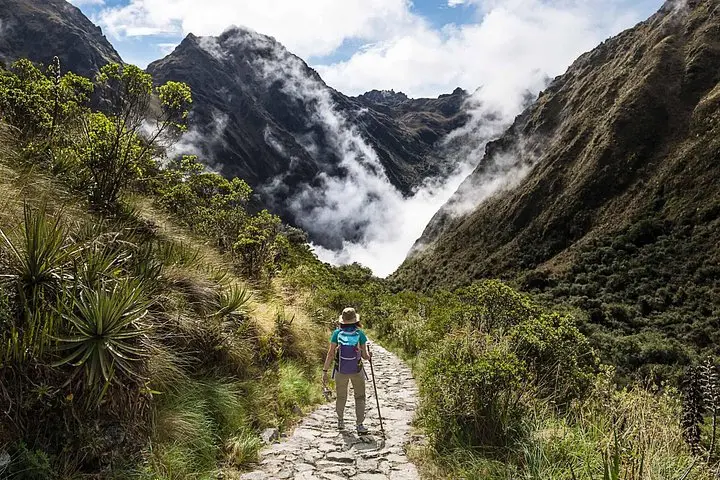
A thin, cold light slides across the snow shoulders of Salkantay as you lace your boots at dawn. The first day climbs out of Mollepata through stony passes and winds toward Soraypampa, where a cup of coca tea steams in the air and the Humantay lagoon sits like a turquoise eye at 4,200 m. The trail pushes through shifting microclimates — glaciated ramps, high puna, and then the humid green of the cloud and subtropical forest — until the train tracks and terraces of Aguas Calientes bring Machu Picchu into view.
Verified experiences and guided adventures in the surrounding area.
Operated by Chullos Travel Peru · Cusco, Cusco Region
A thin, cold light slides across the snow shoulders of Salkantay as you lace your boots at dawn. The first day climbs out of Mollepata through stony passes and winds toward Soraypampa, where a cup of coca tea steams in the air and the Humantay lagoon sits like a turquoise eye at 4,200 m. The trail pushes through shifting microclimates — glaciated ramps, high puna, and then the humid green of the cloud and subtropical forest — until the train tracks and terraces of Aguas Calientes bring Machu Picchu into view.
This route follows long-used Andean corridors that predate colonial maps; Salkantay itself is an Apu, a mountain with spiritual significance to local Quechua communities. Geologically the trek is dramatic: an ice-polished massif gives way to eroded volcanic and metamorphic ridges and the deep, river-cut Urubamba valley. Along the way you’ll encounter coffee plots, orchids, and narrow Inca steps that hint at the broader cultural network that fed and connected the empire.
Practical side: expect roughly 51 km over five days with a high pass above 4,600 m and daily sections of steep ascent and descent. Acclimatize in Cusco, carry layers for rapid weather change, and stagger your pace on exposed switchbacks. Camps are basic; the itinerary includes meals, a camping kit, and a return train from Aguas Calientes. Note Machu Picchu tickets are controlled by Peru’s Ministry of Culture and vary by circuit.
Hydrate, respect altitude, and leave campsites as you found them — the Andes are resilient only if visitors are careful.
Salkantay is longer and reaches higher elevations than the classic Inca Trail; it’s more remote with steeper passes, so it’s considered more physically demanding.
The operator purchases tickets based on availability, but Machu Picchu tickets are issued by Peru’s Ministry of Culture and may affect final itinerary—availability varies by circuit.
Dry season (May–September) offers more stable weather and clearer mountain views; shoulder months have fewer crowds but more variable conditions.
Some operators offer lodge-based variations on the Salkantay route, but this specific itinerary includes camping and a camping kit as part of the package.
Chullos Travel Peru operates guided outdoor trips and adventures with an emphasis on safety, stewardship, and memorable experiences.
A thin, cold light slides across the snow shoulders of Salkantay as you lace your boots at dawn. The first day climbs out of Mollepata through stony passes and winds toward Soraypampa, where a cup of coca tea steams in the air and the Humantay lagoon sits like a turquoise eye at 4,200 m. The trail pushes through shifting microclimates — glaciated ramps, high puna, and then the humid green of the cloud and subtropical forest — until the train tracks and terraces of Aguas Calientes bring Machu Picchu into view.
A thin, cold light slides across the snow shoulders of Salkantay as you lace your boots at dawn. The first day climbs out of Mollepata through stony passes and winds toward Soraypampa, where a cup of coca tea steams in the air and the Humantay lagoon sits like a turquoise eye at 4,200 m. The trail pushes through shifting microclimates — glaciated ramps, high puna, and then the humid green of the cloud and subtropical forest — until the train tracks and terraces of Aguas Calientes bring Machu Picchu into view.
This route follows long-used Andean corridors that predate colonial maps; Salkantay itself is an Apu, a mountain with spiritual significance to local Quechua communities. Geologically the trek is dramatic: an ice-polished massif gives way to eroded volcanic and metamorphic ridges and the deep, river-cut Urubamba valley. Along the way you’ll encounter coffee plots, orchids, and narrow Inca steps that hint at the broader cultural network that fed and connected the empire.
Practical side: expect roughly 51 km over five days with a high pass above 4,600 m and daily sections of steep ascent and descent. Acclimatize in Cusco, carry layers for rapid weather change, and stagger your pace on exposed switchbacks. Camps are basic; the itinerary includes meals, a camping kit, and a return train from Aguas Calientes. Note Machu Picchu tickets are controlled by Peru’s Ministry of Culture and vary by circuit.
Hydrate, respect altitude, and leave campsites as you found them — the Andes are resilient only if visitors are careful.