THE ADVENTURE COLLECTIVE® · Independent discovery and booking for outdoor travel

A 4-day route that marries the high, glaciated passes of the Salkantay with a section of the Classic Inca Trail, ending at Machu Picchu. Expect steep altitude gains, cloud forest descents, and two nights of camping before a final night in Aguas Calientes.
A 4-day route that marries the high, glaciated passes of the Salkantay with a section of the Classic Inca Trail, ending at Machu Picchu. Expect steep altitude gains, cloud forest descents, and two nights of camping before a final night in Aguas Calientes.
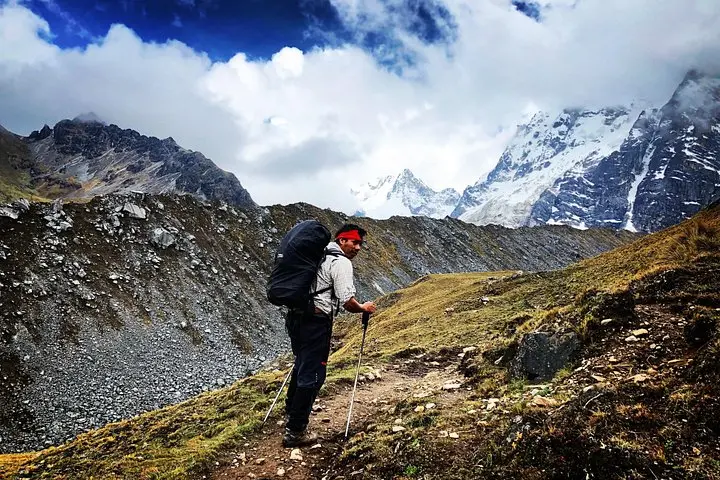
Dawn breaks over high Andean ridges as the van slides away from Cusco and the profile of Salkantay—a raw, glaciated peak—emerges through low cloud. On the first morning the trailhead at Soraypampa opens like a page of geology: moraine-scoured bowls, a turquoise humantay lake, and stony switchbacks that lead into thinning air.
Verified experiences and guided adventures in the surrounding area.
Operated by Action Peru Treks · Cusco, Cusco
Dawn breaks over high Andean ridges as the van slides away from Cusco and the profile of Salkantay—a raw, glaciated peak—emerges through low cloud. On the first morning the trailhead at Soraypampa opens like a page of geology: moraine-scoured bowls, a turquoise humantay lake, and stony switchbacks that lead into thinning air.
This route threads two trekking traditions. The Salkantay corridor climbs from puna grassland through glacial cirques before dropping into cloud forest; on day three the group links into the Classic Inca Trail, tracing ancient stone paths past Llactapata and Paucarcancha toward Ollantaytambo and Aguas Calientes. Mount Salkantay (approx. 6,271 m / 20,574 ft) dominates the skyline and has long held cultural significance for Quechua communities as an apu, or mountain spirit.
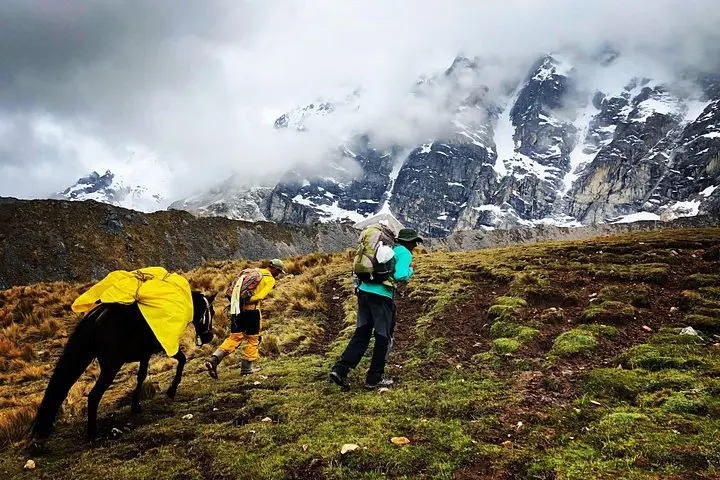
Expect big altitude swings: Soraypampa starts near 3,800 m (12,467 ft), the Incachiriasca pass reaches about 4,850 m (15,908 ft), and the trek finishes at Machu Picchu (2,430 m). Terrain varies—rocky high-pass scrambles, steep descents, and humid singletrack through cloud forest—so pacing and acclimatization matter.
Practical guidance: allow 48 hours in Cusco before starting, carry a warm sleeping bag and layered clothing, and use trekking poles on steep descents. Hydrate early, watch for altitude symptoms, and note Machu Picchu entry times start at 8:00 AM under current regulations (no sunrise access on this itinerary). With a guided support crew, two nights camping and one night in Aguas Calientes, the trek blends raw mountain exposure with the engineered corridors of the Incas—both a physical test and a window into Andean landscapes.
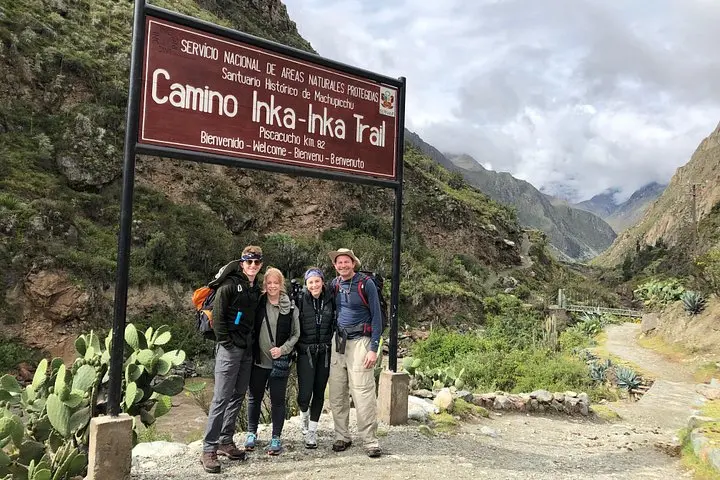
This itinerary connects into the Classic Inca Trail at Km 82 but uses a transport transfer for the final approach; permits for Huayna Picchu or Machu Picchu are separate and subject to availability.
The route climbs from ~3,800 m to a high pass near 4,850 m; proper acclimatization, hydration, and pacing reduce risk but altitude sickness remains possible.
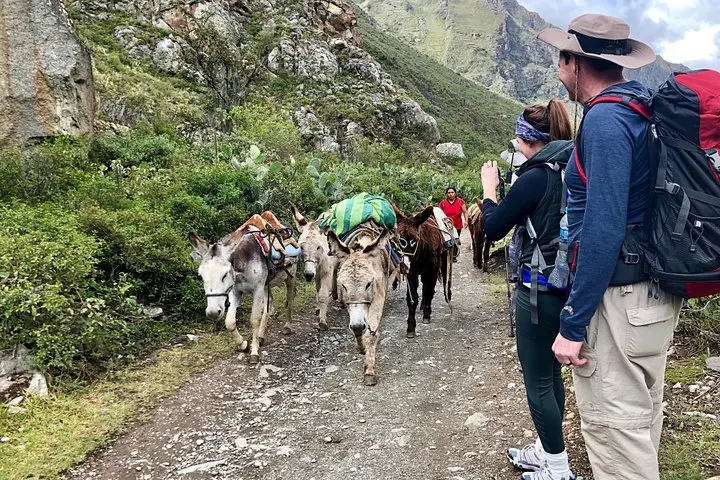
Two nights are in shared tents with support staff providing meals and equipment; expect basic amenities, communal dining, and portable toilets at camps.
Yes—sleeping bags, trekking poles, and some cold-weather clothing are commonly available to rent in Cusco or from the operator when arranged in advance.
Action Peru Treks operates guided outdoor trips and adventures with an emphasis on safety, stewardship, and memorable experiences.
Dawn breaks over high Andean ridges as the van slides away from Cusco and the profile of Salkantay—a raw, glaciated peak—emerges through low cloud. On the first morning the trailhead at Soraypampa opens like a page of geology: moraine-scoured bowls, a turquoise humantay lake, and stony switchbacks that lead into thinning air.
Dawn breaks over high Andean ridges as the van slides away from Cusco and the profile of Salkantay—a raw, glaciated peak—emerges through low cloud. On the first morning the trailhead at Soraypampa opens like a page of geology: moraine-scoured bowls, a turquoise humantay lake, and stony switchbacks that lead into thinning air.
This route threads two trekking traditions. The Salkantay corridor climbs from puna grassland through glacial cirques before dropping into cloud forest; on day three the group links into the Classic Inca Trail, tracing ancient stone paths past Llactapata and Paucarcancha toward Ollantaytambo and Aguas Calientes. Mount Salkantay (approx. 6,271 m / 20,574 ft) dominates the skyline and has long held cultural significance for Quechua communities as an apu, or mountain spirit.
Expect big altitude swings: Soraypampa starts near 3,800 m (12,467 ft), the Incachiriasca pass reaches about 4,850 m (15,908 ft), and the trek finishes at Machu Picchu (2,430 m). Terrain varies—rocky high-pass scrambles, steep descents, and humid singletrack through cloud forest—so pacing and acclimatization matter.
Practical guidance: allow 48 hours in Cusco before starting, carry a warm sleeping bag and layered clothing, and use trekking poles on steep descents. Hydrate early, watch for altitude symptoms, and note Machu Picchu entry times start at 8:00 AM under current regulations (no sunrise access on this itinerary). With a guided support crew, two nights camping and one night in Aguas Calientes, the trek blends raw mountain exposure with the engineered corridors of the Incas—both a physical test and a window into Andean landscapes.