THE ADVENTURE COLLECTIVE® · Independent discovery and booking for outdoor travel

Three full days from Salta take you through the rust-red canyons of Quebrada de las Conchas, the colonial calm of Cachi and the blinding expanse of Salinas Grandes. Long drives, short walks and big vistas make this a concentrated introduction to northwest Argentina’s landscapes and culture.
Three full days from Salta take you through the rust-red canyons of Quebrada de las Conchas, the colonial calm of Cachi and the blinding expanse of Salinas Grandes. Long drives, short walks and big vistas make this a concentrated introduction to northwest Argentina’s landscapes and culture.
You meet the van before dawn in Salta's Plaza 9 de Julio, the city still holding its last cool breath. The driver checks names, luggage clinks, and the road curls away from colonial facades into high desert—first toward the red-banded cliffs of Quebrada de las Conchas, then up the slow grades of the Calchaquí Valley and, finally, into the thin-air grandeur of the Salinas Grandes.
Verified experiences and guided adventures in the surrounding area.
Operated by AGENCIA DE TURISMO TIAMAR EVT · Salta, Salta
You meet the van before dawn in Salta's Plaza 9 de Julio, the city still holding its last cool breath. The driver checks names, luggage clinks, and the road curls away from colonial facades into high desert—first toward the red-banded cliffs of Quebrada de las Conchas, then up the slow grades of the Calchaquí Valley and, finally, into the thin-air grandeur of the Salinas Grandes.
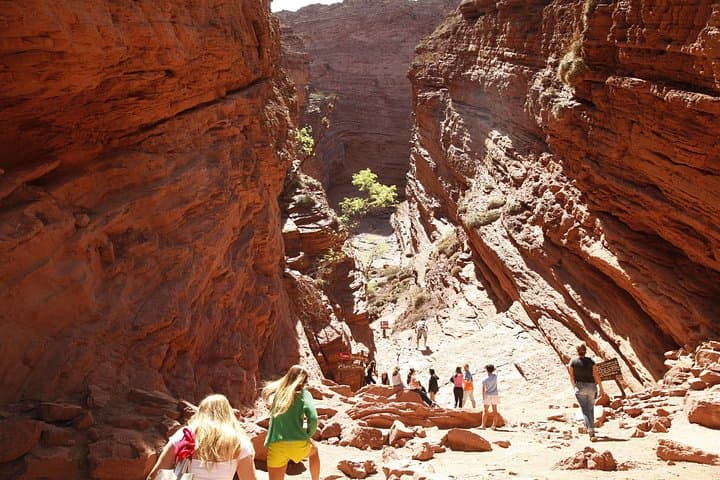
On Day One the landscape does the talking: wind-carved amphitheaters, spires and hoodoos in ochre and rust that lean as if listening. Cafayate arrives like an oasis—a tidy town with low-slung bodegas, sunlit courtyards and Malbec vines that thrive in calcium-rich soils. A winery visit breaks the day, the tannins a literal taste of the valley's geology.
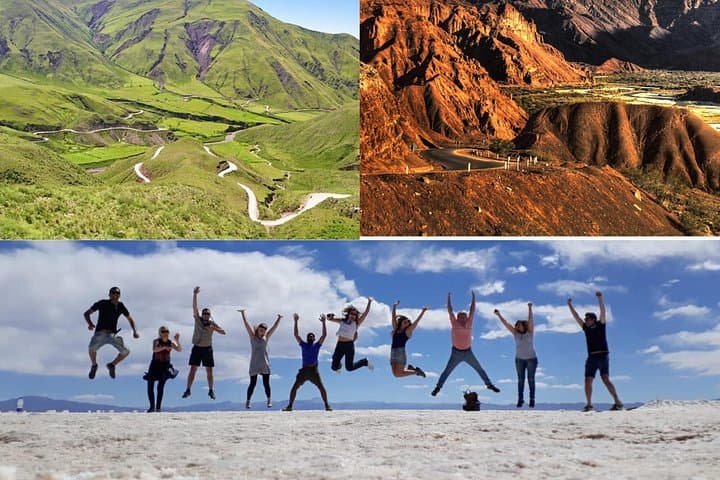
Day Two shifts palette to the north, where the road climbs into Los Cardones and the old terraces around Cachi. The town’s whitewashed houses and a church with carved wooden details recall Spanish colonial patterns layered over earlier Andean life. The drive itself is the attraction: twisting switchbacks, scrubland studded with giant cactus, and viewpoints where the cordillera slices the horizon.
Day Three pushes altitude. Purmamarca’s seven-colored hill is a glimpse of the Puna’s stacked sediments before Cuesta de Lipán climbs to nearly 4,720 meters. At the Salinas Grandes you step onto a salt plain so bright it throws back daylight; local communities manage access and small contributions support their stewardship and cultural projects.
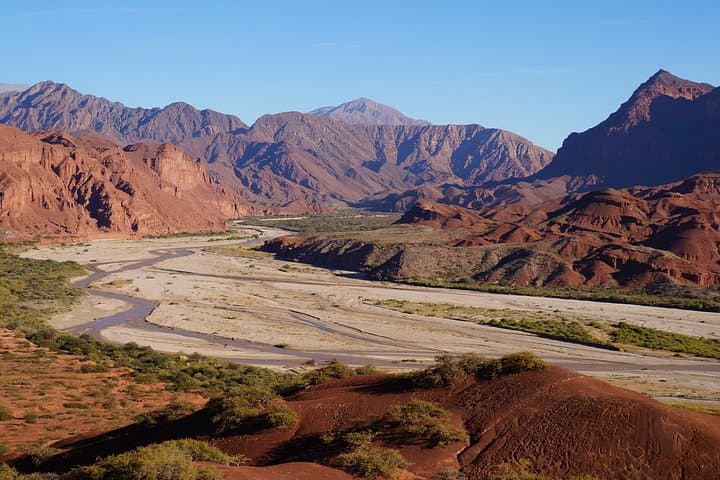
Geology runs like a through-line—marine deposits pressed, uplifted and parched into the sculpted ridges, terraces and vast salt crusts that make these three days visually distinct. Culturally, the valleys were highways for pre-Columbian peoples and, later, colonial caravans; today indigenous communities and small winemakers guard traditions while adapting to tourism.
Practical notes: this is a bus-based program with short guided walks—expect long days (12–14 hours). Altitude is the main variable: take two days in Salta to acclimatize if possible, carry water, and move slowly on the high passes. Bring cash for the small community contributions at Salinas Grandes and for lunches in towns. Shoes should be sturdy but comfortable for short hikes and rocky viewpoints.
Timing matters—sunrise and late afternoon sculpt the canyon walls and salt flats into their most photogenic moods, and midday at the Salinas is harsh and bright. If you want fewer people in photos, request an early pickup and keep sunglasses, sunblock and a brimmed hat at hand. The three excursions balance scenery, local flavor and geology into a compact, high-reward itinerary—ideal for travelers who want to experience northwest Argentina’s range of landscapes without deep backcountry logistics.
Each day is bus-based with several photo stops and short walks; expect long days but low technical difficulty—main challenge is altitude and long periods off your feet.
Yes—visitors typically pay a small contribution to the local community that manages access; carry cash in Argentine pesos.
Lunches are generally at your own expense; the itinerary allows free time in Cafayate, Cachi and Purmamarca to choose local restaurants or snacks.
Yes—the day includes a scheduled winery stop with free time in Cafayate to taste and explore independent bodegas.
The operator notes stroller access and infant seats are available, but the long days and altitude may be tiring for very young children—plan accordingly.
Descend to lower elevation, rest, hydrate, and notify the guide—most symptoms are mild but severe cases require immediate medical attention.
AGENCIA DE TURISMO TIAMAR EVT operates guided outdoor trips and adventures with an emphasis on safety, stewardship, and memorable experiences.

You meet the van before dawn in Salta's Plaza 9 de Julio, the city still holding its last cool breath. The driver checks names, luggage clinks, and the road curls away from colonial facades into high desert—first toward the red-banded cliffs of Quebrada de las Conchas, then up the slow grades of the Calchaquí Valley and, finally, into the thin-air grandeur of the Salinas Grandes.
You meet the van before dawn in Salta's Plaza 9 de Julio, the city still holding its last cool breath. The driver checks names, luggage clinks, and the road curls away from colonial facades into high desert—first toward the red-banded cliffs of Quebrada de las Conchas, then up the slow grades of the Calchaquí Valley and, finally, into the thin-air grandeur of the Salinas Grandes.
On Day One the landscape does the talking: wind-carved amphitheaters, spires and hoodoos in ochre and rust that lean as if listening. Cafayate arrives like an oasis—a tidy town with low-slung bodegas, sunlit courtyards and Malbec vines that thrive in calcium-rich soils. A winery visit breaks the day, the tannins a literal taste of the valley's geology.
Day Two shifts palette to the north, where the road climbs into Los Cardones and the old terraces around Cachi. The town’s whitewashed houses and a church with carved wooden details recall Spanish colonial patterns layered over earlier Andean life. The drive itself is the attraction: twisting switchbacks, scrubland studded with giant cactus, and viewpoints where the cordillera slices the horizon.
Day Three pushes altitude. Purmamarca’s seven-colored hill is a glimpse of the Puna’s stacked sediments before Cuesta de Lipán climbs to nearly 4,720 meters. At the Salinas Grandes you step onto a salt plain so bright it throws back daylight; local communities manage access and small contributions support their stewardship and cultural projects.
Geology runs like a through-line—marine deposits pressed, uplifted and parched into the sculpted ridges, terraces and vast salt crusts that make these three days visually distinct. Culturally, the valleys were highways for pre-Columbian peoples and, later, colonial caravans; today indigenous communities and small winemakers guard traditions while adapting to tourism.
Practical notes: this is a bus-based program with short guided walks—expect long days (12–14 hours). Altitude is the main variable: take two days in Salta to acclimatize if possible, carry water, and move slowly on the high passes. Bring cash for the small community contributions at Salinas Grandes and for lunches in towns. Shoes should be sturdy but comfortable for short hikes and rocky viewpoints.
Timing matters—sunrise and late afternoon sculpt the canyon walls and salt flats into their most photogenic moods, and midday at the Salinas is harsh and bright. If you want fewer people in photos, request an early pickup and keep sunglasses, sunblock and a brimmed hat at hand. The three excursions balance scenery, local flavor and geology into a compact, high-reward itinerary—ideal for travelers who want to experience northwest Argentina’s range of landscapes without deep backcountry logistics.