THE ADVENTURE COLLECTIVE® · Independent discovery and booking for outdoor travel

Spend a full day from Punta Cana chasing humpback whales in Samaná Bay, lunching on Cayo Levantado (Bacardi Island) and riding to the dramatic El Limón Waterfalls. This full-day trip blends marine wildlife viewing with beach time and a short inland safari.
Spend a full day from Punta Cana chasing humpback whales in Samaná Bay, lunching on Cayo Levantado (Bacardi Island) and riding to the dramatic El Limón Waterfalls. This full-day trip blends marine wildlife viewing with beach time and a short inland safari.
The catamaran slices through Samaná Bay with a casual insistence, and the first rolling backs of deep blue suggest the day will not be ordinary. Guests gather at the rail—binoculars already raised—listening as a naturalist traces the route of humpback mothers and calves that return here each winter. The sea pulls attention outward; the coast, with its washed-pastel towns and coconut groves, keeps a quieter pull inland where El Limón’s waterfall waits.
Verified experiences and guided adventures in the surrounding area.
Operated by The Whales Las Ballenas · Samaná, Samaná Province
The catamaran slices through Samaná Bay with a casual insistence, and the first rolling backs of deep blue suggest the day will not be ordinary. Guests gather at the rail—binoculars already raised—listening as a naturalist traces the route of humpback mothers and calves that return here each winter. The sea pulls attention outward; the coast, with its washed-pastel towns and coconut groves, keeps a quieter pull inland where El Limón’s waterfall waits.
Samaná Bay is one of the Western Hemisphere’s most dependable humpback breeding grounds. Geologically the ridge-and-valley terrain around the bay funnels warm Caribbean currents and creates sheltered nursery waters; culturally the region is a cross-current of Taino roots, colonial histories, and an entrepreneurial fishing and tourism economy. Cayo Levantado—slang-named Bacardi Island after a rum ad immortalized its palm-fringed crescent—offers the cinematic midday interlude: a buffet of Dominican staples, shallow turquoise for swimming, and a beach that seems designed for long, warm pauses.
After lunch the rhythm changes. Riders mount horses and follow sandy lanes under a canopy of palms and almond trees toward El Limón. The falls drop from a steep limestone escarpment, a sudden vertical punctuation in an otherwise forgiving landscape. Water dares you forward—the pool below both invitation and test—while the forest around it hums and keeps its own pace.
Practicalities matter on a day like this. The full excursion runs roughly 12 hours (expect a long day with hotel pickup and return to Punta Cana). Whale watching is typically scheduled in the morning—when whales are most active—then island time and the waterfall come in the afternoon. Bring motion-sickness prevention if you’re prone; the catamaran can roll in open water. Wear reef-safe sunscreen, quick-dry clothes, and shoes that can contend with both sand and a slick trail.
Local guides steward the experience: they read whale behavior, coordinate safe viewing distances, and act as ambassadors for the community economy that relies on respectful tourism. Timing your visit between January and March increases odds of seeing breaches and spy-hops, while shoulder seasons are quieter onshore. Lastly, follow the guides’ instructions around the animals—observe, photograph, but don’t approach. The memories—breaches framed against the morning light, the hush of El Limón’s plunge, a picnic under a leaning palm—are best kept sustainable.
For travelers based in Punta Cana, this is a long but concentrated immersion into the Dominican Republic’s marine and inland contrasts: a day that pairs animal spectacle with simple beach luxuries and a short jungle-hill adventure, all stitched together by guides who make the logistics disappear so the place can speak for itself.
The main humpback season runs January through March, with peak sightings typically in February.
No guarantee—nature is variable—but mornings during peak season offer the best odds and trained naturalists increase your chances.
No—the waterfall visit involves short hikes and a guided horse-ride approach; expect 15–30 minutes on foot from the drop-off point.
The supplier lists wheelchair-accessible options for transport and surfaces, but access on boats and natural trails may be limited—confirm special needs when booking.
Yes—buffet lunch on Cayo Levantado is included, featuring typical Dominican dishes like rice, beans, fish, and salads.
Tipping is customary; budget a small tip for the boat crew and local guides if they deliver good service.
The Whales Las Ballenas operates guided outdoor trips and adventures with an emphasis on safety, stewardship, and memorable experiences.


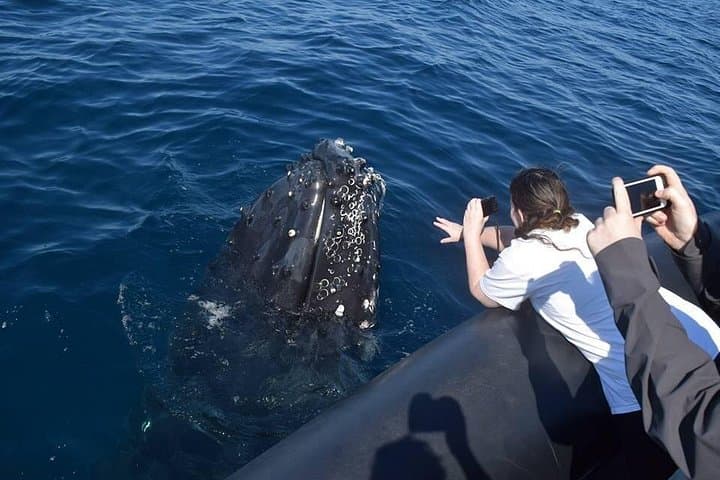
The catamaran slices through Samaná Bay with a casual insistence, and the first rolling backs of deep blue suggest the day will not be ordinary. Guests gather at the rail—binoculars already raised—listening as a naturalist traces the route of humpback mothers and calves that return here each winter. The sea pulls attention outward; the coast, with its washed-pastel towns and coconut groves, keeps a quieter pull inland where El Limón’s waterfall waits.
The catamaran slices through Samaná Bay with a casual insistence, and the first rolling backs of deep blue suggest the day will not be ordinary. Guests gather at the rail—binoculars already raised—listening as a naturalist traces the route of humpback mothers and calves that return here each winter. The sea pulls attention outward; the coast, with its washed-pastel towns and coconut groves, keeps a quieter pull inland where El Limón’s waterfall waits.
Samaná Bay is one of the Western Hemisphere’s most dependable humpback breeding grounds. Geologically the ridge-and-valley terrain around the bay funnels warm Caribbean currents and creates sheltered nursery waters; culturally the region is a cross-current of Taino roots, colonial histories, and an entrepreneurial fishing and tourism economy. Cayo Levantado—slang-named Bacardi Island after a rum ad immortalized its palm-fringed crescent—offers the cinematic midday interlude: a buffet of Dominican staples, shallow turquoise for swimming, and a beach that seems designed for long, warm pauses.
After lunch the rhythm changes. Riders mount horses and follow sandy lanes under a canopy of palms and almond trees toward El Limón. The falls drop from a steep limestone escarpment, a sudden vertical punctuation in an otherwise forgiving landscape. Water dares you forward—the pool below both invitation and test—while the forest around it hums and keeps its own pace.
Practicalities matter on a day like this. The full excursion runs roughly 12 hours (expect a long day with hotel pickup and return to Punta Cana). Whale watching is typically scheduled in the morning—when whales are most active—then island time and the waterfall come in the afternoon. Bring motion-sickness prevention if you’re prone; the catamaran can roll in open water. Wear reef-safe sunscreen, quick-dry clothes, and shoes that can contend with both sand and a slick trail.
Local guides steward the experience: they read whale behavior, coordinate safe viewing distances, and act as ambassadors for the community economy that relies on respectful tourism. Timing your visit between January and March increases odds of seeing breaches and spy-hops, while shoulder seasons are quieter onshore. Lastly, follow the guides’ instructions around the animals—observe, photograph, but don’t approach. The memories—breaches framed against the morning light, the hush of El Limón’s plunge, a picnic under a leaning palm—are best kept sustainable.
For travelers based in Punta Cana, this is a long but concentrated immersion into the Dominican Republic’s marine and inland contrasts: a day that pairs animal spectacle with simple beach luxuries and a short jungle-hill adventure, all stitched together by guides who make the logistics disappear so the place can speak for itself.