THE ADVENTURE COLLECTIVE® · Independent discovery and booking for outdoor travel

A full‑day cycling tour that threads quiet dirt lanes between pre‑Angkor octagonal temples, village plantations, and reclaimed forest at Sambor Prei Kuk. Ideal for riders who want a slower, culturally rich alternative to Angkor’s crowds.
A full‑day cycling tour that threads quiet dirt lanes between pre‑Angkor octagonal temples, village plantations, and reclaimed forest at Sambor Prei Kuk. Ideal for riders who want a slower, culturally rich alternative to Angkor’s crowds.
Dawn finds the lane cool and damp as your tires crunch along laterite roads toward brick towers that time has left half-open to the sky. Pedaling here slows history down: octagonal sanctuaries rise between palms, strangler figs thread through lintels, and village dogs watch you glide past cassava fields and wooden stilt houses.
Verified experiences and guided adventures in the surrounding area.
Operated by Easy Angkor Trip · Kampong Thom, Kampong Thom Province
Dawn finds the lane cool and damp as your tires crunch along laterite roads toward brick towers that time has left half-open to the sky. Pedaling here slows history down: octagonal sanctuaries rise between palms, strangler figs thread through lintels, and village dogs watch you glide past cassava fields and wooden stilt houses.
Sambor Prei Kuk was the capital of Chenla in the 6th–7th centuries, predating Angkor and showcasing early Khmer prototypes—octagonal shrines and “flying palace” carvings that influenced later temple design. The site’s brick and laterite complexes, once ceremonial centers, now sit amid secondary forest and seasonally flooded plains, revealing a landscape shaped by ancient builders and monsoon rhythms.
Culture here is quietly agricultural; expect rice paddies, roadside stalls selling Khmer coffee, and local guides whose family histories tie to the land. Geologically, the region is flat alluvium with scattered laterite outcrops; trails switch from compact dirt to sandy tracks after rain.
Practical guidance: the full-day ride runs roughly 7–10 hours with frequent stops at Trapeang Ropeak, Prasat Yeay Poan and Chrey Temple. Wear breathable layers, a helmet, and padded shorts; bring cash for small purchases and bug spray for shaded temple interiors. Start early to avoid the heat and plan for an air‑conditioned transfer back to Kampong Thom or Siem Reap.
This tour balances archaeology and rural life—bring curiosity and steady legs, and the route will reward you with quiet corners of Cambodia that larger circuits often miss.
The full-day itinerary covers multiple short rides between archaeological clusters over roughly 7–10 hours, with stops at major groups like Prasat Sambor, Yeay Poan and Trapeang Ropeak.
Yes—guides keep the pace relaxed and routes avoid technical singletrack; basic cycling fitness and confidence on uneven surfaces are recommended.
This operator typically includes transfers, bike and helmet, water and lunch; confirm whether site entrance fees are covered when booking as policies vary.
Tours proceed in light rain; severe weather may force rescheduling—check cancellation policies and bring a waterproof cover for electronics.
Easy Angkor Trip operates guided outdoor trips and adventures with an emphasis on safety, stewardship, and memorable experiences.
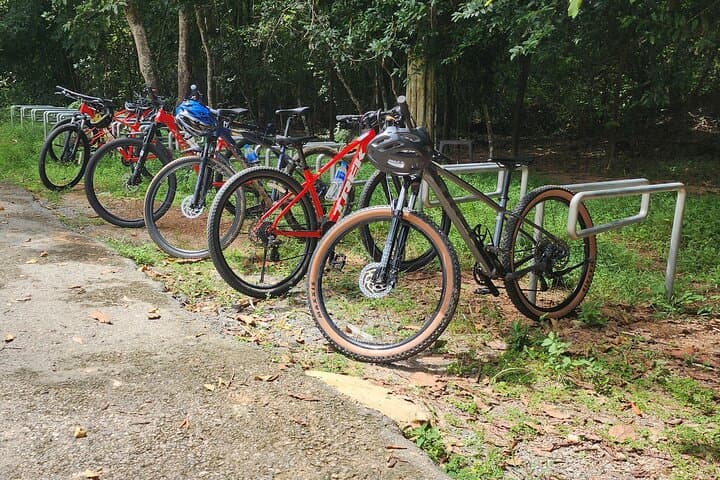


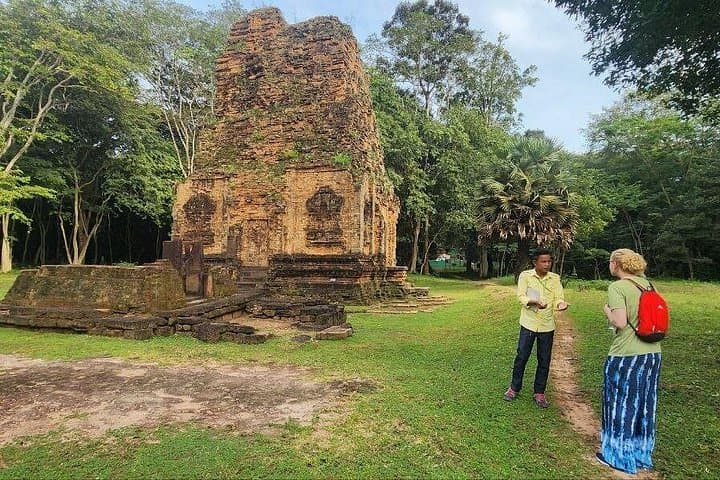
Dawn finds the lane cool and damp as your tires crunch along laterite roads toward brick towers that time has left half-open to the sky. Pedaling here slows history down: octagonal sanctuaries rise between palms, strangler figs thread through lintels, and village dogs watch you glide past cassava fields and wooden stilt houses.
Dawn finds the lane cool and damp as your tires crunch along laterite roads toward brick towers that time has left half-open to the sky. Pedaling here slows history down: octagonal sanctuaries rise between palms, strangler figs thread through lintels, and village dogs watch you glide past cassava fields and wooden stilt houses.
Sambor Prei Kuk was the capital of Chenla in the 6th–7th centuries, predating Angkor and showcasing early Khmer prototypes—octagonal shrines and “flying palace” carvings that influenced later temple design. The site’s brick and laterite complexes, once ceremonial centers, now sit amid secondary forest and seasonally flooded plains, revealing a landscape shaped by ancient builders and monsoon rhythms.
Culture here is quietly agricultural; expect rice paddies, roadside stalls selling Khmer coffee, and local guides whose family histories tie to the land. Geologically, the region is flat alluvium with scattered laterite outcrops; trails switch from compact dirt to sandy tracks after rain.
Practical guidance: the full-day ride runs roughly 7–10 hours with frequent stops at Trapeang Ropeak, Prasat Yeay Poan and Chrey Temple. Wear breathable layers, a helmet, and padded shorts; bring cash for small purchases and bug spray for shaded temple interiors. Start early to avoid the heat and plan for an air‑conditioned transfer back to Kampong Thom or Siem Reap.
This tour balances archaeology and rural life—bring curiosity and steady legs, and the route will reward you with quiet corners of Cambodia that larger circuits often miss.