THE ADVENTURE COLLECTIVE® · Independent discovery and booking for outdoor travel

See Jaipur’s highlights in a single day — Amber Fort, Hawa Mahal, Jantar Mantar and the Monkey Temple — on a private car tour from New Delhi. Expect long drives, close-up Rajasthani architecture, and easy walking around major monuments.
See Jaipur’s highlights in a single day — Amber Fort, Hawa Mahal, Jantar Mantar and the Monkey Temple — on a private car tour from New Delhi. Expect long drives, close-up Rajasthani architecture, and easy walking around major monuments.
A pre-dawn drive out of New Delhi eases you onto the Yamuna Expressway and toward the ochre slopes of the Aravalli range. By mid-morning the car slows beneath the ramparts of Amber Fort — its sandstone face warming under the sun — and the day becomes a series of architectural calls: carved latticework, mirrored chambers, and sun-etched courtyards.
Verified experiences and guided adventures in the surrounding area.
Operated by Bagga India Tour · Jaipur, Rajasthan
A pre-dawn drive out of New Delhi eases you onto the Yamuna Expressway and toward the ochre slopes of the Aravalli range. By mid-morning the car slows beneath the ramparts of Amber Fort — its sandstone face warming under the sun — and the day becomes a series of architectural calls: carved latticework, mirrored chambers, and sun-etched courtyards.
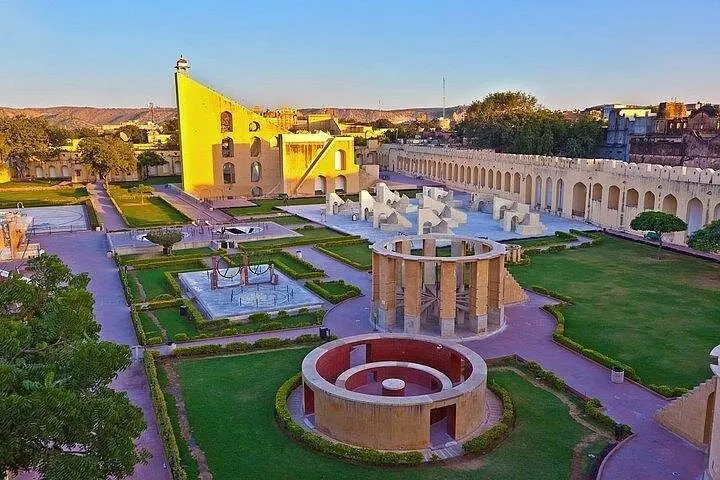
Jaipur was laid out in 1727 by Maharaja Sawai Jai Singh II; his city plan and scientific curiosity survive at Jantar Mantar, the world’s largest stone observatory. The surrounding Aravalli hills are among India’s oldest fold mountains, their ridges punctuated by hilltop forts like Jaigarh that once commanded trade routes across Rajasthan.
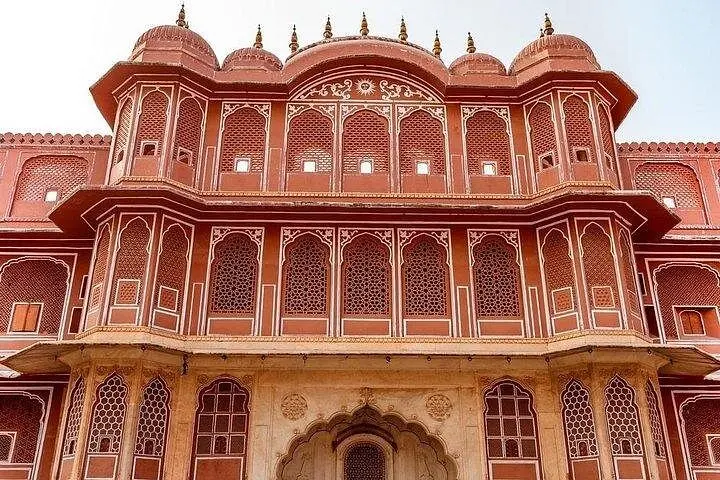
Culturally, Jaipur is direct: markets brim with block-printed textiles and enamel bangles while palace facades show how climate and caste shaped design — screened windows at Hawa Mahal allowed women to observe processions without being seen. At Galtaji (Monkey Temple) the sacred kunds echo with bells and the bold presence of macaques who have long coexisted around the shrines.
Practical guidance: this is a long, mostly vehicle-driven day—expect 10–14 hours with several 30–90 minute stops. Bring comfortable walking shoes for uneven palace steps, sun protection, and a photocopy of your passport if required. Allow buffer time for traffic between Delhi and Jaipur, and plan for short breaks for chai and restrooms. The tour pairs curated history with efficient transport; it’s best taken early in the week to avoid weekend crowds and late-afternoon heat.
The drive is roughly 4–5 hours each way depending on traffic, making this a long day that typically runs 10–14 hours total.
Entrance fees are included if you book the All Inclusive option; otherwise expect to pay admission on-site for certain attractions.
Yes—this private tour is rated easy physically, but it involves long car time and some stairs at forts; plan rest breaks accordingly.
Yes—an approved local guide joins you in Jaipur for guided visits; drivers handle transport and logistics.
Bagga India Tour operates guided outdoor trips and adventures with an emphasis on safety, stewardship, and memorable experiences.
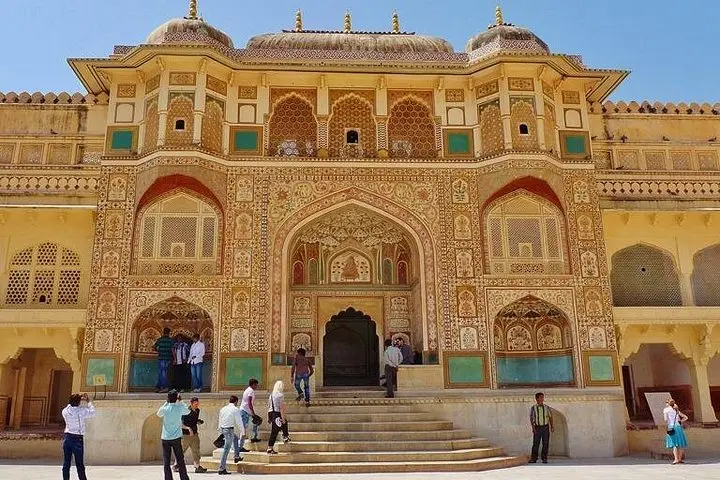
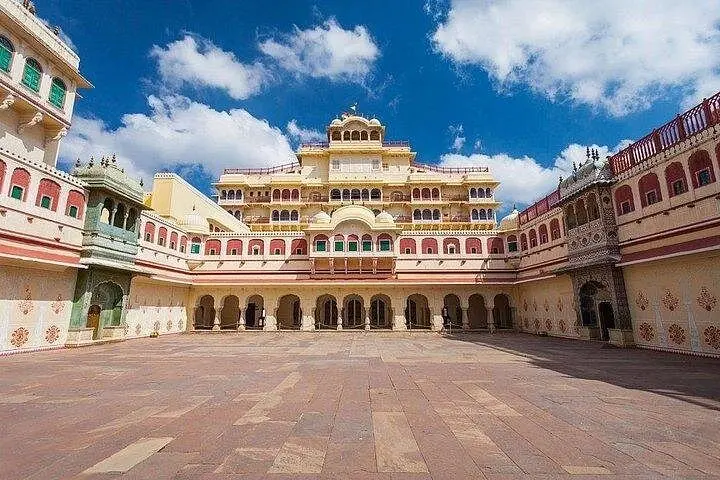
A pre-dawn drive out of New Delhi eases you onto the Yamuna Expressway and toward the ochre slopes of the Aravalli range. By mid-morning the car slows beneath the ramparts of Amber Fort — its sandstone face warming under the sun — and the day becomes a series of architectural calls: carved latticework, mirrored chambers, and sun-etched courtyards.
A pre-dawn drive out of New Delhi eases you onto the Yamuna Expressway and toward the ochre slopes of the Aravalli range. By mid-morning the car slows beneath the ramparts of Amber Fort — its sandstone face warming under the sun — and the day becomes a series of architectural calls: carved latticework, mirrored chambers, and sun-etched courtyards.
Jaipur was laid out in 1727 by Maharaja Sawai Jai Singh II; his city plan and scientific curiosity survive at Jantar Mantar, the world’s largest stone observatory. The surrounding Aravalli hills are among India’s oldest fold mountains, their ridges punctuated by hilltop forts like Jaigarh that once commanded trade routes across Rajasthan.
Culturally, Jaipur is direct: markets brim with block-printed textiles and enamel bangles while palace facades show how climate and caste shaped design — screened windows at Hawa Mahal allowed women to observe processions without being seen. At Galtaji (Monkey Temple) the sacred kunds echo with bells and the bold presence of macaques who have long coexisted around the shrines.
Practical guidance: this is a long, mostly vehicle-driven day—expect 10–14 hours with several 30–90 minute stops. Bring comfortable walking shoes for uneven palace steps, sun protection, and a photocopy of your passport if required. Allow buffer time for traffic between Delhi and Jaipur, and plan for short breaks for chai and restrooms. The tour pairs curated history with efficient transport; it’s best taken early in the week to avoid weekend crowds and late-afternoon heat.