THE ADVENTURE COLLECTIVE® · Independent discovery and booking for outdoor travel

Train under a Toyama-ryu master inside the historic Arai Residence, practicing iai techniques, zazen, and tameshigiri in an atmospheric early Showa dojo. This three-hour session mixes practical sword work with cultural context and a guided tour of the property.
Train under a Toyama-ryu master inside the historic Arai Residence, practicing iai techniques, zazen, and tameshigiri in an atmospheric early Showa dojo. This three-hour session mixes practical sword work with cultural context and a guided tour of the property.
You step over the genkan threshold and the air changes — quieter, drier, measured. Tatami mats hold the echo of past practice while shoji screens filter a pale Osaka light into the dojo. The Arai Residence, an early Showa-era house from 1932 designated as a Registered Tangible Cultural Property, frames the lesson: wood grain, low eaves, and the soft scrape of keikogi as visitors become students.
Verified experiences and guided adventures in the surrounding area.
Operated by icpトラベル · Izumisano, Osaka Prefecture
You step over the genkan threshold and the air changes — quieter, drier, measured. Tatami mats hold the echo of past practice while shoji screens filter a pale Osaka light into the dojo. The Arai Residence, an early Showa-era house from 1932 designated as a Registered Tangible Cultural Property, frames the lesson: wood grain, low eaves, and the soft scrape of keikogi as visitors become students.
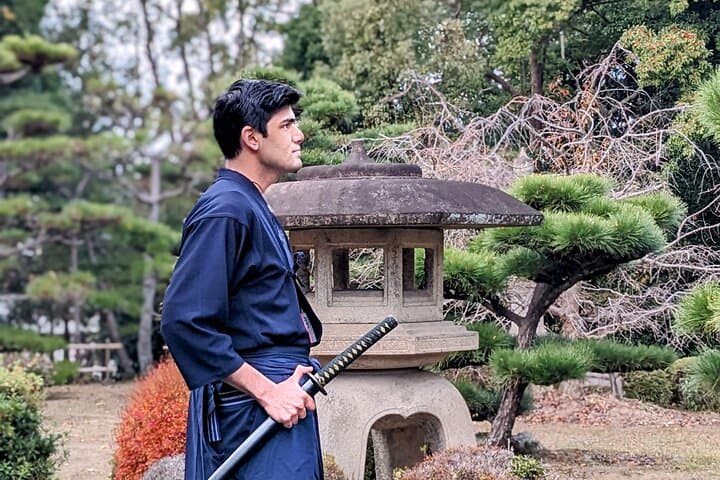
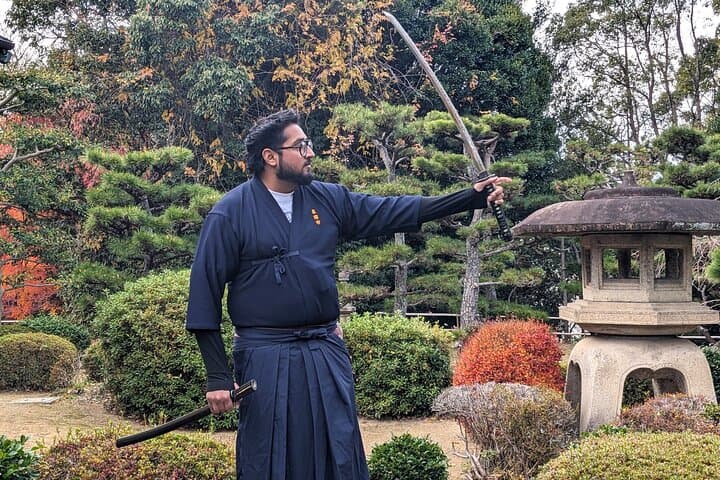
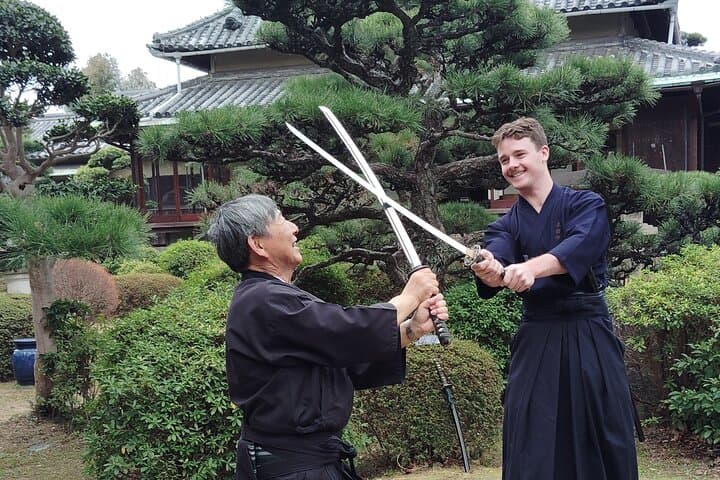
This is Toyama-ryu Iai-do, taught under Toshiyuki Yoshizuka, a multiple-time champion and an established teacher for foreigners. The curriculum follows a strict rhythm — change into kimono, opening greetings, zazen breathing to steady the body, an introduction to sword etiquette, kata practice, and tameshigiri cutting drills that illustrate geometry, timing, and intent. The style carries the practical legacy of military training reform in early 20th-century Japan and reflects a lineage focused on efficient, battlefield-ready iai.
Beyond the dojo, Izumisano sits on the Osaka Plain near Osaka Bay, where flat coastal geography shaped trade and craft communities that supported samurai households and later civic life. Small details — lacquered fittings, the tatami seams, the curated silence — are as instructive as the strokes of the blade.
Practical guidance: arrive on time (free taxi from Izumisano Station is included), wear comfortable undergarments for kimono change, and follow the master’s safety brief. Expect low-impact physical demand but strict etiquette; notify staff of any back, heart, or pregnancy restrictions beforehand. Bring a camera for the commemorative shot, but defer to the master during practice and cutting drills.
No — the class is designed for beginners; the master demonstrates technique and guides students through timed practice.
Yes for the commemorative photo session, but refrain from photographing during formal instruction, zazen, or tameshigiri unless instructed.
The activity is suitable for most adults and children in strollers, but it’s not recommended for people with serious back, heart conditions, or pregnancy due to kneeling and movement demands.
Public transport to Izumisano Station is common; the experience includes a free taxi transfer from Izumisano Station to the residence — confirm pickup details when booking.
icpトラベル operates guided outdoor trips and adventures with an emphasis on safety, stewardship, and memorable experiences.
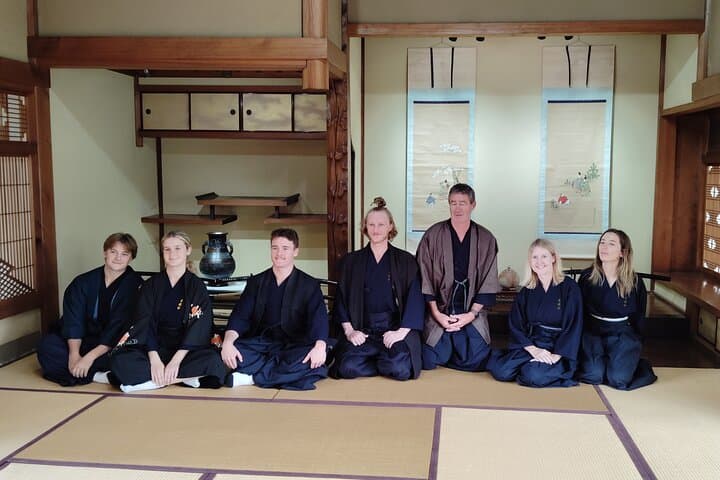
You step over the genkan threshold and the air changes — quieter, drier, measured. Tatami mats hold the echo of past practice while shoji screens filter a pale Osaka light into the dojo. The Arai Residence, an early Showa-era house from 1932 designated as a Registered Tangible Cultural Property, frames the lesson: wood grain, low eaves, and the soft scrape of keikogi as visitors become students.
You step over the genkan threshold and the air changes — quieter, drier, measured. Tatami mats hold the echo of past practice while shoji screens filter a pale Osaka light into the dojo. The Arai Residence, an early Showa-era house from 1932 designated as a Registered Tangible Cultural Property, frames the lesson: wood grain, low eaves, and the soft scrape of keikogi as visitors become students.
This is Toyama-ryu Iai-do, taught under Toshiyuki Yoshizuka, a multiple-time champion and an established teacher for foreigners. The curriculum follows a strict rhythm — change into kimono, opening greetings, zazen breathing to steady the body, an introduction to sword etiquette, kata practice, and tameshigiri cutting drills that illustrate geometry, timing, and intent. The style carries the practical legacy of military training reform in early 20th-century Japan and reflects a lineage focused on efficient, battlefield-ready iai.
Beyond the dojo, Izumisano sits on the Osaka Plain near Osaka Bay, where flat coastal geography shaped trade and craft communities that supported samurai households and later civic life. Small details — lacquered fittings, the tatami seams, the curated silence — are as instructive as the strokes of the blade.
Practical guidance: arrive on time (free taxi from Izumisano Station is included), wear comfortable undergarments for kimono change, and follow the master’s safety brief. Expect low-impact physical demand but strict etiquette; notify staff of any back, heart, or pregnancy restrictions beforehand. Bring a camera for the commemorative shot, but defer to the master during practice and cutting drills.