THE ADVENTURE COLLECTIVE® · Independent discovery and booking for outdoor travel

Spend an hour in a Kawasaki dojo learning beginner karate and iaido alongside local children. This hands-on class combines basic self-defense drills, sword etiquette, and cultural exchange in a beginner-friendly setting.
Spend an hour in a Kawasaki dojo learning beginner karate and iaido alongside local children. This hands-on class combines basic self-defense drills, sword etiquette, and cultural exchange in a beginner-friendly setting.
Step into a bright dojo in Kawasaki: polished wooden floors, a line of small gis drying on hooks, and the polite hush that follows a bow. For 60 minutes you join Japanese children in a guided introduction to karate-do and iaido — learning basic stances, safe self-defense drills, and the etiquette of drawing a mock sword.
Verified experiences and guided adventures in the surrounding area.
Operated by Shuminavi Inc. · Kawasaki, Kanagawa
Step into a bright dojo in Kawasaki: polished wooden floors, a line of small gis drying on hooks, and the polite hush that follows a bow. For 60 minutes you join Japanese children in a guided introduction to karate-do and iaido — learning basic stances, safe self-defense drills, and the etiquette of drawing a mock sword.
Karate and iaido have deep roots in Japan. Karate evolved on Okinawa and spread across the mainland during the 20th century; iaido refines the single, precise motion of drawing and sheathing a sword, steeped in samurai ritual. In Kawasaki the practice reads as both physical training and cultural exchange: the kids you train with will model timing and manners as much as technique.
The session mixes warm-ups and demonstration, hands-on practice with padded tools, and a Q&A. It’s suitable for beginners and family-friendly, with classes capped at around ten participants. Expect to remove shoes at the dojo entrance, try on an obi or hakama for photos, and follow instructors’ safety cues closely.
Practical notes: classes run about an hour, no advanced fitness or prior skill required, and some restrictions apply for pregnant guests or people with serious spinal or heart conditions. Come in comfortable athletic clothing you can move in, bring a small towel and water, and arrive 10–15 minutes early to change and meet the group. Whether you’re chasing a cultural snapshot or a short, active lesson in Japanese martial arts, this Kawasaki workshop delivers direct contact with technique, etiquette, and local kids who make the hour memorable.
No — the class is designed for beginners and focuses on basic movements, safety, and etiquette.
Sessions commonly include local children alongside adult visitors; check booking details but classes are family-friendly.
No — the activity is not recommended for pregnant guests due to physical movements and safety considerations.
Instructors often use simple English or a translator for key points; demonstration and practice bridge most language gaps.
Shuminavi Inc. operates guided outdoor trips and adventures with an emphasis on safety, stewardship, and memorable experiences.

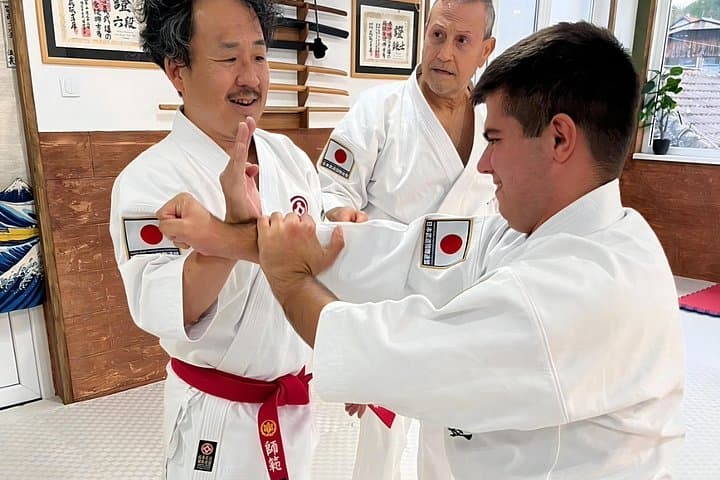

Step into a bright dojo in Kawasaki: polished wooden floors, a line of small gis drying on hooks, and the polite hush that follows a bow. For 60 minutes you join Japanese children in a guided introduction to karate-do and iaido — learning basic stances, safe self-defense drills, and the etiquette of drawing a mock sword.
Step into a bright dojo in Kawasaki: polished wooden floors, a line of small gis drying on hooks, and the polite hush that follows a bow. For 60 minutes you join Japanese children in a guided introduction to karate-do and iaido — learning basic stances, safe self-defense drills, and the etiquette of drawing a mock sword.
Karate and iaido have deep roots in Japan. Karate evolved on Okinawa and spread across the mainland during the 20th century; iaido refines the single, precise motion of drawing and sheathing a sword, steeped in samurai ritual. In Kawasaki the practice reads as both physical training and cultural exchange: the kids you train with will model timing and manners as much as technique.
The session mixes warm-ups and demonstration, hands-on practice with padded tools, and a Q&A. It’s suitable for beginners and family-friendly, with classes capped at around ten participants. Expect to remove shoes at the dojo entrance, try on an obi or hakama for photos, and follow instructors’ safety cues closely.
Practical notes: classes run about an hour, no advanced fitness or prior skill required, and some restrictions apply for pregnant guests or people with serious spinal or heart conditions. Come in comfortable athletic clothing you can move in, bring a small towel and water, and arrive 10–15 minutes early to change and meet the group. Whether you’re chasing a cultural snapshot or a short, active lesson in Japanese martial arts, this Kawasaki workshop delivers direct contact with technique, etiquette, and local kids who make the hour memorable.