THE ADVENTURE COLLECTIVE® · Independent discovery and booking for outdoor travel

Step into a Kyoto dojo for hands-on katana training led by a master who channels Musashi’s directness. This compact, culture-rich class teaches draw, sheath, and basic kata while situating moves in centuries of samurai practice.
Step into a Kyoto dojo for hands-on katana training led by a master who channels Musashi’s directness. This compact, culture-rich class teaches draw, sheath, and basic kata while situating moves in centuries of samurai practice.
A cool morning light slides across the wooden floor of a Kyoto dojo as participants bow and breathe into a session led by a modern-day Musashi. The room smells faintly of polish and rice paper; the instructor moves with an economy of motion that turns practice into a lesson in focus. Participants don dōgi, obi, and hakama, and the class shifts from explanation to repetition until drawing and sheathing a training katana feels like a natural rhythm.
Verified experiences and guided adventures in the surrounding area.
Operated by Yushinkan Co., Ltd. (株式会社勇進舘) SETO Yushin · Kyoto, Kyoto Prefecture
A cool morning light slides across the wooden floor of a Kyoto dojo as participants bow and breathe into a session led by a modern-day Musashi. The room smells faintly of polish and rice paper; the instructor moves with an economy of motion that turns practice into a lesson in focus. Participants don dōgi, obi, and hakama, and the class shifts from explanation to repetition until drawing and sheathing a training katana feels like a natural rhythm.
Kyoto was Japan’s imperial heart for over a millennium, and its martial arts evolved alongside court life and feudal clans. Modern samurai training in the city blends that long history with practical, staged drills rather than battlefield techniques—think kata, drawing and basic cut mechanics, and etiquette. The dojo setting often reflects traditional woodworking and tatami layout, reinforcing the cultural context behind each movement.
Beyond the lesson, Kyoto rewards an early stroll: narrow stone lanes, wooden machiya, and neighborhood shrines give a sense of scale to the training’s heritage. Visitors may pair a class with a stop at a local tea house or a short tram ride to Arashiyama for riverside bamboo.
Practical guidance: allow 1.5–2 hours, arrive 10–15 minutes early for dressing, and wear breathable, non-restrictive clothing under the provided gear. Inform the operator of injuries in advance—this session is moderately physical and not recommended for those with spinal, heart, or pregnancy restrictions. Hydrate beforehand; bottled water is typically supplied. Expect small-group coaching, close demonstration, and a chance to watch a two-katana performance by the master.
Participants must be at least 12 years old; minors may need a guardian present depending on operator policy.
No—classes are designed for beginners and teach basic drawing, sheathing, and kata from scratch.
Training uses zinc-alloy or wooden training katana for practice; mat cutting with live blades is not offered.
You should disclose spinal, cardiovascular, or pregnancy concerns before booking; the operator may decline participation for safety.
Yushinkan Co., Ltd. (株式会社勇進舘) SETO Yushin operates guided outdoor trips and adventures with an emphasis on safety, stewardship, and memorable experiences.
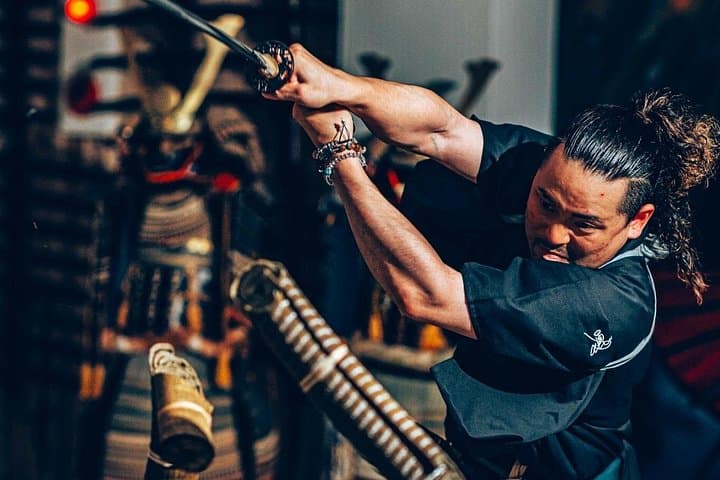
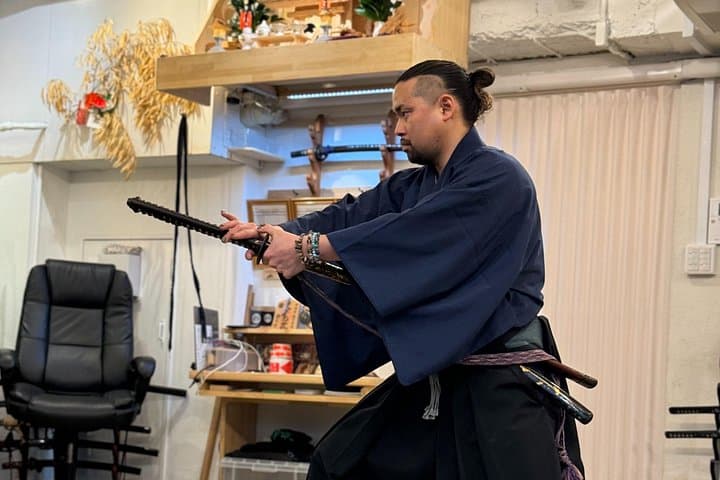
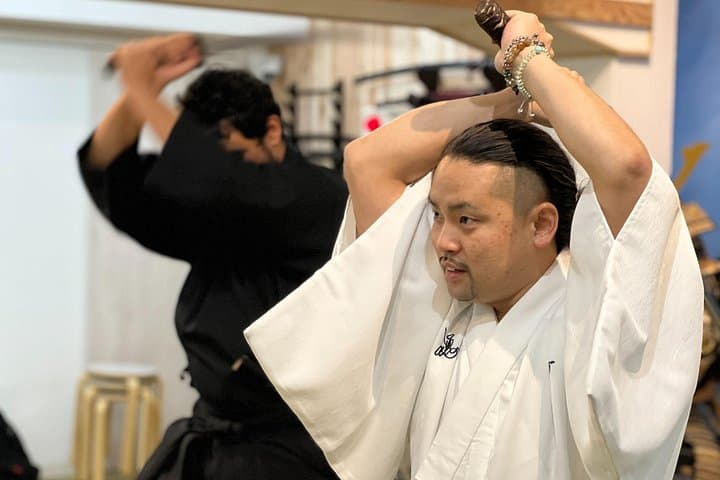
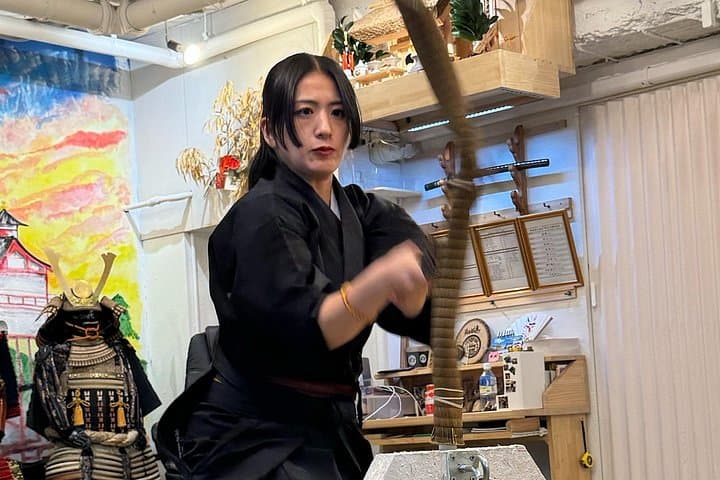
A cool morning light slides across the wooden floor of a Kyoto dojo as participants bow and breathe into a session led by a modern-day Musashi. The room smells faintly of polish and rice paper; the instructor moves with an economy of motion that turns practice into a lesson in focus. Participants don dōgi, obi, and hakama, and the class shifts from explanation to repetition until drawing and sheathing a training katana feels like a natural rhythm.
A cool morning light slides across the wooden floor of a Kyoto dojo as participants bow and breathe into a session led by a modern-day Musashi. The room smells faintly of polish and rice paper; the instructor moves with an economy of motion that turns practice into a lesson in focus. Participants don dōgi, obi, and hakama, and the class shifts from explanation to repetition until drawing and sheathing a training katana feels like a natural rhythm.
Kyoto was Japan’s imperial heart for over a millennium, and its martial arts evolved alongside court life and feudal clans. Modern samurai training in the city blends that long history with practical, staged drills rather than battlefield techniques—think kata, drawing and basic cut mechanics, and etiquette. The dojo setting often reflects traditional woodworking and tatami layout, reinforcing the cultural context behind each movement.
Beyond the lesson, Kyoto rewards an early stroll: narrow stone lanes, wooden machiya, and neighborhood shrines give a sense of scale to the training’s heritage. Visitors may pair a class with a stop at a local tea house or a short tram ride to Arashiyama for riverside bamboo.
Practical guidance: allow 1.5–2 hours, arrive 10–15 minutes early for dressing, and wear breathable, non-restrictive clothing under the provided gear. Inform the operator of injuries in advance—this session is moderately physical and not recommended for those with spinal, heart, or pregnancy restrictions. Hydrate beforehand; bottled water is typically supplied. Expect small-group coaching, close demonstration, and a chance to watch a two-katana performance by the master.