THE ADVENTURE COLLECTIVE® · Independent discovery and booking for outdoor travel

A half-day sail from Shelter Island puts you within breathing distance of migrating gray whales, seasonal blue whales, playful dolphins, and sunbathing sea lions. This 4–4.5 hour cruise blends natural history, naval sightlines, and practical comfort on a 141-foot yacht.
A half-day sail from Shelter Island puts you within breathing distance of migrating gray whales, seasonal blue whales, playful dolphins, and sunbathing sea lions. This 4–4.5 hour cruise blends natural history, naval sightlines, and practical comfort on a 141-foot yacht.
The deck rocks gently as the city skyline slides aft and the Pacific opens like a breathing thing. Salt pulls at your face and gulls wheel overhead while the 141-foot Yacht America cleaves a clean wake out past Point Loma. Within minutes the dock lights and marina slips are a smudge; the horizon is the only plan. Guides with binoculars call out blows, tails, and the playful arcs of dolphins that race the bow. When a gray whale surfaces nearby, it doesn’t perform for you so much as acknowledge you — an enormous, slow-moving neighbor on its seasonal route.
Verified experiences and guided adventures in the surrounding area.
Operated by San Diego Whale Watching & Charters - Next Level Sailing · San Diego, California
The deck rocks gently as the city skyline slides aft and the Pacific opens like a breathing thing. Salt pulls at your face and gulls wheel overhead while the 141-foot Yacht America cleaves a clean wake out past Point Loma. Within minutes the dock lights and marina slips are a smudge; the horizon is the only plan. Guides with binoculars call out blows, tails, and the playful arcs of dolphins that race the bow. When a gray whale surfaces nearby, it doesn’t perform for you so much as acknowledge you — an enormous, slow-moving neighbor on its seasonal route.
This is coastal California with its layered history and visible geology. Point Loma’s basalt cliffs are reminders of ancient lava flows and marine terraces dropped by tectonic tilt. The land you pass by was once used by the Kumeyaay people and later charted by Juan Rodríguez Cabrillo in 1542; today the lighthouse at Point Loma marks a working point for navigation and for whale-watchers’ bearings. Ecologically, San Diego’s shelf and the seasonal upwelling off Baja create rich feeding grounds: blue and fin whales appear in spring and summer when krill concentrations peak, while gray whales sweep north and south between mid-December and April.
On a practical note, the cruise is a half-day outing — roughly 4 to 4.5 hours — that takes you past North Island Naval Air Station, Cabrillo National Monument, and string of sea lion haul-outs. Guides narrate marine behavior and point out naval activity; if an F-18 roars overhead, it’s more common than dramatic. The operation runs a ‘‘whale-sighting guarantee’’ — if you don’t see a whale, you can return free — and provides snacks and blankets, but you should bring layers, a picnic, and a camera with a telephoto lens.
Timing and comfort matter. Mornings are calmer for photography and smoother seas; afternoons can be breezier and colder than on land. The vessel has steps to board; let the operator know if you need assistance. Seasickness meds are a sensible precaution for first-timers. Respect the animals and the rules: boat operators follow safe approach distances and the guides will ask you to keep voices down near active feeding or calving behavior.
By the time you slide back into the marina the city feels different — salt-cleaned and slow. You’ve watched migration patterns written across the ocean, seen national defense and wildness coexist, and learned how an upwelling of cold water can summon the planet’s largest animals to dine within sight of San Diego’s shoreline.
Gray whales are most reliable mid-December through April; blue and fin whales are usually present April through August; humpbacks and minkes turn up throughout spring, summer, and fall.
Check-in is located across the street from the Best Western Island Palms Hotel and Blue Wave Bar & Grill on Shelter Island; arrive within the designated hour before departure.
If the cruise does not spot a whale you are eligible for a free return trip — follow the operator’s instructions to claim it.
The experience is family-friendly; however there are five steps to board, so contact the operator in advance to discuss wheelchair access and boarding assistance.
The operator provides sodas and snacks; you may bring your own picnic but glass and certain containers may be restricted—check the operator’s policy.
Common sightings include common dolphins, California sea lions, pelicans, and a variety of seabirds; guides will point them out during the cruise.
San Diego Whale Watching & Charters - Next Level Sailing operates guided outdoor trips and adventures with an emphasis on safety, stewardship, and memorable experiences.
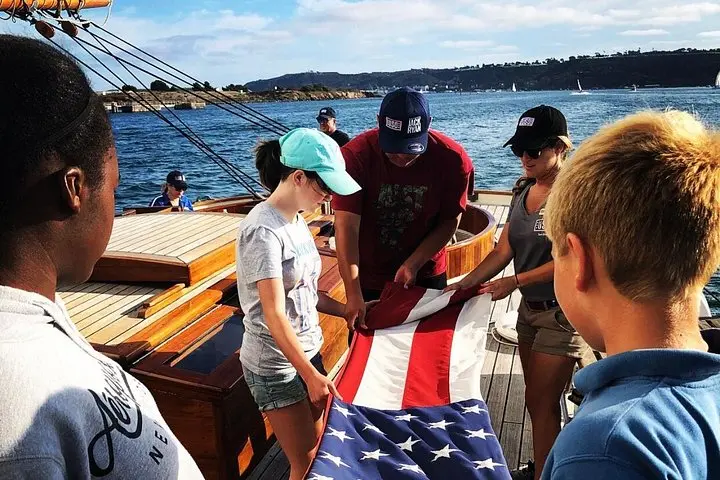
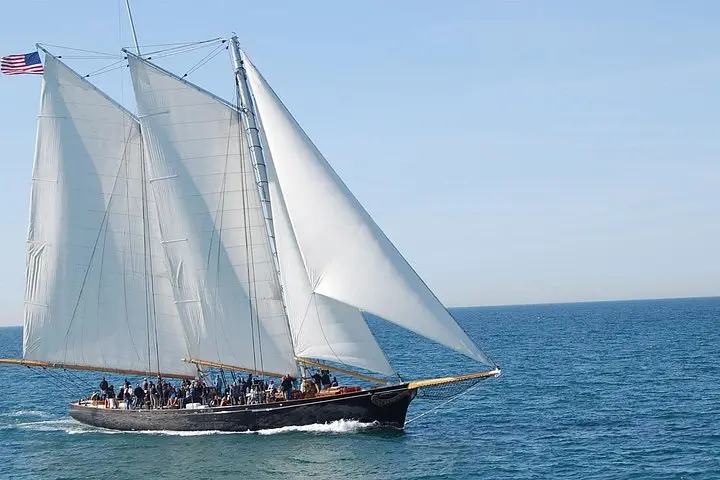
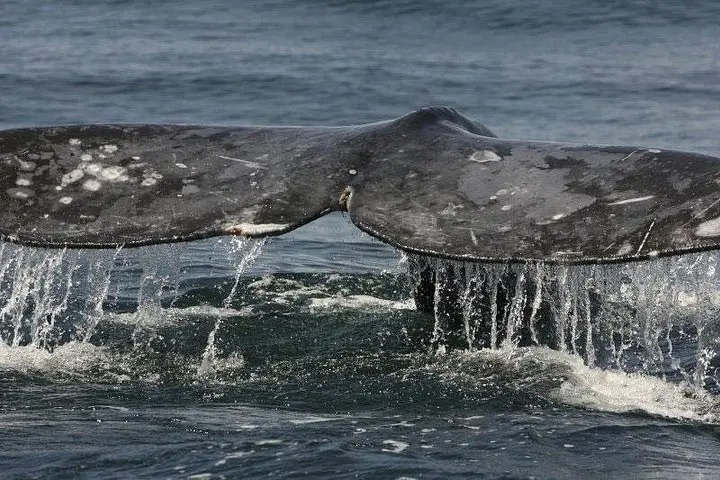
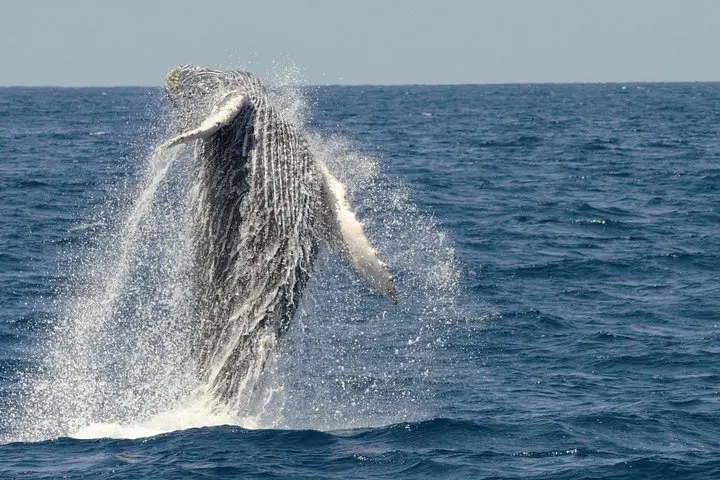
The deck rocks gently as the city skyline slides aft and the Pacific opens like a breathing thing. Salt pulls at your face and gulls wheel overhead while the 141-foot Yacht America cleaves a clean wake out past Point Loma. Within minutes the dock lights and marina slips are a smudge; the horizon is the only plan. Guides with binoculars call out blows, tails, and the playful arcs of dolphins that race the bow. When a gray whale surfaces nearby, it doesn’t perform for you so much as acknowledge you — an enormous, slow-moving neighbor on its seasonal route.
The deck rocks gently as the city skyline slides aft and the Pacific opens like a breathing thing. Salt pulls at your face and gulls wheel overhead while the 141-foot Yacht America cleaves a clean wake out past Point Loma. Within minutes the dock lights and marina slips are a smudge; the horizon is the only plan. Guides with binoculars call out blows, tails, and the playful arcs of dolphins that race the bow. When a gray whale surfaces nearby, it doesn’t perform for you so much as acknowledge you — an enormous, slow-moving neighbor on its seasonal route.
This is coastal California with its layered history and visible geology. Point Loma’s basalt cliffs are reminders of ancient lava flows and marine terraces dropped by tectonic tilt. The land you pass by was once used by the Kumeyaay people and later charted by Juan Rodríguez Cabrillo in 1542; today the lighthouse at Point Loma marks a working point for navigation and for whale-watchers’ bearings. Ecologically, San Diego’s shelf and the seasonal upwelling off Baja create rich feeding grounds: blue and fin whales appear in spring and summer when krill concentrations peak, while gray whales sweep north and south between mid-December and April.
On a practical note, the cruise is a half-day outing — roughly 4 to 4.5 hours — that takes you past North Island Naval Air Station, Cabrillo National Monument, and string of sea lion haul-outs. Guides narrate marine behavior and point out naval activity; if an F-18 roars overhead, it’s more common than dramatic. The operation runs a ‘‘whale-sighting guarantee’’ — if you don’t see a whale, you can return free — and provides snacks and blankets, but you should bring layers, a picnic, and a camera with a telephoto lens.
Timing and comfort matter. Mornings are calmer for photography and smoother seas; afternoons can be breezier and colder than on land. The vessel has steps to board; let the operator know if you need assistance. Seasickness meds are a sensible precaution for first-timers. Respect the animals and the rules: boat operators follow safe approach distances and the guides will ask you to keep voices down near active feeding or calving behavior.
By the time you slide back into the marina the city feels different — salt-cleaned and slow. You’ve watched migration patterns written across the ocean, seen national defense and wildness coexist, and learned how an upwelling of cold water can summon the planet’s largest animals to dine within sight of San Diego’s shoreline.