THE ADVENTURE COLLECTIVE® · Independent discovery and booking for outdoor travel

A seven-day road tour that threads San Francisco to Yellowstone, Grand Teton, Antelope Canyon, the Grand Canyon, and Las Vegas. Expect geysers, high-elevation vistas, slot canyons, and long scenic drives—best for travelers who like varied landscapes with light hikes and boardwalks.
A seven-day road tour that threads San Francisco to Yellowstone, Grand Teton, Antelope Canyon, the Grand Canyon, and Las Vegas. Expect geysers, high-elevation vistas, slot canyons, and long scenic drives—best for travelers who like varied landscapes with light hikes and boardwalks.
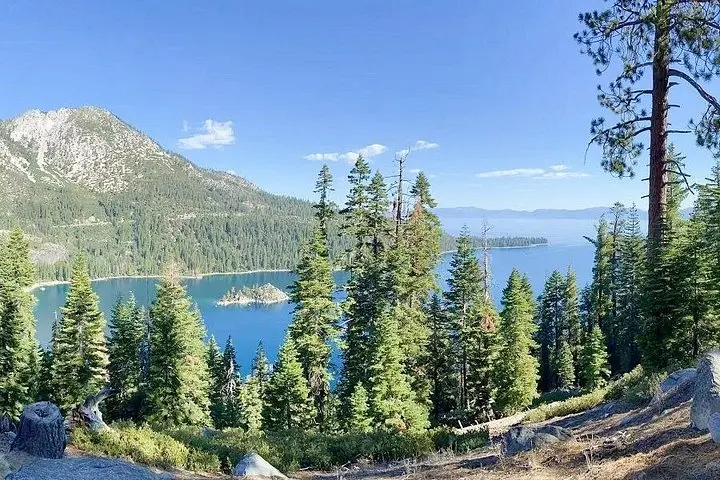
The bus pulls away from Union Square at dawn, the city’s glass faces still cool from night. Tires whisper over the Bay Area’s concrete, then climb into the Sierra—the first of many transitions on this seven-day sweep from urban shorelines to high Yellowstone plateaus and the neon edge of Las Vegas. Days on this route move in chapters: Tahoe’s cobalt calm, geyser basins steaming like pages turned, hoodoos cut into impossible shapes, and a final desert drive under Mojave sun.
Verified experiences and guided adventures in the surrounding area.
Operated by EasyinUS · San Francisco, California
The bus pulls away from Union Square at dawn, the city’s glass faces still cool from night. Tires whisper over the Bay Area’s concrete, then climb into the Sierra—the first of many transitions on this seven-day sweep from urban shorelines to high Yellowstone plateaus and the neon edge of Las Vegas. Days on this route move in chapters: Tahoe’s cobalt calm, geyser basins steaming like pages turned, hoodoos cut into impossible shapes, and a final desert drive under Mojave sun.
Historically this corridor threads together contrasting American landscapes. Lake Tahoe formed in an ancient fault basin; the Tetons are young, uplifted mountains with jagged cores exposed by erosion. Yellowstone sits atop a caldera—heat and pressure that create the park’s famous geysers and hot springs. Down in the Colorado Plateau, Antelope Canyon’s sculpted walls testify to centuries of flash floods and Navajo stewardship. The tour touches both human and geological stories: state capitols and pioneer bridges, Indigenous land that predates all roads.
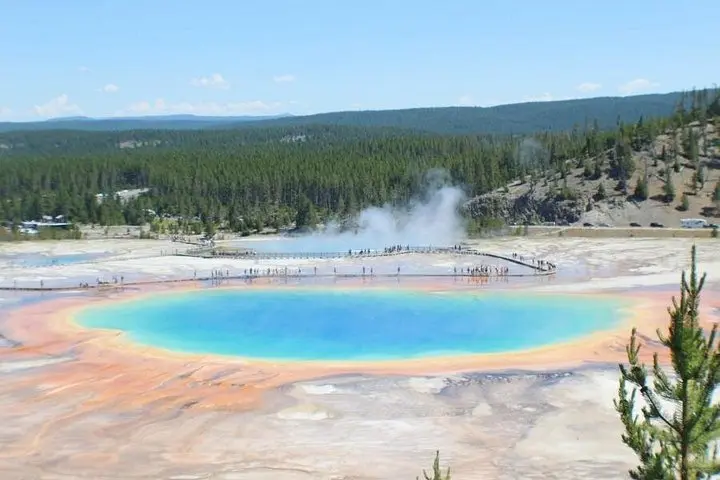
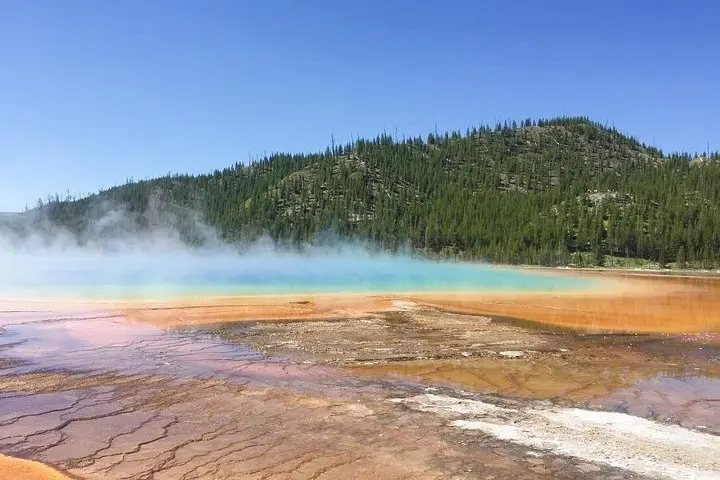
Expect variety more than long hikes. Sightseeing stops are mostly short walks or boardwalk loops—Old Faithful’s viewing plaza, Grand Prismatic’s overlook trail (about 0.5–1 mile total walking on boardwalks), and the short trek to Horseshoe Bend’s rim (roughly 1.5 miles round-trip over sand and steps). Elevations swing: Page/Antelope Canyon sits near 3,000 ft, Lake Tahoe at 6,225 ft, and many Yellowstone plateaus above 7,000–8,000 ft; that altitude can make mornings brisk.
Practical guidance: book at least a week ahead—hotel inventory in peak months moves fast. Mornings and evenings bring the best light and coolest temperatures; midday is busiest at popular overlooks. Layers are essential—temperatures can drop 30–40°F between desert midafternoon and a high-elevation morning. Hydrate on long drives and carry sun protection in the canyon and desert. Expect long stretches on the coach; bring earplugs and motion-sickness remedies if you’re prone to travel fatigue.
Wildlife watching is part of the rhythm here—bison grazing in Hayden Valley, elk on Grand Teton slopes—but always view from a distance and follow park regulations. Photography rewards patient framing: slot canyons favor soft, diffused light while sunrise at Bryce or the Grand Canyon amplifies color and shadow.
This itinerary isn’t about conquering terrain but about presence—seeing tectonics, geothermal power, and desert artistry compressed into a week. With some planning—altitude awareness, layered clothing, and timing your camera for golden hours—you’ll leave with a clear sense of why these places continue to pull people across long miles to stand, briefly, in front of something larger than themselves.
Most days include short walks to viewpoints and boardwalks—plan on 0.5–2 miles of walking per major stop, with plenty of coach time between destinations.
The itinerary notes admission included for several Yellowstone attractions; check booking details for specific park entrance policies and any required passes.
The tour is rated physically easy to moderate; however, long bus days and some uneven terrain mean it’s best for kids and seniors who can manage short walks and altitude changes.
Stay hydrated, avoid heavy exertion on the first high-elevation day, and consult a physician if you have respiratory or heart conditions; the tour advises against poor cardiovascular health.
Personal cameras are welcome; drones are restricted in national parks and generally prohibited—check park-specific rules before flying anything.
Book at least seven days ahead to secure hotels and seats, especially in peak summer and holiday weeks.
EasyinUS operates guided outdoor trips and adventures with an emphasis on safety, stewardship, and memorable experiences.
The bus pulls away from Union Square at dawn, the city’s glass faces still cool from night. Tires whisper over the Bay Area’s concrete, then climb into the Sierra—the first of many transitions on this seven-day sweep from urban shorelines to high Yellowstone plateaus and the neon edge of Las Vegas. Days on this route move in chapters: Tahoe’s cobalt calm, geyser basins steaming like pages turned, hoodoos cut into impossible shapes, and a final desert drive under Mojave sun.
The bus pulls away from Union Square at dawn, the city’s glass faces still cool from night. Tires whisper over the Bay Area’s concrete, then climb into the Sierra—the first of many transitions on this seven-day sweep from urban shorelines to high Yellowstone plateaus and the neon edge of Las Vegas. Days on this route move in chapters: Tahoe’s cobalt calm, geyser basins steaming like pages turned, hoodoos cut into impossible shapes, and a final desert drive under Mojave sun.
Historically this corridor threads together contrasting American landscapes. Lake Tahoe formed in an ancient fault basin; the Tetons are young, uplifted mountains with jagged cores exposed by erosion. Yellowstone sits atop a caldera—heat and pressure that create the park’s famous geysers and hot springs. Down in the Colorado Plateau, Antelope Canyon’s sculpted walls testify to centuries of flash floods and Navajo stewardship. The tour touches both human and geological stories: state capitols and pioneer bridges, Indigenous land that predates all roads.
Expect variety more than long hikes. Sightseeing stops are mostly short walks or boardwalk loops—Old Faithful’s viewing plaza, Grand Prismatic’s overlook trail (about 0.5–1 mile total walking on boardwalks), and the short trek to Horseshoe Bend’s rim (roughly 1.5 miles round-trip over sand and steps). Elevations swing: Page/Antelope Canyon sits near 3,000 ft, Lake Tahoe at 6,225 ft, and many Yellowstone plateaus above 7,000–8,000 ft; that altitude can make mornings brisk.
Practical guidance: book at least a week ahead—hotel inventory in peak months moves fast. Mornings and evenings bring the best light and coolest temperatures; midday is busiest at popular overlooks. Layers are essential—temperatures can drop 30–40°F between desert midafternoon and a high-elevation morning. Hydrate on long drives and carry sun protection in the canyon and desert. Expect long stretches on the coach; bring earplugs and motion-sickness remedies if you’re prone to travel fatigue.
Wildlife watching is part of the rhythm here—bison grazing in Hayden Valley, elk on Grand Teton slopes—but always view from a distance and follow park regulations. Photography rewards patient framing: slot canyons favor soft, diffused light while sunrise at Bryce or the Grand Canyon amplifies color and shadow.
This itinerary isn’t about conquering terrain but about presence—seeing tectonics, geothermal power, and desert artistry compressed into a week. With some planning—altitude awareness, layered clothing, and timing your camera for golden hours—you’ll leave with a clear sense of why these places continue to pull people across long miles to stand, briefly, in front of something larger than themselves.