THE ADVENTURE COLLECTIVE® · Independent discovery and booking for outdoor travel

Walk Monte Titano’s stone streets with a private guide, from Piazza della Libertà to the Guaita Tower and Basilica. Expect sweeping Adriatic views, medieval fortifications, and compact museums—all in a focused two‑hour route.
Walk Monte Titano’s stone streets with a private guide, from Piazza della Libertà to the Guaita Tower and Basilica. Expect sweeping Adriatic views, medieval fortifications, and compact museums—all in a focused two‑hour route.
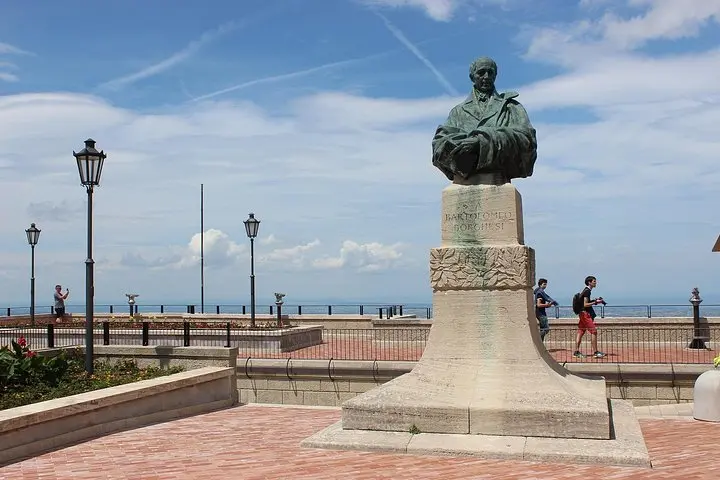
You step off the cable car into wind and stone: the air carries salt from the Adriatic and the low hum of terracotta roofs below. Cobblestones slope toward the Palazzo Pubblico, and flags snap above a square where the Statua della Libertà keeps quiet company with morning light.
Verified experiences and guided adventures in the surrounding area.
Operated by BlackBuck Travels · San Marino, N/A
You step off the cable car into wind and stone: the air carries salt from the Adriatic and the low hum of terracotta roofs below. Cobblestones slope toward the Palazzo Pubblico, and flags snap above a square where the Statua della Libertà keeps quiet company with morning light.
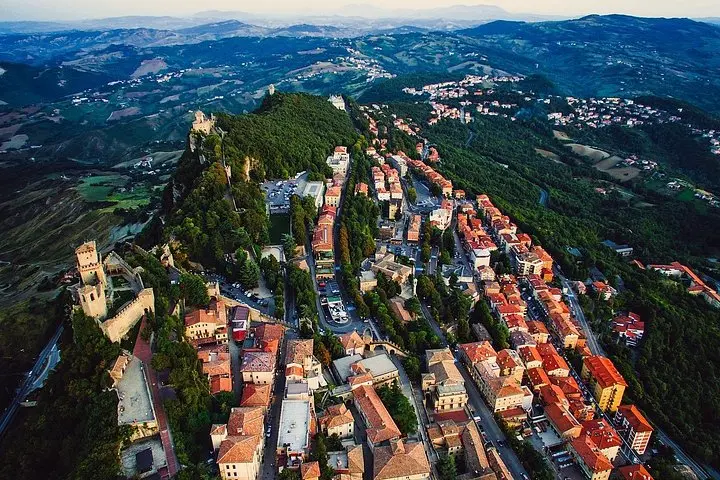
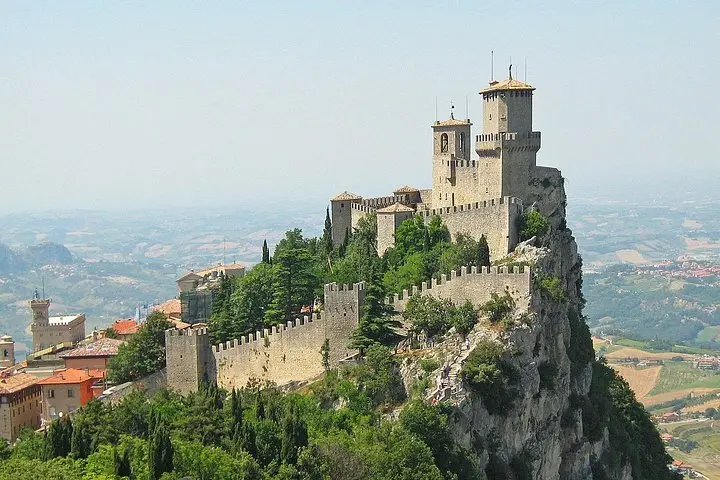
San Marino sits on Monte Titano, a rugged limestone spur carved by tectonic uplift at the edge of the Apennines. The republic’s story stretches back to a fourth‑century hermit, later a medieval enclave and one of Europe’s oldest surviving republics. Fortified towers—most visibly the 11th‑century Guaita—watch over centuries of boundary disputes and trade routes, while the basilica overlays Romanesque remains with 19th‑century neoclassical order.
A guided two‑hour route threads civic life and natural edges: Piazza della Libertà, the neo‑Gothic town hall, the battlements where prisoners once paced, then the basilica’s long nave. The Monte Titano cable car links the valley’s rhythms with the old city’s narrow lanes; views stretch to Adriatic light and patchwork fields that change color through the seasons.
Practicalities matter: this is a mostly paved, stepped route with short climbs—comfortable shoes and steady legs suffice. Expect narrow alleys and stone steps; allow time for photography and the museum’s collections. Midday can be hot in summer; mornings or late afternoons offer cooler light and quieter plazas. Guides provide historical context, routing that avoids crowds when possible, and pointers to local cafés and viewpoints. For travelers wanting concentrated history and big views in two hours, this private walking tour delivers dense local culture with straightforward logistics.
The private walking tour is approximately 2 hours and covers Piazza della Libertà, Palazzo Pubblico, Guaita Tower, Basilica, the cable car ascent point, and Museo di Stato.
The tower involves stone steps and some steep sections but is short; most visitors in normal health can manage the ascent with regular breaks.
This tour description notes a private guide but does not include admission fees; confirm with the operator if entry to specific museums or towers is covered.
Some streets and steps are accessible, but many sections have narrow steps; foldable strollers may be manageable with assistance—check with your guide.
BlackBuck Travels operates guided outdoor trips and adventures with an emphasis on safety, stewardship, and memorable experiences.
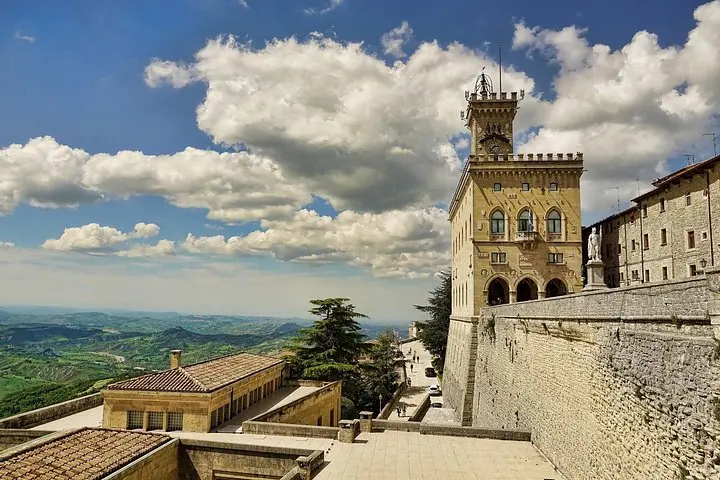
You step off the cable car into wind and stone: the air carries salt from the Adriatic and the low hum of terracotta roofs below. Cobblestones slope toward the Palazzo Pubblico, and flags snap above a square where the Statua della Libertà keeps quiet company with morning light.
You step off the cable car into wind and stone: the air carries salt from the Adriatic and the low hum of terracotta roofs below. Cobblestones slope toward the Palazzo Pubblico, and flags snap above a square where the Statua della Libertà keeps quiet company with morning light.
San Marino sits on Monte Titano, a rugged limestone spur carved by tectonic uplift at the edge of the Apennines. The republic’s story stretches back to a fourth‑century hermit, later a medieval enclave and one of Europe’s oldest surviving republics. Fortified towers—most visibly the 11th‑century Guaita—watch over centuries of boundary disputes and trade routes, while the basilica overlays Romanesque remains with 19th‑century neoclassical order.
A guided two‑hour route threads civic life and natural edges: Piazza della Libertà, the neo‑Gothic town hall, the battlements where prisoners once paced, then the basilica’s long nave. The Monte Titano cable car links the valley’s rhythms with the old city’s narrow lanes; views stretch to Adriatic light and patchwork fields that change color through the seasons.
Practicalities matter: this is a mostly paved, stepped route with short climbs—comfortable shoes and steady legs suffice. Expect narrow alleys and stone steps; allow time for photography and the museum’s collections. Midday can be hot in summer; mornings or late afternoons offer cooler light and quieter plazas. Guides provide historical context, routing that avoids crowds when possible, and pointers to local cafés and viewpoints. For travelers wanting concentrated history and big views in two hours, this private walking tour delivers dense local culture with straightforward logistics.