THE ADVENTURE COLLECTIVE® · Independent discovery and booking for outdoor travel

Start your Telluride day the local way—on the San Miguel River. This half-day, guide-led run blends Class II–III splashes, red sandstone canyon views, and just enough technical paddling to keep everyone grinning.
Start your Telluride day the local way—on the San Miguel River. This half-day, guide-led run blends Class II–III splashes, red sandstone canyon views, and just enough technical paddling to keep everyone grinning.
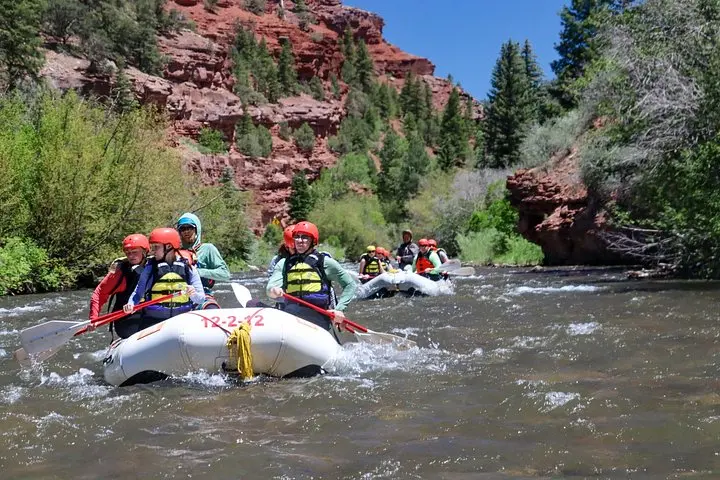
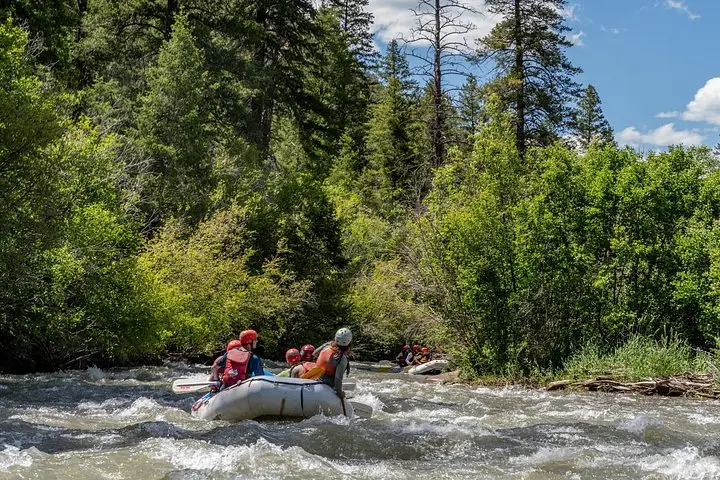
Morning comes cool and clear in the San Juans, and the San Miguel River is already talking—snowmelt urging the current forward, riffles hissing against red sandstone as if daring you to climb in. At Caddis Flats, a short drive down-valley from Telluride, guides clip helmets, tighten PFDs, and slide bright rafts into water as cold and clean as the peaks it just left. You step in, toes tingling, paddle poised. On this half-day run, the San Miguel wastes no time, pushing around cottonwood islands and pulling you toward quick, splashy drops that wake up the whole crew.
Verified experiences and guided adventures in the surrounding area.
Operated by Mild to Wild Rafting and Jeep Tours · Placerville, Colorado
Morning comes cool and clear in the San Juans, and the San Miguel River is already talking—snowmelt urging the current forward, riffles hissing against red sandstone as if daring you to climb in. At Caddis Flats, a short drive down-valley from Telluride, guides clip helmets, tighten PFDs, and slide bright rafts into water as cold and clean as the peaks it just left. You step in, toes tingling, paddle poised. On this half-day run, the San Miguel wastes no time, pushing around cottonwood islands and pulling you toward quick, splashy drops that wake up the whole crew.
This is one of Colorado’s under-the-radar classics: a free-flowing tributary of the Dolores that still runs by snow and season rather than a dam schedule. Spring swells raise it to frisky Class II–III, threading waves between sandstone shelves and pine-studded benches. By midsummer, the river thins and gets technical, asking for precise strokes to slip past rocks and nose into clean tongues. It’s a compelling contrast to Telluride’s polished main street—raw, playful, and genuine.
The corridor carries stories. Ute trails once paralleled these banks; later, the Rio Grande Southern Railroad shadowed the river, hauling ore from high-country mines. You can still feel that working landscape in the grade of the canyon and the way the river steers the day—dictating pace, cooling the air, drawing wildlife to its edges. Look for American dippers bobbing on midstream stones, then vanishing under whitewater only to pop up grinning downstream.
Logistics are straightforward. You’ll meet at Caddis Flats Campground near Placerville, get outfitted with a coast-guard approved PFD and helmet, and learn the strokes. Expect 2–3 hours on the water with a low guest-to-guide ratio that keeps the boat tight and responsive. In early season, wetsuits and neoprene booties are standard (often required until July) because the river is pure snowmelt; in the heat of summer, quick-dry layers and aggressive sunscreen are your friends.
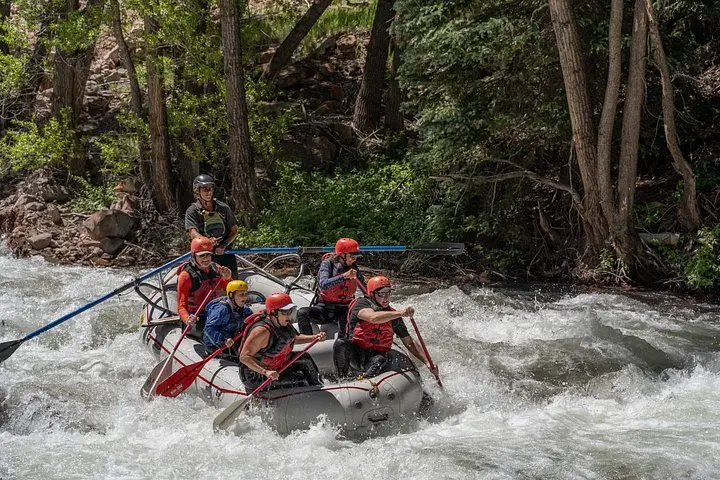
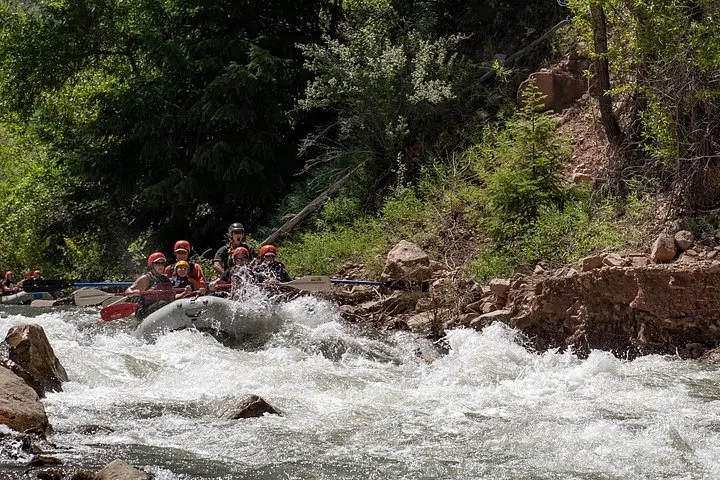
This is active rafting—everyone paddles. Front seats set the rhythm as your guide calls commands, timing hits into wave trains and shepherding the raft through bends where the current tries to shove you into playful trouble. Between rapids, the canyon exhales. Red walls warm in the sun. The boat drifts. And then the river nudges again, asking for another clean line.
After the takeout, you’re minutes from coffee in Placerville or a celebratory plate of green chile back in Telluride. Either way, the San Miguel rides with you—a chill in the forearms, a grin that sticks, and the satisfying fatigue that comes from letting a wild river set your morning right.
Typically Class II–III. In May–June during peak snowmelt, expect pushier Class III; by July–August it trends toward technical Class II–III with lower flows.
You’ll wear a Coast Guard–approved PFD and helmet, but you should be comfortable in moving water in case of an unexpected swim.
Choose quick-dry layers (no cotton). Wetsuits and booties are often required until July and are available for rent on site (around $15). Bring sunscreen and a towel for afterward.
Yes. Minimum age is 10, and beginners are welcome. Guides will adjust section choice or postpone during very high water for safety.
May through early July offers the most consistent whitewater. Late summer runs may be shorter or more technical depending on flows, but are warmer and more relaxed.
Action cameras are fine if chest-mounted or tethered. Phones should be in a waterproof case with a leash, or left in your vehicle to avoid loss.
Mild to Wild Rafting and Jeep Tours operates guided outdoor trips and adventures with an emphasis on safety, stewardship, and memorable experiences.
Morning comes cool and clear in the San Juans, and the San Miguel River is already talking—snowmelt urging the current forward, riffles hissing against red sandstone as if daring you to climb in. At Caddis Flats, a short drive down-valley from Telluride, guides clip helmets, tighten PFDs, and slide bright rafts into water as cold and clean as the peaks it just left. You step in, toes tingling, paddle poised. On this half-day run, the San Miguel wastes no time, pushing around cottonwood islands and pulling you toward quick, splashy drops that wake up the whole crew.
Morning comes cool and clear in the San Juans, and the San Miguel River is already talking—snowmelt urging the current forward, riffles hissing against red sandstone as if daring you to climb in. At Caddis Flats, a short drive down-valley from Telluride, guides clip helmets, tighten PFDs, and slide bright rafts into water as cold and clean as the peaks it just left. You step in, toes tingling, paddle poised. On this half-day run, the San Miguel wastes no time, pushing around cottonwood islands and pulling you toward quick, splashy drops that wake up the whole crew.
This is one of Colorado’s under-the-radar classics: a free-flowing tributary of the Dolores that still runs by snow and season rather than a dam schedule. Spring swells raise it to frisky Class II–III, threading waves between sandstone shelves and pine-studded benches. By midsummer, the river thins and gets technical, asking for precise strokes to slip past rocks and nose into clean tongues. It’s a compelling contrast to Telluride’s polished main street—raw, playful, and genuine.
The corridor carries stories. Ute trails once paralleled these banks; later, the Rio Grande Southern Railroad shadowed the river, hauling ore from high-country mines. You can still feel that working landscape in the grade of the canyon and the way the river steers the day—dictating pace, cooling the air, drawing wildlife to its edges. Look for American dippers bobbing on midstream stones, then vanishing under whitewater only to pop up grinning downstream.
Logistics are straightforward. You’ll meet at Caddis Flats Campground near Placerville, get outfitted with a coast-guard approved PFD and helmet, and learn the strokes. Expect 2–3 hours on the water with a low guest-to-guide ratio that keeps the boat tight and responsive. In early season, wetsuits and neoprene booties are standard (often required until July) because the river is pure snowmelt; in the heat of summer, quick-dry layers and aggressive sunscreen are your friends.
This is active rafting—everyone paddles. Front seats set the rhythm as your guide calls commands, timing hits into wave trains and shepherding the raft through bends where the current tries to shove you into playful trouble. Between rapids, the canyon exhales. Red walls warm in the sun. The boat drifts. And then the river nudges again, asking for another clean line.
After the takeout, you’re minutes from coffee in Placerville or a celebratory plate of green chile back in Telluride. Either way, the San Miguel rides with you—a chill in the forearms, a grin that sticks, and the satisfying fatigue that comes from letting a wild river set your morning right.