THE ADVENTURE COLLECTIVE® · Independent discovery and booking for outdoor travel

Three days by bullet train from Shanghai take you to San Qing Shan’s granite pillars and Wuyuan’s painted villages. This short retreat mixes cable-car ascents, stair-hugging trails and rural cultural stops for a compact taste of Jiangxi’s highland scenery.
Three days by bullet train from Shanghai take you to San Qing Shan’s granite pillars and Wuyuan’s painted villages. This short retreat mixes cable-car ascents, stair-hugging trails and rural cultural stops for a compact taste of Jiangxi’s highland scenery.
The morning train slices through eastern China and, within three hours, the city noise thins into rolling rice terraces and emerald ridgelines. Arriving at Yushan South, a guide meets the group and drives toward San Qing Shan; the cable car soon lifts visitors into a world of granite towers and wind-scoured pines. Air tastes cooler up top, and paths alternate between stepped stone and narrow ridgelines that give way to sweeping panoramas.
Verified experiences and guided adventures in the surrounding area.
Operated by Hangzhou Delight Travel Service Co., LTD. · Yushan, Jiangxi
The morning train slices through eastern China and, within three hours, the city noise thins into rolling rice terraces and emerald ridgelines. Arriving at Yushan South, a guide meets the group and drives toward San Qing Shan; the cable car soon lifts visitors into a world of granite towers and wind-scoured pines. Air tastes cooler up top, and paths alternate between stepped stone and narrow ridgelines that give way to sweeping panoramas.
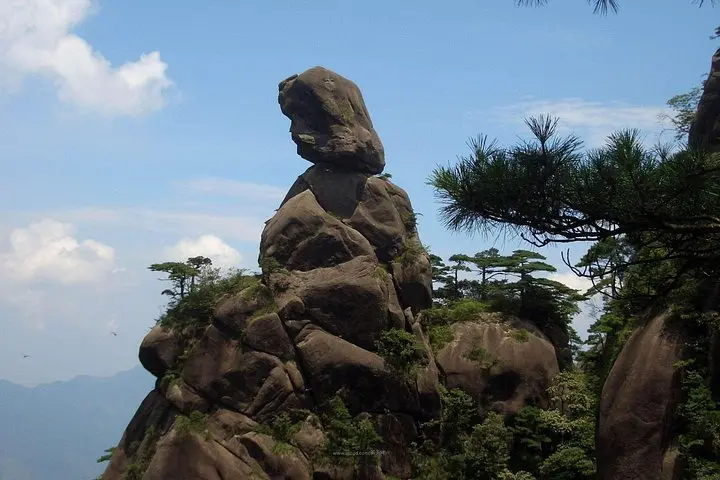
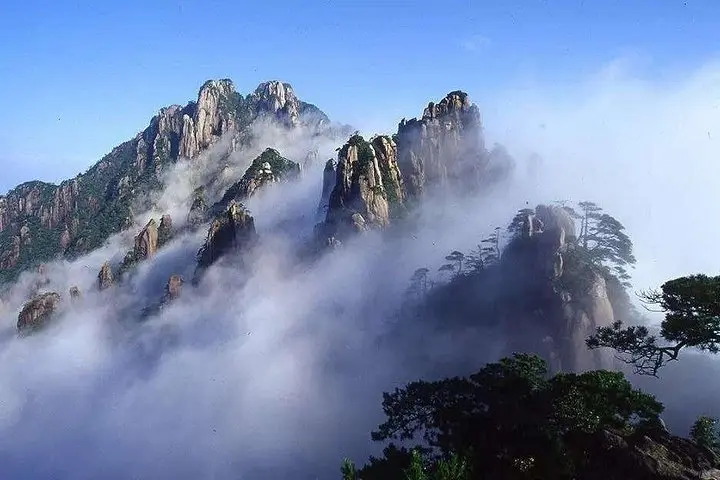
San Qing Shan is a UNESCO World Heritage site known for its concentrated granite pillars and peaks carved by millions of years of uplift and erosion. The mountain holds Daoist significance—many of the named peaks reflect mythic figures—while lower valleys near Wuyuan preserve centuries-old Anhui-style villages and patchwork fields of rapeseed. Geology here is visible: exfoliated granite faces, vertical joints, and perched boulders that seem to balance by design rather than chance.
Days are a practical blend of short hikes, cable-car ascents, and village strolls. Expect stair climbs to viewpoints such as Tianmen and Goddess Peak, and quieter walks through forested gullies where small streams push through moss and root. Cultural stops in Wuyuan highlight painted rafters, wooden archways, and local farming rhythms rather than urban tourist trappings.
Practical guidance: carry layered rain protection, sturdy shoes with good grip for wet stone, and a daypack with water and snacks. Travel by bullet train on fixed schedules—arrive early for ticket collection—and allow buffer time for rural drives between sites. For a three-day window, prioritize sunrise viewpoints on San Qing Shan and an afternoon visit to Huangling in Wuyuan for the best light and fewer crowds.
The itinerary uses a high-speed train that takes about three hours from Shanghai Hongqiao to Yushan South; arrive early to redeem tickets.
Yes—this tour includes entrance fees and the cable-car up to San Qing Shan as noted in the itinerary.
The tour is rated physically easy, but paths include many stone steps and some exposed viewpoints—those with mobility limits should plan accordingly.
A local guide meets travelers at Yushan South Station and accompanies the group throughout the trip; confirm language preference when booking.
Hangzhou Delight Travel Service Co., LTD. operates guided outdoor trips and adventures with an emphasis on safety, stewardship, and memorable experiences.
The morning train slices through eastern China and, within three hours, the city noise thins into rolling rice terraces and emerald ridgelines. Arriving at Yushan South, a guide meets the group and drives toward San Qing Shan; the cable car soon lifts visitors into a world of granite towers and wind-scoured pines. Air tastes cooler up top, and paths alternate between stepped stone and narrow ridgelines that give way to sweeping panoramas.
The morning train slices through eastern China and, within three hours, the city noise thins into rolling rice terraces and emerald ridgelines. Arriving at Yushan South, a guide meets the group and drives toward San Qing Shan; the cable car soon lifts visitors into a world of granite towers and wind-scoured pines. Air tastes cooler up top, and paths alternate between stepped stone and narrow ridgelines that give way to sweeping panoramas.
San Qing Shan is a UNESCO World Heritage site known for its concentrated granite pillars and peaks carved by millions of years of uplift and erosion. The mountain holds Daoist significance—many of the named peaks reflect mythic figures—while lower valleys near Wuyuan preserve centuries-old Anhui-style villages and patchwork fields of rapeseed. Geology here is visible: exfoliated granite faces, vertical joints, and perched boulders that seem to balance by design rather than chance.
Days are a practical blend of short hikes, cable-car ascents, and village strolls. Expect stair climbs to viewpoints such as Tianmen and Goddess Peak, and quieter walks through forested gullies where small streams push through moss and root. Cultural stops in Wuyuan highlight painted rafters, wooden archways, and local farming rhythms rather than urban tourist trappings.
Practical guidance: carry layered rain protection, sturdy shoes with good grip for wet stone, and a daypack with water and snacks. Travel by bullet train on fixed schedules—arrive early for ticket collection—and allow buffer time for rural drives between sites. For a three-day window, prioritize sunrise viewpoints on San Qing Shan and an afternoon visit to Huangling in Wuyuan for the best light and fewer crowds.