THE ADVENTURE COLLECTIVE® · Independent discovery and booking for outdoor travel

Walk from Parque Cuscatlán’s modern plazas into San Salvador’s Historic Center to trace the city’s arc—from contemporary public art to the Cathedral and National Palace. This two‑hour guided tour pairs urban history with practical local tips for exploring the capital on foot.
Walk from Parque Cuscatlán’s modern plazas into San Salvador’s Historic Center to trace the city’s arc—from contemporary public art to the Cathedral and National Palace. This two‑hour guided tour pairs urban history with practical local tips for exploring the capital on foot.
You start in Parque Cuscatlán with contemporary murals and sculpted green lawns under a tropical sky—modern public art giving way to the city’s older bones as your group moves inland. The guide points out a BINAES complex on one block and, a few streets later, the neoclassical façade of the National Palace looming over Plaza Barrios.
Verified experiences and guided adventures in the surrounding area.
Operated by Zenith Travels · San Salvador, San Salvador
You start in Parque Cuscatlán with contemporary murals and sculpted green lawns under a tropical sky—modern public art giving way to the city’s older bones as your group moves inland. The guide points out a BINAES complex on one block and, a few streets later, the neoclassical façade of the National Palace looming over Plaza Barrios.
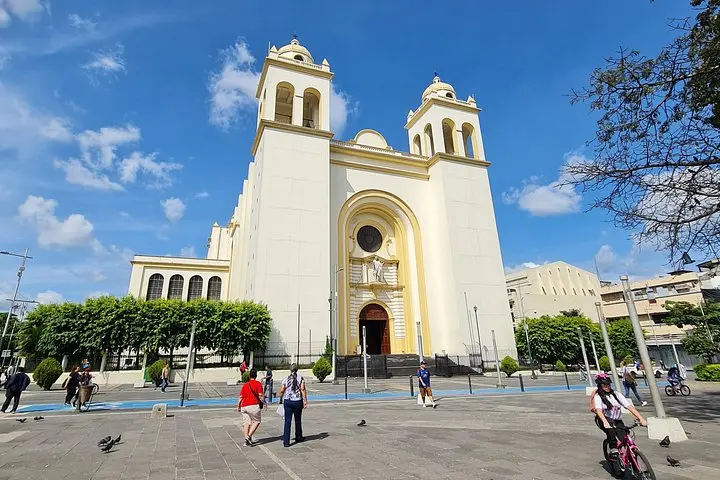
Streets here keep records of conflict and renewal: colonial grids, 20th‑century government buildings, and recent revitalization projects that aim to stitch commerce back into the core. The Cathedral’s quiet plaza holds the tomb of Saint Óscar Romero, whose assassination in 1980 marks a turning point in El Salvador’s modern history. Beneath the urban fabric you feel the volcanic island geology—San Salvador sits on a valley rim carved by seismic shifts and layered lava—and the city’s layout reflects both indigenous displacement and Central American colonial planning.
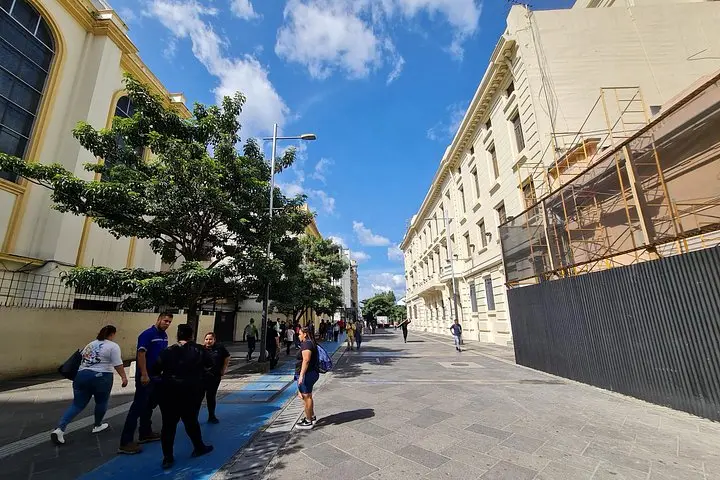
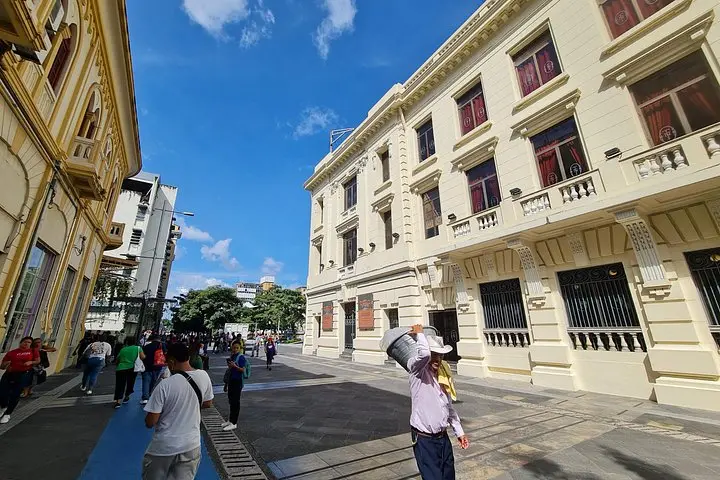
The two‑hour walking loop mixes paved sidewalks, patchy cobblestones and pedestrianized plazas; expect flat to gently rolling terrain suitable for steady walkers. You’ll pass modern libraries, a newly organized market teeming with vendors, and university buildings that signal the capital’s civic comeback. Guides fold in food suggestions and neighborhood tips so the tour doubles as field research for your afternoon plans.
Plan for sun and sudden showers depending on season, carry water, and wear supportive shoes. Mornings are cooler and quieter; evenings illuminate the cathedral and surrounding eateries. This tour is compact, interpretive, and best for travelers who want context as much as photos.
The tour lasts about two hours and covers roughly 2–3 kilometers on mostly flat city streets and plazas.
Much of the route is on paved sidewalks, but there are some cobblestone sections and steps at historic sites—check with the operator for specific accessibility needs.
Guides typically speak Spanish and may offer English; confirm language availability when booking.
Yes—Plaza Barrios and surrounding streets have local restaurants and markets; guides often point out recommended spots to try pupusas and other Salvadoran dishes.
Zenith Travels operates guided outdoor trips and adventures with an emphasis on safety, stewardship, and memorable experiences.
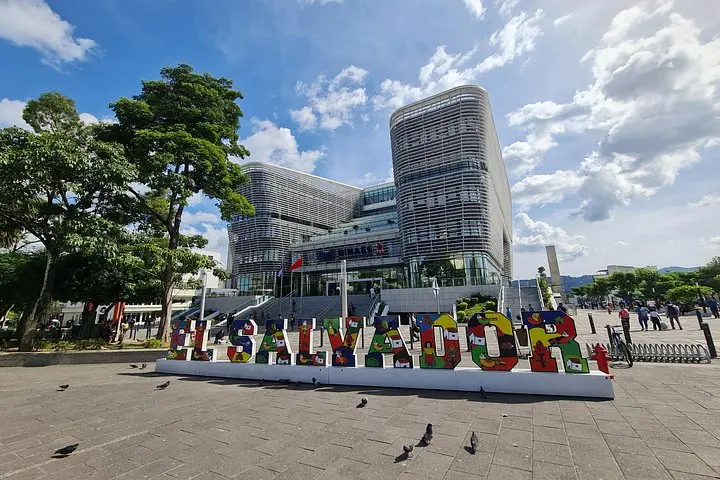
You start in Parque Cuscatlán with contemporary murals and sculpted green lawns under a tropical sky—modern public art giving way to the city’s older bones as your group moves inland. The guide points out a BINAES complex on one block and, a few streets later, the neoclassical façade of the National Palace looming over Plaza Barrios.
You start in Parque Cuscatlán with contemporary murals and sculpted green lawns under a tropical sky—modern public art giving way to the city’s older bones as your group moves inland. The guide points out a BINAES complex on one block and, a few streets later, the neoclassical façade of the National Palace looming over Plaza Barrios.
Streets here keep records of conflict and renewal: colonial grids, 20th‑century government buildings, and recent revitalization projects that aim to stitch commerce back into the core. The Cathedral’s quiet plaza holds the tomb of Saint Óscar Romero, whose assassination in 1980 marks a turning point in El Salvador’s modern history. Beneath the urban fabric you feel the volcanic island geology—San Salvador sits on a valley rim carved by seismic shifts and layered lava—and the city’s layout reflects both indigenous displacement and Central American colonial planning.
The two‑hour walking loop mixes paved sidewalks, patchy cobblestones and pedestrianized plazas; expect flat to gently rolling terrain suitable for steady walkers. You’ll pass modern libraries, a newly organized market teeming with vendors, and university buildings that signal the capital’s civic comeback. Guides fold in food suggestions and neighborhood tips so the tour doubles as field research for your afternoon plans.
Plan for sun and sudden showers depending on season, carry water, and wear supportive shoes. Mornings are cooler and quieter; evenings illuminate the cathedral and surrounding eateries. This tour is compact, interpretive, and best for travelers who want context as much as photos.