THE ADVENTURE COLLECTIVE® · Independent discovery and booking for outdoor travel

Walk the Singalila Ridge from Maneybhanjyang to Rimbik across Sandakphu and Phalut, where panoramic vistas take in Kanchenjunga and Everest. This 4–5 day trek balances high-altitude ridge walking with forested trails and village stays.
Walk the Singalila Ridge from Maneybhanjyang to Rimbik across Sandakphu and Phalut, where panoramic vistas take in Kanchenjunga and Everest. This 4–5 day trek balances high-altitude ridge walking with forested trails and village stays.
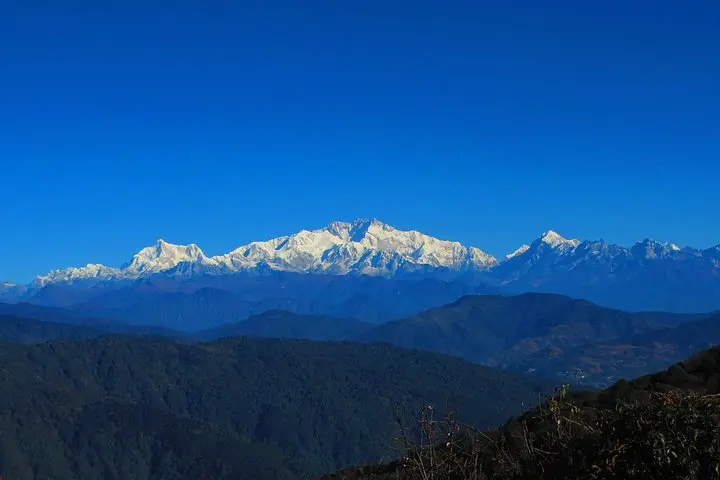
Morning light arrives first on the high shoulders of the Singalila Ridge. You start at Maneybhanjyang, the road surrendering to a footpath that pushes through rhododendron and silver fir, each bend opening a broader frame of Kanchenjunga and, on a clear day, Everest far on the horizon.
Verified experiences and guided adventures in the surrounding area.
Operated by Darjeeling Sikkim Experiences · Darjeeling, West Bengal
Morning light arrives first on the high shoulders of the Singalila Ridge. You start at Maneybhanjyang, the road surrendering to a footpath that pushes through rhododendron and silver fir, each bend opening a broader frame of Kanchenjunga and, on a clear day, Everest far on the horizon.
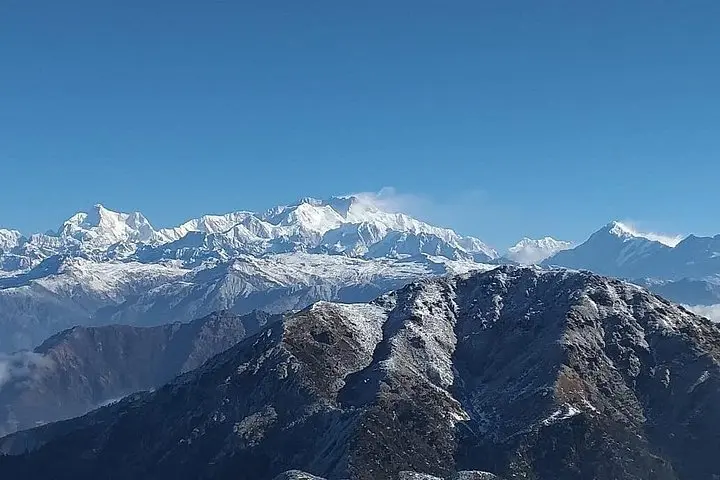
The trail threads traditional villages—Tonglu, Gairibas, Kalipokhari—where tea and simple dal meals mark the rhythm of the day. Sandakphu (3,636 m) is the high point: a windswept meadow and one of the few places in West Bengal that commands an uninterrupted parade of Himalayan summits stretching from Nepal to Bhutan. From there the ridge walk to Phalut moves level and exposed, a spine of grass and rocky steps with panoramic drops on both sides.
Geology here is Himalayan uplift; the route rides old fault lines and glacially-sheared ridgelines. Culturally, the trek crosses borderland communities tied to Darjeeling’s tea economy and the mountain pastoralism of small hamlets. The area falls within Singalila’s protected forests—habitat for red panda and several pheasant species—so trails follow narrow corridors through chestnut, hemlock and pine.
Practical notes: plan 4–5 days, expect 1,100–1,500 m of net ascent depending on your start point, and bring a warm sleeping layer—the ridge may be below-freezing at night. Footing alternates packed earth, rocky pitches and rooty forest sections; trekking poles help. Acclimatize slowly, carry cash in small villages, and book local guides for navigation, permits and lodging. The reward is simple: high, clean air and an unbroken skyline of giants.
Local permits are often required at forest checkpoints; guides typically handle permits and park fees as part of logistics.
Clear summit views are most reliable in spring (April–May) and autumn (October–November) when skies are generally stable.
Most groups use simple lodges/tea-houses in Tonglu, Gairibas, Sandakphu and Phalut; camping is possible but requires extra gear and permissions.
Sandakphu reaches 3,636 m—altitude sickness is possible; ascend gradually, stay hydrated, and watch for symptoms.
Darjeeling Sikkim Experiences operates guided outdoor trips and adventures with an emphasis on safety, stewardship, and memorable experiences.
Morning light arrives first on the high shoulders of the Singalila Ridge. You start at Maneybhanjyang, the road surrendering to a footpath that pushes through rhododendron and silver fir, each bend opening a broader frame of Kanchenjunga and, on a clear day, Everest far on the horizon.
Morning light arrives first on the high shoulders of the Singalila Ridge. You start at Maneybhanjyang, the road surrendering to a footpath that pushes through rhododendron and silver fir, each bend opening a broader frame of Kanchenjunga and, on a clear day, Everest far on the horizon.
The trail threads traditional villages—Tonglu, Gairibas, Kalipokhari—where tea and simple dal meals mark the rhythm of the day. Sandakphu (3,636 m) is the high point: a windswept meadow and one of the few places in West Bengal that commands an uninterrupted parade of Himalayan summits stretching from Nepal to Bhutan. From there the ridge walk to Phalut moves level and exposed, a spine of grass and rocky steps with panoramic drops on both sides.
Geology here is Himalayan uplift; the route rides old fault lines and glacially-sheared ridgelines. Culturally, the trek crosses borderland communities tied to Darjeeling’s tea economy and the mountain pastoralism of small hamlets. The area falls within Singalila’s protected forests—habitat for red panda and several pheasant species—so trails follow narrow corridors through chestnut, hemlock and pine.
Practical notes: plan 4–5 days, expect 1,100–1,500 m of net ascent depending on your start point, and bring a warm sleeping layer—the ridge may be below-freezing at night. Footing alternates packed earth, rocky pitches and rooty forest sections; trekking poles help. Acclimatize slowly, carry cash in small villages, and book local guides for navigation, permits and lodging. The reward is simple: high, clean air and an unbroken skyline of giants.