THE ADVENTURE COLLECTIVE® · Independent discovery and booking for outdoor travel

Walk Santa Ana after dark with a local guide who threads together the city’s coffee-era architecture, Civil War memory, and rapid social change. This 2–2.5 hour night tour pairs paced urban walking with candid local stories and finishes at a neighborhood speakeasy.
Walk Santa Ana after dark with a local guide who threads together the city’s coffee-era architecture, Civil War memory, and rapid social change. This 2–2.5 hour night tour pairs paced urban walking with candid local stories and finishes at a neighborhood speakeasy.
The lamps of Parque Libertad wash the plaza in amber as you step off the curb and into Santa Ana’s evening rhythm. Footsteps echo against colonial facades, vendors sweep up the day’s dust, and the cathedral’s neo‑Gothic silhouette looms like an unread chapter. Your guide—Marlon, a local storyteller—leads you through streets where the city’s recent past is neither hidden nor finished; it’s lived.
Verified experiences and guided adventures in the surrounding area.
Operated by Marlon Zometa · Santa Ana, Santa Ana
The lamps of Parque Libertad wash the plaza in amber as you step off the curb and into Santa Ana’s evening rhythm. Footsteps echo against colonial facades, vendors sweep up the day’s dust, and the cathedral’s neo‑Gothic silhouette looms like an unread chapter. Your guide—Marlon, a local storyteller—leads you through streets where the city’s recent past is neither hidden nor finished; it’s lived.
Along the route you touch threads of history: the coffee boom that built the Teatro Nacional, the Civil War scars still visible in family stories, and the sharp turn in security over the last decade. Geology is quiet here—the city sits on Salvadoran volcanic plains—yet you’ll notice volcanic stone in older masonry and sweeping views toward Cerro Verde on clear nights. Culture appears in small ways: neighborhood bars keeping late hours, mural art that marks resilience, and a speakeasy that closes the tour with a local toast.
Practical side: expect 2–2.5 hours of mostly flat urban walking on paved streets and occasional uneven sidewalks. Wear comfortable shoes and bring a small light jacket—nights can be breezy. The tour is best started after dusk to catch the city’s shift from daytime bustle to measured night life, and groups are small and conversational.
This is a listening walk as much as a sightseeing one—arrive ready to ask questions, take local perspectives seriously, and leave with an understanding of how a community remakes itself.
The guide discusses the city’s past candidly; Santa Ana’s central areas used for the tour are frequented by visitors and local businesses, and the operator notes a marked improvement in public safety since 2015.
The tour is typically led in Spanish with English provided—confirm language at booking or request a specific language if needed.
Meet at Parque Libertad in downtown Santa Ana; the walk ends at a local speakeasy-style bar within walking distance of the starting point.
The tour involves some uneven sidewalks and steps; it’s not fully wheelchair accessible—contact the operator about specific accessibility accommodations.
Marlon Zometa operates guided outdoor trips and adventures with an emphasis on safety, stewardship, and memorable experiences.
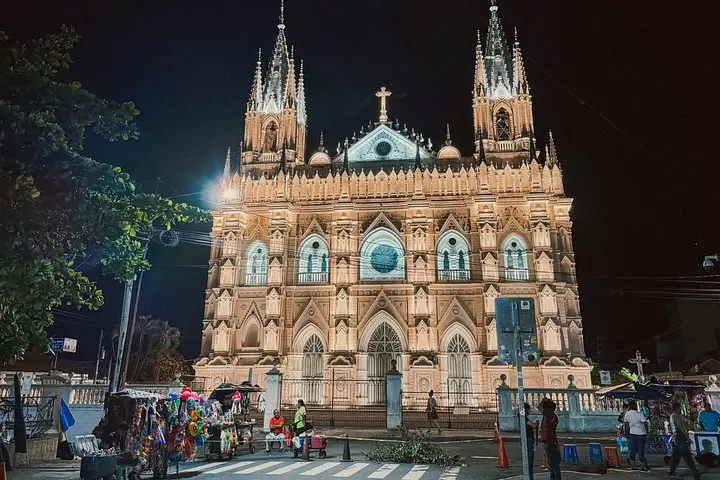
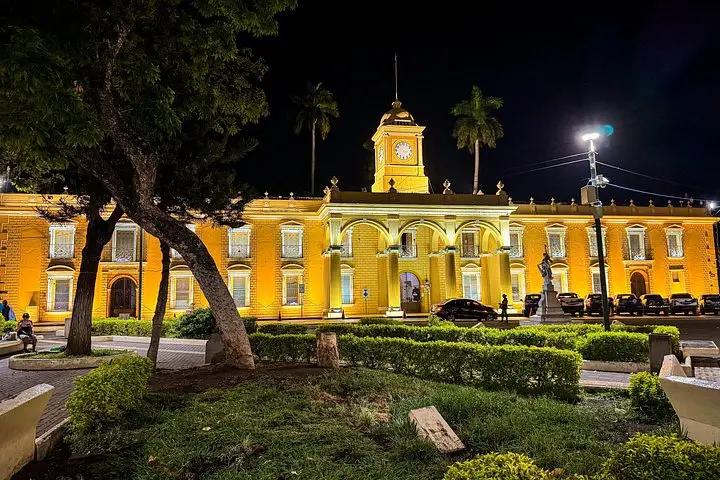
The lamps of Parque Libertad wash the plaza in amber as you step off the curb and into Santa Ana’s evening rhythm. Footsteps echo against colonial facades, vendors sweep up the day’s dust, and the cathedral’s neo‑Gothic silhouette looms like an unread chapter. Your guide—Marlon, a local storyteller—leads you through streets where the city’s recent past is neither hidden nor finished; it’s lived.
The lamps of Parque Libertad wash the plaza in amber as you step off the curb and into Santa Ana’s evening rhythm. Footsteps echo against colonial facades, vendors sweep up the day’s dust, and the cathedral’s neo‑Gothic silhouette looms like an unread chapter. Your guide—Marlon, a local storyteller—leads you through streets where the city’s recent past is neither hidden nor finished; it’s lived.
Along the route you touch threads of history: the coffee boom that built the Teatro Nacional, the Civil War scars still visible in family stories, and the sharp turn in security over the last decade. Geology is quiet here—the city sits on Salvadoran volcanic plains—yet you’ll notice volcanic stone in older masonry and sweeping views toward Cerro Verde on clear nights. Culture appears in small ways: neighborhood bars keeping late hours, mural art that marks resilience, and a speakeasy that closes the tour with a local toast.
Practical side: expect 2–2.5 hours of mostly flat urban walking on paved streets and occasional uneven sidewalks. Wear comfortable shoes and bring a small light jacket—nights can be breezy. The tour is best started after dusk to catch the city’s shift from daytime bustle to measured night life, and groups are small and conversational.
This is a listening walk as much as a sightseeing one—arrive ready to ask questions, take local perspectives seriously, and leave with an understanding of how a community remakes itself.