THE ADVENTURE COLLECTIVE® · Independent discovery and booking for outdoor travel

Cover Santa Fe’s history, architecture, and art in a compact two- to three-hour driving tour. Ride in comfort while a local guide traces Pueblo, Spanish, and railroad-era stories and points out the city’s can't-miss sites.
Cover Santa Fe’s history, architecture, and art in a compact two- to three-hour driving tour. Ride in comfort while a local guide traces Pueblo, Spanish, and railroad-era stories and points out the city’s can't-miss sites.
The Sprinter hums up San Francisco Street and the city opens like a map: low adobe roofs, the Sangre de Cristo foothills pressing skyward, and wind that always seems to know where you’re headed. In a compact two- to three-hour loop you’ll move through blocks of living history—church plazas, gallery-lined lanes, and a commanding hilltop view that frames the oldest fort ruins in the Southwest.
Verified experiences and guided adventures in the surrounding area.
Operated by Vigilante Guides · Santa Fe, New Mexico
The Sprinter hums up San Francisco Street and the city opens like a map: low adobe roofs, the Sangre de Cristo foothills pressing skyward, and wind that always seems to know where you’re headed. In a compact two- to three-hour loop you’ll move through blocks of living history—church plazas, gallery-lined lanes, and a commanding hilltop view that frames the oldest fort ruins in the Southwest.
Santa Fe’s story is layered: Tewa and other Pueblo communities long predate Spanish arrival, the Pueblo Revolt reshaped colonial lines in 1680, and the city later shifted through Mexican and American control in the 19th century. Geologically you’re in the southern high desert—thin air at roughly 7,200 ft, piñon and juniper on sandstone slopes—so light and color change fast as clouds pass.
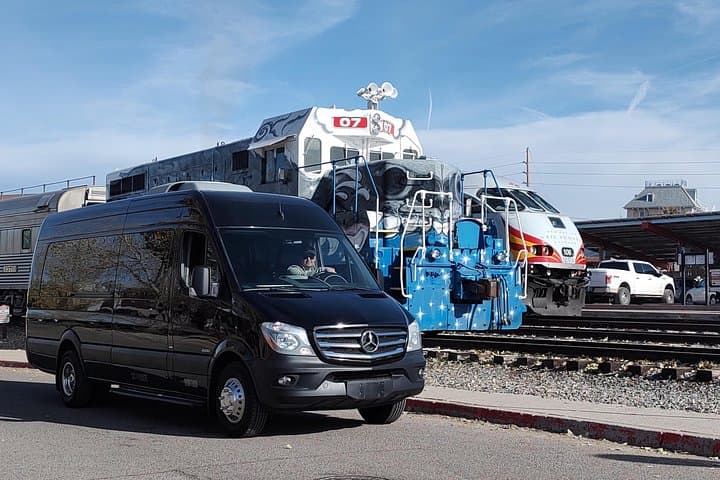
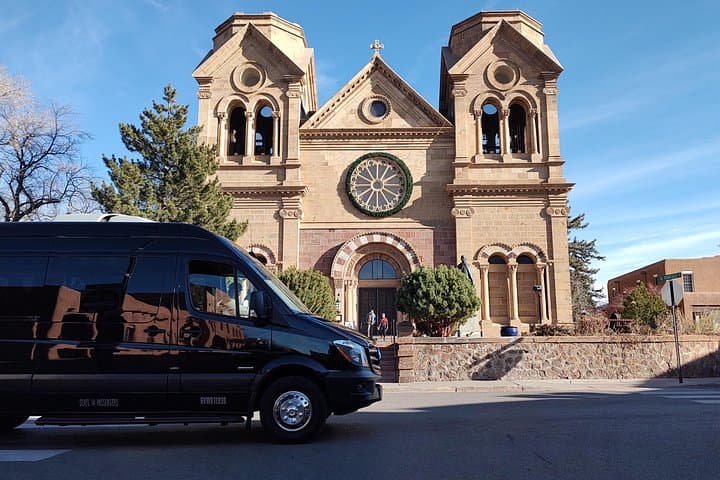
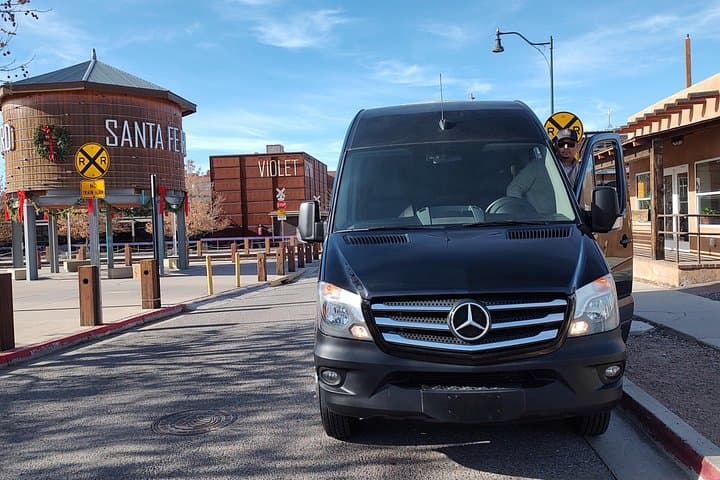
The drive passes landmarks: the Cathedral, the Georgia O’Keeffe Museum, the Plaza, historic San Miguel Church (c.1610), Canyon Road’s galleries, and the Railyard’s market energy. Guides point out architecture, local legends, and the railroad’s role in Santa Fe’s growth while you ride in an air-conditioned Mercedes Sprinter with a small group.
Practical edge: arrive 10–15 minutes early at La Fonda, bring layers for high-elevation sun and wind, and carry water—altitude and dry air make dehydration easy. Photography is frequent; keep a small lens cloth for dusty windows. If you want deeper gallery stops or museum entries, plan extra time before or after the tour. This drive gives a compact orientation—ideal for first-time visitors who want context, history, and a clear route for further exploration.
Meet in front of La Fonda hotel on E. San Francisco St; plan to arrive 10–15 minutes early.
The tour lasts about 2–3 hours with up to 13 travelers in a small-group Sprinter van.
Admissions are not included; the itinerary passes by major museums and galleries but does not cover entry fees.
The tour is primarily seated with brief standing at viewpoints; contact the operator in advance for accessibility accommodations.
Vigilante Guides operates guided outdoor trips and adventures with an emphasis on safety, stewardship, and memorable experiences.

The Sprinter hums up San Francisco Street and the city opens like a map: low adobe roofs, the Sangre de Cristo foothills pressing skyward, and wind that always seems to know where you’re headed. In a compact two- to three-hour loop you’ll move through blocks of living history—church plazas, gallery-lined lanes, and a commanding hilltop view that frames the oldest fort ruins in the Southwest.
The Sprinter hums up San Francisco Street and the city opens like a map: low adobe roofs, the Sangre de Cristo foothills pressing skyward, and wind that always seems to know where you’re headed. In a compact two- to three-hour loop you’ll move through blocks of living history—church plazas, gallery-lined lanes, and a commanding hilltop view that frames the oldest fort ruins in the Southwest.
Santa Fe’s story is layered: Tewa and other Pueblo communities long predate Spanish arrival, the Pueblo Revolt reshaped colonial lines in 1680, and the city later shifted through Mexican and American control in the 19th century. Geologically you’re in the southern high desert—thin air at roughly 7,200 ft, piñon and juniper on sandstone slopes—so light and color change fast as clouds pass.
The drive passes landmarks: the Cathedral, the Georgia O’Keeffe Museum, the Plaza, historic San Miguel Church (c.1610), Canyon Road’s galleries, and the Railyard’s market energy. Guides point out architecture, local legends, and the railroad’s role in Santa Fe’s growth while you ride in an air-conditioned Mercedes Sprinter with a small group.
Practical edge: arrive 10–15 minutes early at La Fonda, bring layers for high-elevation sun and wind, and carry water—altitude and dry air make dehydration easy. Photography is frequent; keep a small lens cloth for dusty windows. If you want deeper gallery stops or museum entries, plan extra time before or after the tour. This drive gives a compact orientation—ideal for first-time visitors who want context, history, and a clear route for further exploration.