THE ADVENTURE COLLECTIVE® · Independent discovery and booking for outdoor travel

Walk Santa Fe with a native city historian and trace four hundred years of Pueblo, Spanish, Mexican and American history. This 2¼-hour guided tour mixes architecture, lesser-known sites and local stories for a compact, accessible city experience.
Walk Santa Fe with a native city historian and trace four hundred years of Pueblo, Spanish, Mexican and American history. This 2¼-hour guided tour mixes architecture, lesser-known sites and local stories for a compact, accessible city experience.
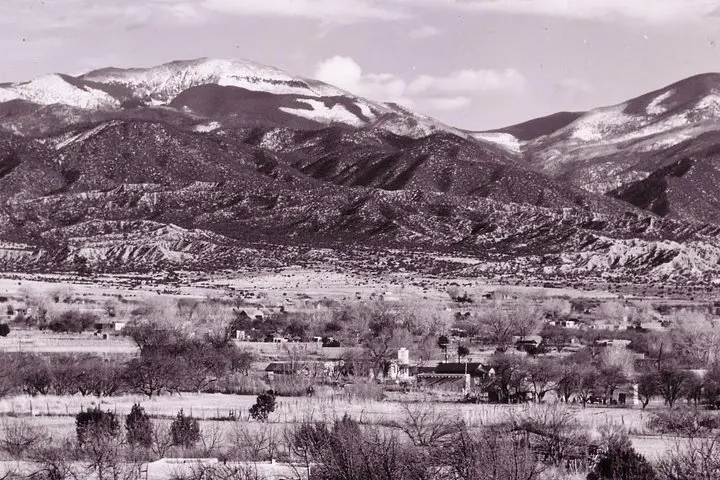
You step out onto the Plaza beneath the sandstone face of the Cathedral Basilica of St. Francis, piñon smoke drifting from a nearby vendor and the faint echo of footfalls on cobbles. The air is thin and carries a dry, resinous scent; the Sangre de Cristo foothills press a cool line on the horizon and the city seems to hum with layered histories waiting to be unfolded.
Verified experiences and guided adventures in the surrounding area.
Operated by Ana Pacheco · Santa Fe, New Mexico
You step out onto the Plaza beneath the sandstone face of the Cathedral Basilica of St. Francis, piñon smoke drifting from a nearby vendor and the faint echo of footfalls on cobbles. The air is thin and carries a dry, resinous scent; the Sangre de Cristo foothills press a cool line on the horizon and the city seems to hum with layered histories waiting to be unfolded.
This guided walk brings four centuries of New Mexico into two hours: Pueblo communities and Spanish colonial governors, the contested borders of Mexican and American rule, and quieter threads like spirituality and art that remade Santa Fe in the 20th century. The route includes the Loretto Chapel and its famous spiral staircase, the San Miguel Mission, Burro Alley, and sites tied to the Manhattan Project and regional health history such as Sunmount Sanatorium. Geologically, the city sits on high-desert alluvium below the Sangre de Cristos, where adobe and stucco architecture reflect both climate and cultural exchange.
Expect a deliberate, narrative pace: short stops for interpretation, some time on irregular sidewalks, and a small-group format that encourages questions. Practical notes—bring a refillable water bottle, sun protection and comfortable shoes for cobbled streets. The tour is largely level and wheelchair accessible, but weather can turn quickly; afternoons in summer are prone to monsoon bursts.
Finish with a walk down Canyon Road or a detour to the Railyard for contemporary art—Santa Fe’s past and present meet on streets that reward slow exploration.
The tour runs approximately 135 minutes (about 2 hours 15 minutes), with several short stops and walking between sites.
Yes — the operator notes wheelchair accessibility for routes and transportation; surfaces are mostly accessible though some historic spots may have steps or narrow passages.
Admissions are generally not included; stops include exterior views and guided interpretation, while some museums or chapels may require separate entry fees.
Yes — the pace is moderate and intended for participants of all ages; bring snacks and water for children and factor in brief rests if needed.
Ana Pacheco operates guided outdoor trips and adventures with an emphasis on safety, stewardship, and memorable experiences.
You step out onto the Plaza beneath the sandstone face of the Cathedral Basilica of St. Francis, piñon smoke drifting from a nearby vendor and the faint echo of footfalls on cobbles. The air is thin and carries a dry, resinous scent; the Sangre de Cristo foothills press a cool line on the horizon and the city seems to hum with layered histories waiting to be unfolded.
You step out onto the Plaza beneath the sandstone face of the Cathedral Basilica of St. Francis, piñon smoke drifting from a nearby vendor and the faint echo of footfalls on cobbles. The air is thin and carries a dry, resinous scent; the Sangre de Cristo foothills press a cool line on the horizon and the city seems to hum with layered histories waiting to be unfolded.
This guided walk brings four centuries of New Mexico into two hours: Pueblo communities and Spanish colonial governors, the contested borders of Mexican and American rule, and quieter threads like spirituality and art that remade Santa Fe in the 20th century. The route includes the Loretto Chapel and its famous spiral staircase, the San Miguel Mission, Burro Alley, and sites tied to the Manhattan Project and regional health history such as Sunmount Sanatorium. Geologically, the city sits on high-desert alluvium below the Sangre de Cristos, where adobe and stucco architecture reflect both climate and cultural exchange.
Expect a deliberate, narrative pace: short stops for interpretation, some time on irregular sidewalks, and a small-group format that encourages questions. Practical notes—bring a refillable water bottle, sun protection and comfortable shoes for cobbled streets. The tour is largely level and wheelchair accessible, but weather can turn quickly; afternoons in summer are prone to monsoon bursts.
Finish with a walk down Canyon Road or a detour to the Railyard for contemporary art—Santa Fe’s past and present meet on streets that reward slow exploration.